Natural TTouch And Scent Work For Reactive Dogs 2026
Discover how holistic TTouch and scent work naturally rehabilitate reactive dogs in 2026. Learn force-free techniques to lower cortisol and build focus.
The Paradigm Shift in 2026 Canine Behavioral Conditioning
As we navigate the canine behavioral landscape in 2026, the focus of dog training has profoundly shifted from simple obedience compliance to holistic nervous system regulation. For decades, reactive dogs—those who lunge, bark, or shut down in the presence of triggers—were managed primarily through operant conditioning and, unfortunately, aversive tools. Today, the consensus among leading veterinary behaviorists and force-free trainers is clear: true behavioral modification must address the dog's underlying physiological state. You cannot train a dog whose nervous system is trapped in a sympathetic "fight or flight" response.
This is where natural and holistic approaches shine. By combining Tellington TTouch (TTouch), a somatic bodywork method, with therapeutic scent work, handlers can actively lower a dog's cortisol levels, engage the parasympathetic nervous system, and build deep, resilient focus. This comprehensive guide explores how to integrate these two powerful, natural modalities to rehabilitate reactive dogs without force, fear, or frustration.
Understanding the Reactive Nervous System
Reactivity is not a behavioral choice; it is a physiological survival response. When a reactive dog spots a trigger (another dog, a stranger, a loud noise), their amygdala hijacks the brain, flooding the body with adrenaline and cortisol. In this state, the dog is physically incapable of learning new behaviors or processing complex commands. The American Veterinary Society of Animal Behavior (AVSAB) strongly advocates for humane, force-free methods that prioritize the animal's emotional well-being, noting that adding physical corrections to a fearful dog only exacerbates the underlying stress response.
Holistic training recognizes that to change the behavior, we must first change the body's internal environment. We must signal to the dog's brain that they are safe. TTouch achieves this through specific, mindful tactile stimulation, while scent work achieves this by engaging the olfactory bulb, which has direct neural pathways to the brain's emotional centers.
What is Tellington TTouch?
Developed by Linda Tellington-Jones, TTouch is a holistic method of bodywork that uses specific, non-habitual touches and movements to activate cellular intelligence and release tension. Unlike traditional petting or massage, which can sometimes overstimulate an anxious dog, TTouch is deliberate, slow, and mindful. According to the official Tellington TTouch Training organization, these unique movements help shift the dog's brain waves from active beta states to relaxed alpha states, effectively "resetting" the nervous system.
Core TTouch Movements for Reactivity
- Clouded Leopard: Using the pads of your fingers in a soft, curved hand, apply gentle pressure and move the skin in a full, slow circle and a quarter. Imagine your fingers are resting on a cloud. This is deeply calming and ideal for the dog's back and sides.
- Python Pull: Using your whole hand, gently lift and slide the skin along the dog's spine or neck in a slow, undulating motion. This helps release deep fascial tension often held by dogs who are constantly on high alert.
- Lying Leopard: Similar to the Clouded Leopard, but you rest your hand flat and still on the dog's body for several seconds before moving. This stationary touch is excellent for grounding a panicked dog during a reactive episode.
Scent Work as Olfactory Regulation
While TTouch addresses the somatic (body) experience of stress, scent work addresses the neurological experience. A dog's olfactory bulb is proportionally 40 times larger than a human's. When a dog engages in deep, methodical sniffing, their heart rate actually drops. The act of processing complex odor molecules requires intense cognitive focus, which naturally draws blood flow away from the amygdala (the fear center) and toward the prefrontal cortex (the thinking brain).
The Fear Free Pets initiative heavily promotes olfactory enrichment as a primary tool for reducing anxiety in both clinical and home environments. In 2026, scent work is no longer just a competitive sport; it is a prescribed therapeutic intervention for canine PTSD and severe reactivity. By hiding natural, dog-safe essential oils (like Birch, Anise, or Clove) and allowing the dog to hunt for them, we give the dog a "job" that inherently self-soothes.
The Dual-Regulation Protocol: Step-by-Step
To rehabilitate a reactive dog holistically, we combine TTouch and scent work into a phased protocol. This routine should be practiced in a low-distraction environment before ever attempting it near the dog's actual triggers.
Phase 1: Baseline Body Mapping (Weeks 1-2)
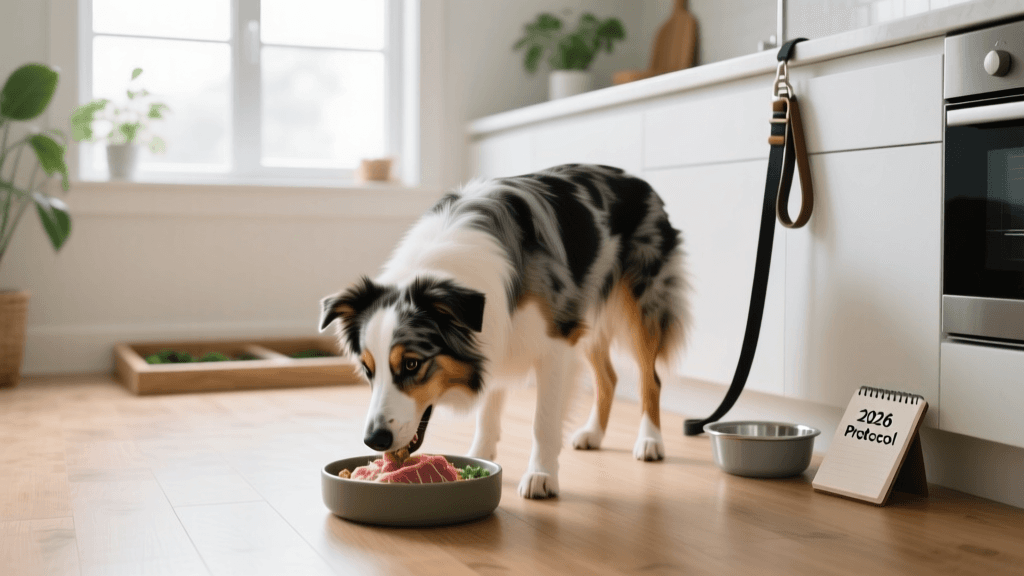
Begin by establishing a TTouch routine in your home. Spend 10 minutes daily performing the Clouded Leopard technique along your dog's spine, starting from the shoulders and moving to the base of the tail. Move at a pace of one circle every two seconds. The goal is not to put the dog to sleep, but to observe their breathing. When you see a deep, involuntary sigh or a lowering of the head, you have successfully engaged the parasympathetic nervous system. Pair this with a high-value, holistic reward like freeze-dried beef liver to build a positive association with the bodywork.
Phase 2: Scent Imprinting (Weeks 3-4)
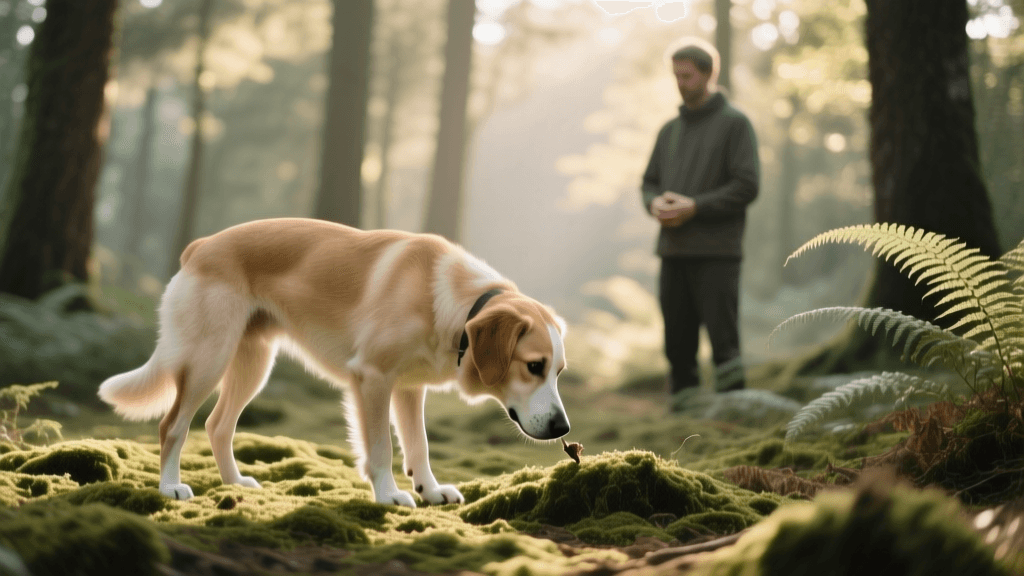
Introduce a single, natural scent target, such as a cotton swab infused with organic Birch essential oil. Place the swab in a small, ventilated tin. Hold the tin in your hand and allow the dog to sniff it. The moment their nose touches or hovers near the tin, mark the behavior with a calm "yes" and reward them away from the tin. Once the dog understands that the odor predicts a reward, begin hiding the tin in easy, visible locations around a single room. Allow the dog to use their nose to find it. Keep sessions short—no more than 5 minutes—to prevent cognitive fatigue.
Phase 3: The Dual-Regulation Walk (Weeks 5+)
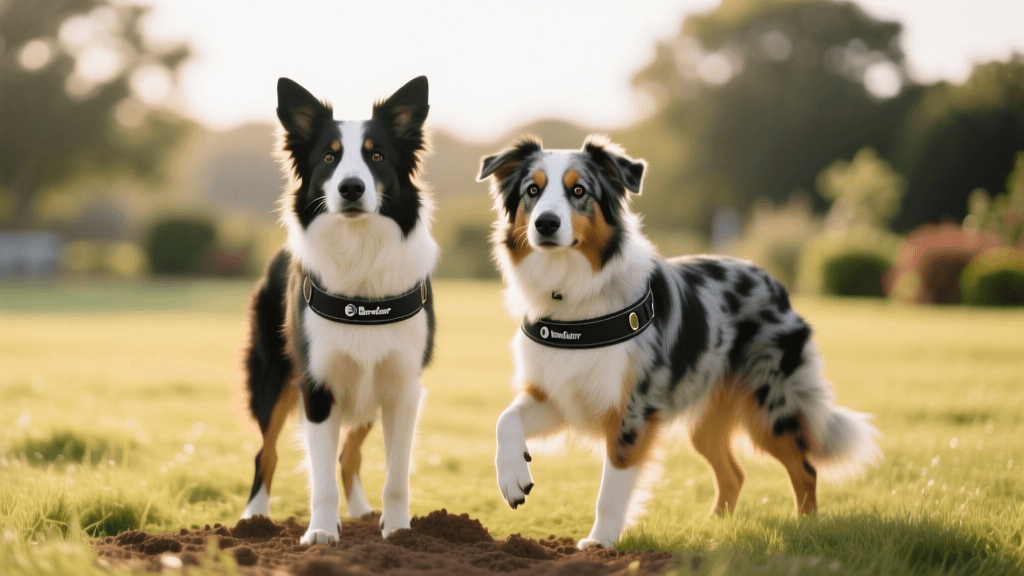
Now, take the protocol into the real world. Equip your dog with a well-fitting, Y-front harness that allows full shoulder extension and does not restrict breathing. Carry your scent tin and your TTouch skills. When you spot a trigger at a distance where your dog notices but does not react (working under threshold), immediately cue a scent search by tossing a handful of treats into the grass or presenting the scent tin. After the dog completes the sniff, use the Lying Leopard TTouch on their chest or shoulder for 10 seconds to ground them before moving away from the trigger.
Traditional Operant Conditioning vs. Holistic Regulation
Understanding the difference between traditional methods and the 2026 holistic standard is crucial for setting realistic expectations. The table below outlines how these approaches differ in addressing canine reactivity.
| Metric | Traditional Operant Conditioning | Holistic Somatic & Olfactory Regulation |
|---|---|---|
| Primary Focus | Suppressing the outward behavior (barking/lunging) | Lowering the internal physiological arousal state |
| Tools Used | Leash corrections, prong collars, verbal markers | Mindful touch, scent targets, decompression harnesses |
| Brain State Targeted | Active learning (often blocked by high cortisol) | Parasympathetic shift (Alpha brain waves) |
| Long-Term Outcome | Learned helplessness or suppressed warnings | Genuine emotional resilience and coping skills |
| Handler Energy | Often tense, requiring strict timing and control | Calm, grounded, and focused on mutual connection |
Essential Holistic Gear and Supplements for 2026
To support your TTouch and scent work protocol, ensure you are using gear and supplements that align with a natural philosophy.
- Balance Harness (2026 Edition): Look for harnesses with dual-attachment points (front and back). A front clip gently redirects the dog's momentum without choking, while the back clip allows for freedom of movement during scent work.
- Long Lines (15-30 feet): Biothane long lines are waterproof, lightweight, and allow the dog to explore scent cones at a distance without the tension of a standard 6-foot leash.
- Calming Colostrum & L-Theanine Supplements: In 2026, veterinary nutritionists frequently recommend supplements containing bovine colostrum and L-Theanine to support GABA receptors in the brain. Administering these 45 minutes before a training walk can significantly lower the dog's baseline anxiety, making them more receptive to TTouch.
- Organic Scent Kits: Avoid synthetic aromatic compounds. Source 100% pure, organic essential oils specifically formulated for canine nose work to ensure you are not overwhelming their sensitive nasal passages.
Conclusion
Rehabilitating a reactive dog is a journey of patience, empathy, and science. By embracing natural and holistic approaches like Tellington TTouch and therapeutic scent work, we move beyond merely managing bad behaviors and start healing the whole dog. The 2026 standard of care demands that we respect the canine nervous system, providing our dogs with the somatic and olfactory tools they need to navigate a complex world with confidence. Start your dual-regulation protocol today, and watch your dog transform from a prisoner of their own anxiety into a grounded, focused, and joyful companion.
aaron-whyte
All our authors care for dogs every day — read more of their work on the authors page.