Holistic Recall Training For Anxious Dogs: TTouch & Scent Work 2026
Discover how to train a reliable recall for anxious dogs in 2026 using holistic TTouch techniques, natural scent work, and nervous system regulation.
The Evolution of Holistic Dog Training in 2026
As we navigate 2026, the dog training community has increasingly embraced a paradigm shift away from purely mechanical obedience and toward nervous-system-based learning. For anxious, reactive, or highly sensitive dogs, traditional recall training—which often relies on high-value food lures or corrective feedback—frequently falls short. When a dog is in a state of environmental overwhelm, their ability to process auditory cues like 'come' is neurologically blocked. Today, leading veterinary behaviorists and holistic trainers are combining somatic bodywork, olfactory anchoring, and species-appropriate nutrition to build reliable recall from the ground up.
This comprehensive guide explores a natural, holistic approach to recall training. By integrating Tellington TTouch (TTouch) to regulate the canine nervous system and utilizing natural scent work to bypass the overwhelmed auditory cortex, you can teach your anxious dog to return to you willingly, even in highly distracting environments.
Understanding the Anxious Canine Nervous System
To train an anxious dog effectively, we must first understand how stress impacts learning. When a dog perceives a threat or becomes overstimulated, their sympathetic nervous system triggers a 'fight, flight, or freeze' response. During this state, the amygdala hijacks the brain, effectively shutting down the prefrontal cortex where conscious learning and decision-making occur.
According to the American Veterinary Society of Animal Behavior (AVSAB), addressing the underlying emotional state and stress levels of a dog is paramount before attempting to enforce obedience cues. If a dog is in sympathetic arousal, no amount of dried liver or verbal praise will penetrate their panic. Therefore, the first step in our holistic recall protocol is not teaching the cue itself, but rather teaching the dog how to down-regulate their nervous system in your presence.
Step 1: Grounding with Tellington TTouch
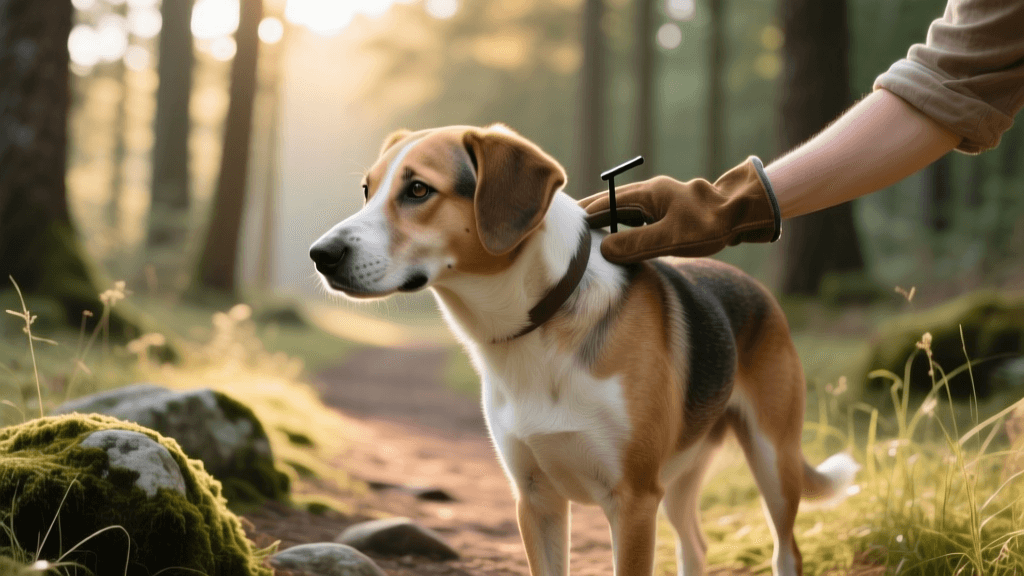
Developed by Linda Tellington-Jones, the Tellington TTouch method utilizes specific, mindful circular touches and lifts on the skin to activate the parasympathetic nervous system (the 'rest and digest' state). For anxious dogs, TTouch serves as a physical anchor that signals safety.
Key TTouch Techniques for Recall Preparation
- The Clouded Leopard: Using the pads of your fingers in a curved position, make one-and-a-quarter clockwise circles on the dog's skin, moving the skin over the underlying tissue. Apply a pressure level of 2 (out of 10) along the dog's back and shoulders to lower their heart rate.
- Ear Slides: The ears are rich in acupressure points linked to the vagus nerve. Gently stroke from the base of the ear to the tip, applying a feather-light touch. This technique is incredibly effective for dogs who exhibit panting, pacing, or whining when outdoors.
- The Lying Leopard: Rest your hands gently on the dog's ribcage without moving, matching your breathing to theirs, and then slowly deepening your breath to encourage them to co-regulate with you.
Actionable Advice: Spend 5 to 10 minutes performing TTouch in a quiet indoor environment daily. Once your dog associates your touch with a drop in heart rate, you can use a brief 'Ear Slide' as a calming reset before stepping outside to practice recall.
Step 2: Harnessing Olfactory Anchors for Recall
Dogs process the world primarily through their noses, possessing up to 300 million olfactory receptors compared to our 6 million. When an anxious dog is visually or auditorily overstimulated, they can often still process scent. The American Kennel Club's Scent Work guidelines highlight that engaging a dog's olfactory system naturally lowers their pulse and shifts their brain into a focused, problem-solving state.
Instead of relying solely on a verbal 'come' or a whistle, we will create a Scent Anchor. This involves pairing a distinct, natural essential oil with the act of returning to you.
Creating Your Scent Anchor Tin
- Purchase a small, sliding-lid metal tin (like an altoids tin or a specialized scent work tin).
- Place a sterile cotton swab inside and add three drops of Sweet Birch or Anise essential oil. (Ensure the oil is 100% pure and therapeutic grade, and never apply it directly to the dog's skin or nose).
- Keep this tin in your treat pouch. When you practice recall, open the tin slightly so the scent wafts out. The dog will learn that following this specific, calming scent leads them back to safety and reward.
Step 3: Holistic High-Value Rewards
In 2026, holistic dog care extends to the nutritional value of training rewards. Anxious dogs often suffer from compromised gut microbiomes, which directly impacts serotonin production (the majority of which is produced in the gut). Feeding highly processed, carbohydrate-heavy training biscuits can cause blood sugar spikes and crashes, exacerbating anxiety and hyperactivity.
Below is a comparison of traditional training treats versus holistic, species-appropriate alternatives recommended for nervous system support.
| Treat Type | Primary Ingredients | Glycemic Impact | Gut-Brain Benefit | 2026 Avg. Cost |
|---|---|---|---|---|
| Traditional Biscuits | Wheat, Corn, Artificial Flavors | High (Spikes blood sugar) | None; may cause inflammation | $12 / lb |
| Freeze-Dried Venison | 100% Venison Heart & Liver | Low (Steady energy) | Rich in B-vitamins for nerve health | $42 / lb |
| Sprouted Pumpkin Seeds | Organic Raw Pumpkin Seeds | Very Low | High in tryptophan and magnesium | $18 / lb |
| Bone Broth Ice Cubes | Slow-simmered beef marrow bones | Zero | Collagen and glycine for calming | $8 / batch |
Pro Tip: For high-distraction outdoor recall, use the Freeze-Dried Venison. For indoor TTouch pairing and low-stress repetition, use Sprouted Pumpkin Seeds or Bone Broth Cubes.
The 4-Week Holistic Recall Protocol
This protocol merges nervous system regulation, scent work, and holistic rewards to build a bulletproof recall for anxious dogs.
Week 1: Scent Association & Somatic Bonding
Goal: Pair the Scent Anchor with profound relaxation.
Action: Indoors, open your Scent Tin. Perform 5 minutes of TTouch (Clouded Leopard and Ear Slides). Immediately after, offer a piece of Freeze-Dried Venison. Do not ask for any obedience cues. The dog learns: Scent + Your Presence = Nervous System Regulation + High-Value Nutrition.
Week 2: Indoor Recall with Scent Anchor
Goal: Introduce movement and the recall cue.
Action: Stand 10 feet away in a hallway. Open the Scent Tin. Say your recall word (e.g., 'Here' or 'Come') in a soft, low, inviting tone. When the dog moves toward you and the scent, reward heavily with venison and a 3-second Ear Slide upon arrival. Repeat 10 times per session, twice daily.
Week 3: Fenced Outdoor & Biothane Long Line
Goal: Transition to the outdoors while maintaining safety and connection.
Action: Equip your dog with a well-fitted Y-front harness and a 30-foot Biothane long line. Biothane is the 2026 standard for holistic trainers; it is waterproof, easy to sanitize, and doesn't burn the hands like nylon. A quality 3/8-inch Biothane line costs around $65 and provides smooth, drag-free feedback. Allow the dog to sniff and decompress. When they look away from you, open the Scent Tin and give your soft recall cue. Gently reel them in if they hesitate, rewarding massively upon return.
Week 4: Distraction Proofing & Decompression Walks
Goal: Generalize the behavior to new environments.
Action: Visit a low-traffic park. Practice the 'Sniffari' method—allowing the dog 15 minutes of uninterrupted sniffing to lower their baseline cortisol before asking for a single recall. Use the Scent Anchor to cut through environmental noise (like distant traffic or barking dogs). Always follow a successful outdoor recall with a 'release' cue, allowing them to return to their sniffing, which reinforces that coming to you does not mean the end of their fun.
Environmental Enrichment and Decompression
A holistic approach recognizes that a dog who is mentally and physically depleted through natural enrichment is far less likely to exhibit anxiety-driven bolting. Incorporate daily decompression walks in nature, utilizing the long line to give them the illusion of off-leash freedom while keeping them safe. Scatter feed their meals in the grass to engage their natural foraging instincts, further supporting their gut-brain axis and lowering overall stress levels.
Conclusion
Training an anxious dog requires patience, empathy, and a willingness to look beyond simple mechanics. By embracing the holistic methodologies of 2026—regulating the nervous system with TTouch, leveraging the power of the canine nose through Scent Anchors, and fueling their brain with species-appropriate nutrition—you are not just teaching a recall cue. You are building a profound, trust-based relationship where your dog chooses to return to you because you are their ultimate source of safety and well-being.
robin-maitland
All our authors care for dogs every day — read more of their work on the authors page.