Senior Dog Trick Training: Top Joint Supplements for 2026
Discover how to safely train tricks with arthritic dogs in 2026 using low-impact methods and top joint supplements like Dasuquin and GlycoFlex.
The Intersection of Canine Mobility and Mental Stimulation
Training is not exclusively for puppies or high-drive working dogs. In fact, senior dogs and those suffering from osteoarthritis, hip dysplasia, or general joint stiffness require consistent mental stimulation to stave off cognitive decline and maintain emotional well-being. However, traditional obedience and trick training often involve repetitive, high-impact movements—like repeated sit-stands, lying down on hard surfaces, or jumping for frisbees—that can exacerbate joint pain and cause training regression. As we navigate 2026, the integration of advanced joint supplements for dogs with low-impact trick training protocols has become the gold standard in canine geriatric and rehabilitative care.
From a training perspective, joint supplements are not merely health aids; they are behavioral enablers. A dog in pain cannot learn effectively. Pain creates negative associations with training cues, leading to avoidance behaviors, reluctance to engage, and even reactivity. By leveraging the best joint supplements for dogs in 2026, trainers and owners can reduce inflammation, improve synovial fluid viscosity, and restore the physical comfort necessary for a dog to focus, learn, and perform. This comprehensive guide explores how to pair cutting-edge 2026 nutraceuticals with joint-friendly training techniques to keep your aging canine companion sharp, happy, and mobile.
Understanding Joint Supplements in 2026: What Actually Works?
The veterinary nutraceutical market has evolved significantly. While early 2010s formulations relied almost exclusively on basic glucosamine, the 2026 landscape focuses on multi-modal joint support. Modern joint supplements for dogs target three distinct pathways: cartilage protection, inflammation reduction, and immune-mediated joint response. Understanding these ingredients is crucial for timing your training sessions to coincide with your dog's peak comfort levels.
| Active Ingredient | Primary Function | Training Benefit |
|---|---|---|
| UC-II (Undenatured Type II Collagen) | Modulates immune response to prevent cartilage breakdown via oral tolerance. | Reduces morning stiffness, making early-day training sessions more productive. |
| Green Lipped Mussel (Perna canaliculus) | Provides a rich profile of ETA (eicosatetraenoic acid) to block inflammatory pathways. | Decreases post-training soreness, allowing for more frequent, short repetition sets. |
| ASU (Avocado Soybean Unsaponifiables) | Protects existing cartilage and inhibits degradative enzymes in the joint space. | Supports long-term joint integrity for dogs learning mobility-intensive scent work. |
| OptiMSM (Methylsulfonylmethane) | Provides bioavailable sulfur for connective tissue repair and antioxidant support. | Accelerates recovery between multi-day training workshops or trial events. |
Top Joint Supplements to Support Training in 2026
When selecting a joint supplement to support a training regimen, bioavailability and palatability are paramount. If you plan to use the supplement chew as a high-value training reward, it must be something your dog actively desires. Here are the top veterinarian-recommended joint supplements for dogs dominating the market in 2026.
1. Nutramax Dasuquin Advanced with Epiitalis
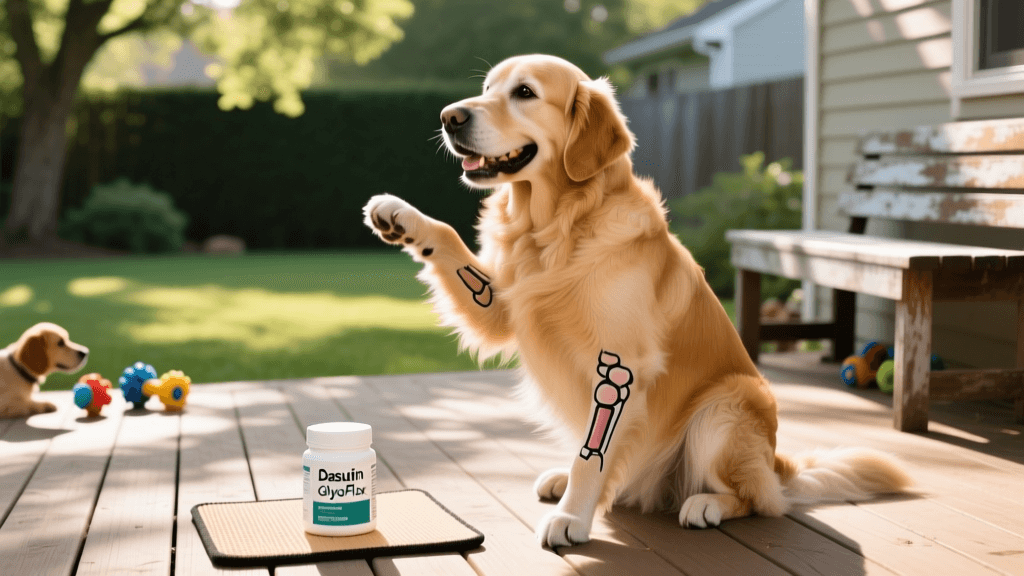
Dasuquin has long been a staple, but the 2026 Advanced formulations incorporating Epiitalis (a patented plant oil extract) and UC-II collagen offer unprecedented joint matrix support. For training purposes, the soft chews are highly palatable and easily broken into smaller pieces, making them an excellent primary reinforcer during low-impact trick shaping. The inclusion of ASU and UC-II means that dogs on this supplement often show improved willingness to perform 'down' and 'settle' cues on hard flooring.
2. VetriScience GlycoFlex Max
Powered by New Zealand Green Lipped Mussel, GlycoFlex Max is a favorite among canine rehabilitation specialists. The high concentration of naturally occurring glycosaminoglycans (GAGs) and omega-3 fatty acids makes it ideal for dogs undergoing hydrotherapy or low-impact obedience training. The chicken-liver flavored bites are highly motivating, which is essential when training senior dogs who may have diminished food drive due to age-related metabolic changes.
3. Zesty Paws Advanced Mobility Bites
For owners seeking a more accessible, daily treat-style supplement, Zesty Paws Advanced Mobility chews feature OptiMSM, glucosamine, and turmeric. While perhaps not as clinically concentrated as prescription-tier nutraceuticals, their high palatability makes them perfect for use directly on the training field. You can easily use these as rapid-fire rewards for stationary tricks like 'touch' or 'speak' without overloading your dog with empty calories.
Low-Impact Trick Training Protocols for Stiff Joints
Once your dog's joint supplement protocol is established (typically requiring 4 to 6 weeks for peak tissue saturation), you can safely introduce mental stimulation exercises. The goal of training an arthritic dog is to induce mental fatigue without causing physical strain. A 10-minute scent work session can tire a senior dog just as effectively as a 3-mile run, without the orthopedic cost.
Protocol 1: Target Training ('Touch')
Target training teaches the dog to touch a specific object (like a target stick or your open palm) with their nose. This is foundational for arthritic dogs because it allows you to guide their movement without using physical pressure or leash corrections.
- Step 1: Present your palm or a target stick near the dog's nose while they are in a comfortable standing or lying position.
- Step 2: The moment they investigate and their nose makes contact, click (or use a verbal marker like 'Yes!') and deliver a piece of their joint supplement chew.
- Step 3: Gradually move the target to encourage slow, deliberate weight shifting. This acts as a gentle, dog-led physiotherapy exercise, improving proprioception and core stability without forcing repetitive sit-stand transitions.
Protocol 2: Modified 'Spin' and 'Weave'
Spinning and weaving through legs are classic tricks that promote spinal flexibility. However, tight circles can torque the hips and knees of a dysplastic dog. In 2026, certified trick dog instructors recommend the 'Modified Arc' approach.
'Never ask a senior dog to complete a full 360-degree spin on a slippery surface. Instead, use a target stick to lure a wide, gentle 180-degree turn, rewarding heavily at the apex of the turn. This maintains spinal mobility while respecting the dog's limited range of motion.' — Canine Mobility and Trick Training Guidelines, 2026
Protocol 3: Scent Work and Nose Games
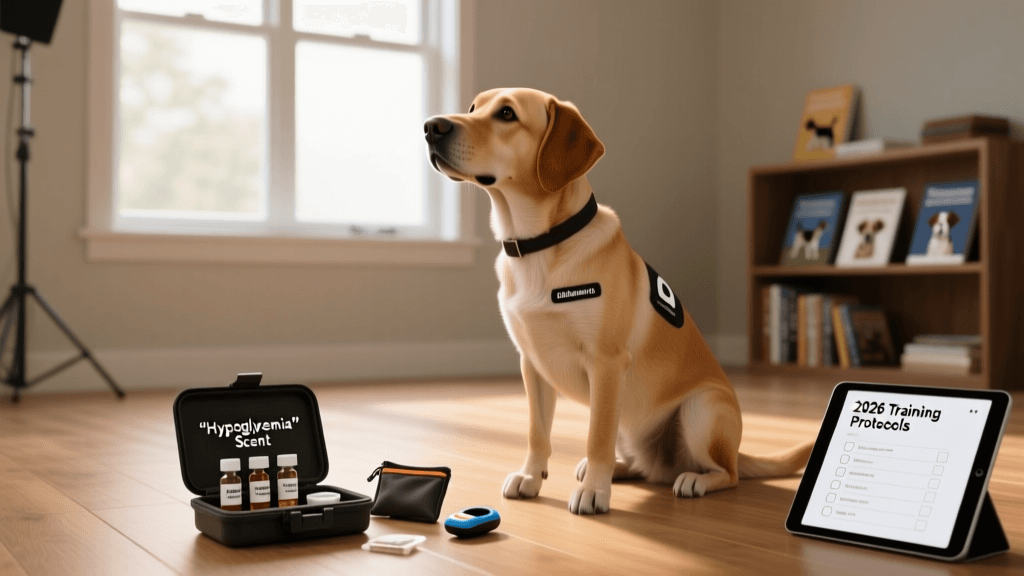
Scent work is the ultimate low-impact training discipline. By hiding high-value treats or specific essential oils (like Birch or Anise) around a room, you force the dog to use their olfactory cortex, which consumes massive amounts of glucose and energy. The dog can perform this entirely at a slow walk or even from a 'settle' position on an orthopedic mat, making it the perfect training outlet for dogs with severe osteoarthritis.
Creating a 2026 Supplement and Training Schedule
Timing is everything. Administering joint supplements and scheduling training sessions in a synergistic manner will yield the best behavioral and physical outcomes. Below is an optimized daily schedule for a senior dog undergoing low-impact trick training.
| Time of Day | Activity | Supplement / Nutrition Integration |
|---|---|---|
| 7:00 AM | Morning Potty & Gentle Sniffari | Administer primary UC-II / Glucosamine dose with breakfast to maximize absorption with dietary fats. |
| 11:00 AM | Target Training & Weight Shifting (10 mins) | Use broken pieces of Green Lipped Mussel chews as high-value training rewards. |
| 2:00 PM | Orthopedic Rest & Passive ROM | Gentle passive range of motion stretches while the dog rests on a supportive memory foam bed. |
| 5:00 PM | Scent Work / Nose Games (15 mins) | Hide kibble or low-calorie treats; save the joint supplement chew for the 'jackpot' final find. |
| 7:00 PM | Dinner & Evening Settle | Administer Omega-3 / ASU evening dose to combat overnight inflammatory cascades. |
Veterinary Insights and Authoritative Guidelines
It is vital to remember that while joint supplements for dogs are powerful tools for enabling training, they are not a replacement for veterinary diagnosis and pain management. According to the American Kennel Club's expert guidelines on canine arthritis, a multi-modal approach that includes weight management, prescription NSAIDs (if necessary), and high-quality nutraceuticals is the most effective way to maintain a dog's quality of life.
Furthermore, researchers at the Texas A&M College of Veterinary Medicine emphasize that early intervention with joint-supporting supplements can delay the progression of osteoarthritis, preserving the dog's ability to engage in obedience and trick training well into their senior years. The U.S. Food and Drug Administration (FDA) also advises pet owners to carefully monitor their dogs when introducing new joint supplements, especially if the dog is already taking prescription arthritis medications, to avoid adverse gastrointestinal interactions.
Conclusion
Training a dog with mobility issues requires empathy, creativity, and a deep understanding of canine biomechanics. By viewing joint supplements for dogs not just as medical interventions, but as foundational tools that unlock your dog's ability to learn and interact, you can transform their golden years. The 2026 landscape of advanced nutraceuticals—featuring UC-II, Green Lipped Mussel, and ASU—provides the physical relief necessary for your dog to focus. Pair these supplements with low-impact tricks like target training and scent work, and you will ensure your senior dog remains mentally sharp, emotionally fulfilled, and physically comfortable for years to come.
priya-sutaria
All our authors care for dogs every day — read more of their work on the authors page.