Adapting Obedience Training for Canine OA Treatment in 2026
Learn how to adapt obedience and trick training for dogs undergoing osteoarthritis (OA) treatment in 2026. Keep your senior dog mentally sharp safely.
The Challenge of Canine OA Treatment and Behavioral Health
Osteoarthritis (OA) affects a significant portion of the aging dog population, as well as younger dogs with joint dysplasia or prior orthopedic injuries. When your veterinarian prescribes a multimodal treatment plan for canine OA in 2026, physical rest and controlled, low-impact movement are usually at the forefront. While advanced therapies like anti-NGF monoclonal antibody injections, regenerative joint therapies, and specialized NSAIDs do wonders for pain management, they do not eliminate the need for joint preservation. This creates a unique behavioral dilemma for dog owners: how do you maintain obedience, prevent boredom, and stop behavioral regression when your dog is on strict exercise restriction?
The answer lies in adapting your training regimen. According to the American Kennel Club's resources on canine osteoarthritis, managing OA requires a delicate balance of weight control, pain management, and appropriate exercise. However, physical rest often leads to mental under-stimulation. A bored dog is prone to destructive chewing, excessive barking, and anxiety. By shifting your training focus from physical exertion to mental fatigue, you can support your dog's medical treatment plan while keeping their brain sharp and engaged.
Modifying Traditional Obedience Commands for Joint Preservation
Traditional obedience training often involves repetitive movements that can exacerbate joint inflammation. In 2026, modern canine rehabilitation experts recommend modifying standard cues to eliminate unnecessary impact on the hips, knees, and shoulders. The goal is to ask for the behavior in a way that prioritizes joint health over speed or precision.
| Command | Traditional Method | OA-Adapted Method | Joint Benefit |
|---|---|---|---|
| Sit | Quick, repetitive sits on hard floors | Slow, single sit on an orthopedic memory-foam mat | Reduces repetitive stifle (knee) flexion and prevents slipping |
| Down | Dropping quickly from a stand | Luring into a 'sphinx' down from a standing position | Minimizes impact on elbows and shoulders |
| Recall (Come) | Running full speed and stopping abruptly at handler | Walking on a loose leash or slow trot to handler | Prevents sudden braking that jars the spine and hindquarters |
| Place (Mat) | Jumping onto an elevated cot or furniture | Stepping onto a low-profile, supportive orthopedic bed | Eliminates vertical joint loading and impact upon landing |
When practicing these modified commands, always use high-value rewards and keep the physical repetitions to a minimum. Ask for one perfect, slow repetition rather than ten rapid ones. This ensures the dog is practicing body awareness and muscle control without grinding compromised cartilage.
Scent Work: The Ultimate Low-Impact Mental Workout
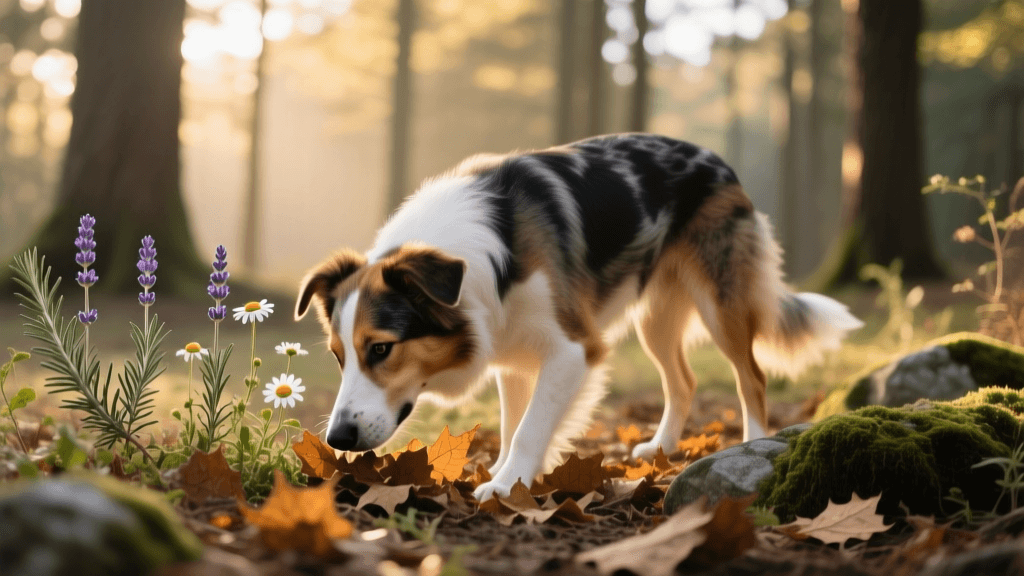
If your dog is on strict crate rest or limited to a small pen due to severe OA flare-ups, scent work is your best training tool. A dog's olfactory system is incredibly complex; the portion of their brain dedicated to analyzing scents is proportionally 40 times greater than ours. Fifteen minutes of intense sniffing can tire a dog out as much as an hour of brisk walking, making it an ideal substitute for physical exercise during OA treatment.
The AKC's guide to Scent Work highlights how this sport is accessible to dogs of all ages and physical abilities. Here is how to set up a low-impact scent game in your living room:
- The Muffin Tin Game: Take a standard baking muffin tin. Place a strong-smelling treat (like a tiny piece of freeze-dried liver) in a few of the cups. Cover all the cups with tennis balls or crumpled paper. Encourage your dog to use their nose to find which cups hide the treats. They only need to nudge the covers with their nose or paw gently.
- Cardboard Box Search: Save your delivery boxes. Scatter 5 to 10 small cardboard boxes across a carpeted room (avoid slippery hardwood floors). Place a treat inside only one or two boxes. Let your dog sniff their way to the prize. This encourages natural foraging behaviors without requiring them to run or jump.
- Essential Oil Targeting: For advanced dogs, introduce a specific target odor like birch or anise essential oil on a cotton swab. Hide the swab in accessible, low-to-the-ground locations and reward heavily when they indicate the source. This builds immense mental focus and confidence.
Target Training for Mobility and Environment Management
Dogs with OA should not be jumping into vehicles, onto grooming tables, or over stairs. Veterinary consensus in 2026 strongly advocates for the use of ramps and step-stools to preserve joint health. However, dogs do not naturally trust ramps. You must train your dog to use them confidently, and 'Target Training' is the most effective method.
Teaching the Hand Touch
Start by teaching your dog to touch their nose to your palm. Hold your hand out, and the moment their nose makes contact, click a clicker or say 'Yes!' and give a treat. Once they reliably touch your hand, you can use this 'hand target' to guide them up a ramp or into a car without ever needing to pull their collar or push their hindquarters, which can cause pain and panic.
Teaching Paw Targets
Place a small, textured mat or a specific rubber pad on the floor. Lure your dog to place just their front paws on the mat and reward. Gradually shape the behavior until they are comfortable stepping all four paws onto the target. This translates perfectly to teaching them to step onto a scale at the vet's office or onto a non-slip ramp for the SUV, ensuring they maintain secure footing and avoid joint-straining slips.
Session Timing, Pacing, and Pain Monitoring
When training a dog undergoing OA treatment, you must become an expert at reading subtle canine body language. A dog in pain will not learn effectively; their cognitive function is overshadowed by discomfort, which can lead to frustration or even defensive reactivity. The American Veterinary Medical Association (AVMA) emphasizes the importance of recognizing age-related and pain-related behavioral changes in senior dogs.
Keep your training sessions incredibly short. Aim for 3 to 5 minutes, two or three times a day, rather than a single 20-minute session. Watch closely for these subtle signs of pain or fatigue during training:
- Excessive panting when the room is not warm
- Lip licking or yawning out of context
- 'Whale eye' (showing the whites of their eyes while turning their head away)
- Reluctance to shift weight or a stiff, guarded posture
- Shaking off as if wet, despite being dry (a common stress/pain reset behavior)
If you observe any of these signals, end the session immediately on a positive note with a simple command your dog knows well, followed by a jackpot reward and a rest period.
Managing Training Treats Within an OA Diet Plan
A critical component of any 2026 canine OA treatment protocol is strict weight management. Excess body weight places exponential stress on compromised joints. Therefore, you cannot use high-calorie commercial training treats during your daily mental stimulation sessions without adjusting your dog's meals.
To solve this, portion out your dog's daily allotment of their prescription joint-support kibble or weight-management diet before the day begins. Use this kibble for the bulk of your training rewards. For 'jackpot' rewards or high-distraction scent work, use single-ingredient, low-calorie options such as dehydrated green beans, small pieces of boiled chicken breast, or commercial low-calorie liver bites. By accounting for every training calorie, you support the medical side of the OA treatment plan while maintaining high motivation during training.
Conclusion
Treating canine osteoarthritis requires a holistic approach that goes beyond medication and supplements. By adapting your obedience training to prioritize joint preservation, introducing mentally exhausting scent work, and utilizing target training for safe mobility, you can dramatically improve your dog's quality of life. In 2026, we understand that a resting body does not mean a resting mind. Keep your dog's brain active, respect their physical boundaries, and watch them thrive despite their OA diagnosis.
beth-carrasco
All our authors care for dogs every day — read more of their work on the authors page.