Understanding Canine Calming Signals: A Holistic Guide 2026
Discover how to read your dog's calming signals using holistic, natural approaches in 2026. Learn to decode body language and reduce stress empathetically.
The Shift Toward Holistic Canine Psychology in 2026
As we navigate the behavioral wellness landscape in 2026, the veterinary and holistic communities have fully embraced a profound shift in how we understand our canine companions. The outdated, dominance-based training paradigms of the past have been entirely replaced by empathetic, science-backed observations of natural canine behavior. At the forefront of this holistic movement is the deep understanding of 'calming signals'—a sophisticated, innate vocabulary that dogs use to navigate their social world, avoid conflict, and manage their own nervous systems. By learning to read and respectfully respond to these signals, dog owners can foster a deeper, more natural bond with their pets while proactively supporting their emotional and psychological well-being.
Understanding your dog from a holistic perspective means looking beyond mere obedience. It requires observing the whole animal: their physical health, their environmental stressors, and their subtle communicative gestures. According to the International Association of Animal Behavior Consultants, modern behavioral therapy heavily relies on recognizing these micro-expressions to prevent chronic anxiety before it escalates into reactive behavior.
What Are Canine Calming Signals?
Calming signals are subtle, often fleeting body language cues that dogs use to communicate peaceful intentions, de-escalate potential conflicts, and self-soothe in stressful situations. First popularized by Norwegian dog trainer Turid Rugaas, the concept has since been validated by modern ethologists and holistic behaviorists. Unlike aggressive posturing or overt fear responses, calming signals are the canine equivalent of a deep, mindful breath or a peaceful gesture of diplomacy.
The Evolutionary Purpose of Conflict Avoidance
In the wild, physical conflict is incredibly costly. Injuries can lead to infection, starvation, or death. Therefore, canines evolved a complex visual language designed specifically to prevent fights before they begin. When your dog displays a calming signal, they are not being 'disobedient' or 'stubborn'; they are actively trying to maintain social harmony and lower the emotional temperature of the room. Recognizing this is the cornerstone of natural, holistic dog care in 2026.
7 Essential Calming Signals Every Holistic Owner Must Recognize
To truly understand your dog, you must become fluent in their subtle gestures. Here are the seven most common calming signals you will observe in daily life:
- 1. Yawning Out of Context: While dogs yawn when tired, a sudden yawn during a veterinary visit, a tense encounter with another dog, or when being scolded is a classic calming signal. It is a physiological attempt to regulate the nervous system and signal non-aggression.
- 2. Lip Licking or Nose Flicking: A quick flick of the tongue over the nose is one of the most common, yet most missed, signals of mild stress. If you are hugging your dog and they repeatedly lick their lips, they are politely asking for space in a natural, non-confrontational way.
- 3. Turning the Head or Body Away: Direct, prolonged eye contact is perceived as a threat in canine culture. If a dog turns their head away from you, another dog, or a camera, they are actively diffusing tension. Holistic trainers encourage owners to mirror this behavior by avoiding direct stares when approaching anxious dogs.
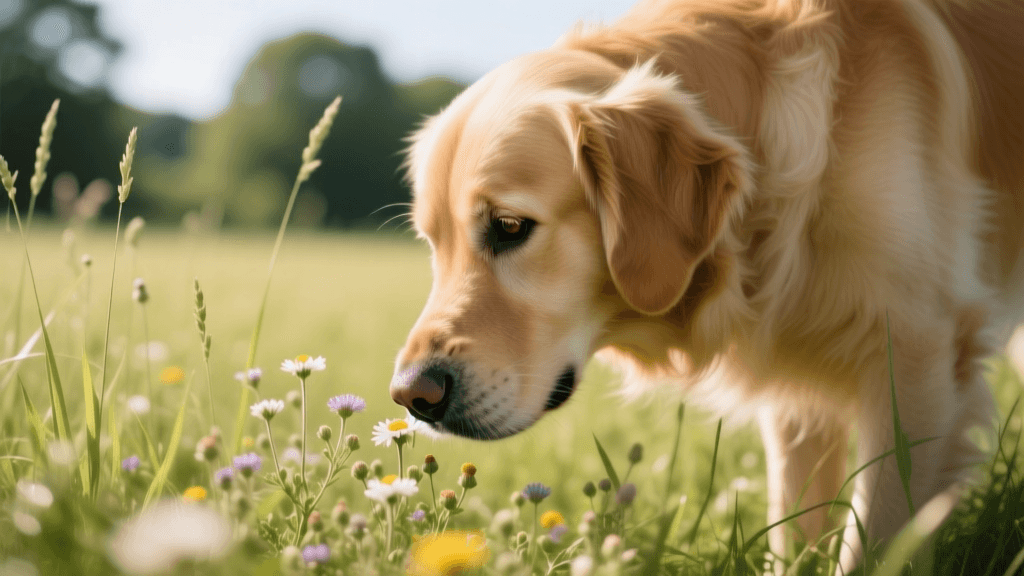
- 4. Ground Sniffing: While sniffing is a primary way dogs gather information, sudden, intense sniffing of the ground when another dog approaches is a deliberate distraction technique. It signals, 'I am busy, I am not a threat, please do not engage aggressively.'
- 5. The Play Bow: The classic front-end-down, rear-end-up posture is an invitation to play, but it also serves as a powerful calming signal. A dog may use a play bow to apologize after a rough interaction or to reassure a nervous canine friend that the overall interaction remains friendly.
- 6. Curving the Approach: Dogs rarely walk in straight lines toward one another, as a direct, head-on approach is inherently confrontational. If your dog walks in a wide arc to greet you or another animal, they are practicing polite, natural canine etiquette.
- 7. Slow Movements and Freezing: Moving slowly or freezing entirely is a way for a dog to project calm energy. If a dog feels overwhelmed by a chaotic household environment, they may move in slow motion to avoid triggering excitement or aggression from those around them.
Decoding the Nuance: Stress Indicators vs. Calming Signals
A critical component of holistic behavioral wellness is distinguishing between a dog who is actively trying to cope (calming signals) and a dog who is becoming overwhelmed (stress indicators). The American Kennel Club's guide on dog body language emphasizes that missing the early calming signals often leads to the more obvious, and harder to manage, stress responses.
| Signal Category | Physical Manifestation | Underlying Emotional State | Holistic Intervention Strategy |
|---|---|---|---|
| Calming Signal | Yawning, lip licking, head turning | Mild stress, attempting to self-soothe and de-escalate | Give the dog space, lower your voice, mirror with a yawn |
| Displacement Behavior | Sudden scratching, sniffing, shaking off | Internal conflict, confusion, or mental fatigue | Redirect with natural scent work or a quiet foraging activity |
| Acute Stress Indicator | Whale eye, pinned ears, tucked tail | High anxiety, fear response, nearing threshold | Immediately remove the trigger, utilize calming pheromones |
| Chronic Stress | Pacing, hyper-vigilance, excessive shedding | Prolonged cortisol elevation, nervous system dysregulation | Implement holistic adaptogens, review diet, increase decompression walks |
How to Respond Holistically to Your Dog's Signals
Understanding your dog's body language is only half the equation; the holistic approach dictates how we respond. In 2026, the focus is on co-regulation—using your own calm energy and natural environmental adjustments to help your dog's nervous system return to baseline.
Mirroring and Environmental Adjustment
When you notice your dog displaying calming signals, the most empathetic response is to acknowledge and respect them. If your dog yawns and turns away during a training session, they are telling you their brain is full. A holistic response involves immediately ending the session, offering a gentle, non-invasive praise, and allowing the dog to decompress. You can also 'mirror' their signals; if a nervous dog is approaching you, turn your body slightly sideways, avert your gaze, and breathe deeply. This mimics natural canine diplomacy and tells the dog, in their own language, that you are safe.
Natural Adaptogens and Somatic Support
For dogs who frequently exhibit stress indicators that follow ignored calming signals, holistic practitioners in 2026 often recommend natural somatic support. Before considering pharmaceutical interventions, many owners turn to species-appropriate adaptogens. Formulations containing L-theanine (naturally found in green tea), organic chamomile, and hemp-derived broad-spectrum CBD have been shown to support the canine endocannabinoid system and promote a natural sense of calm. Additionally, somatic therapies like canine acupressure—specifically targeting the Yin Tang point between the eyes—can physically help a dog down-regulate from a stressful event.
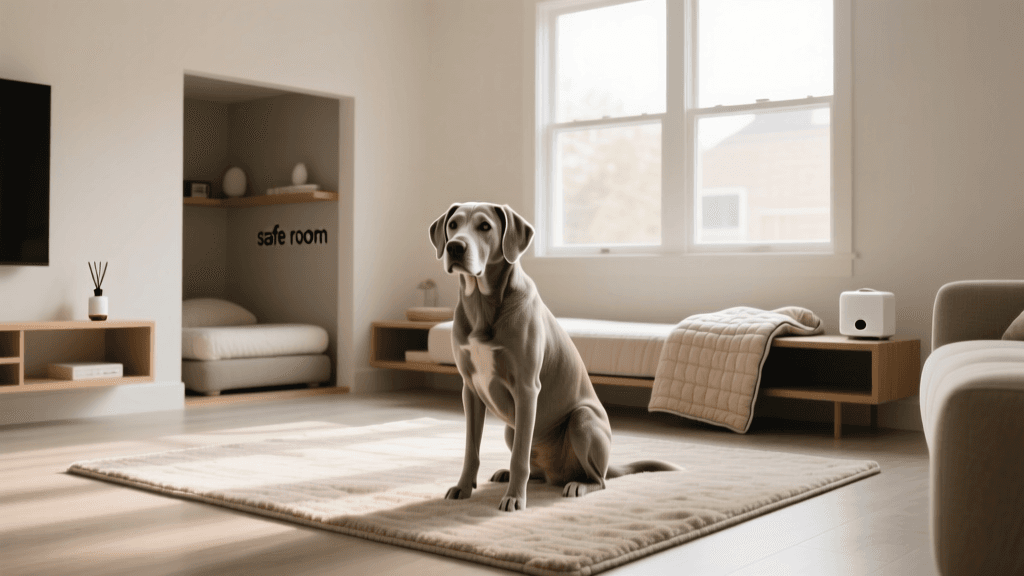
Creating a Low-Stress, Species-Appropriate Environment
A holistic understanding of your dog extends to the environment you provide. Chronic stress often stems from an environment that ignores a dog's natural instincts. The ASPCA's resources on common dog behavior issues highlight that many behavioral problems are simply natural behaviors expressed in inappropriate contexts due to environmental frustration.
To support your dog's psychological health, integrate natural enrichment into their daily routine. Replace sterile, repetitive walks with 'sniffaris'—unstructured walks where the dog is allowed to dictate the pace and engage in deep, natural ground-sniffing. Sniffing lowers a dog's heart rate and engages their parasympathetic nervous system. Furthermore, utilizing natural foraging tools, such as snuffle mats or scattered feeding in the yard, satisfies their innate scavenging instincts, providing deep mental fatigue that physical exercise alone cannot achieve.
Conclusion: The Power of Empathetic Observation
Embracing a natural and holistic approach to understanding your dog in 2026 means becoming a student of their silent language. By recognizing and respecting calming signals, we validate our dogs' feelings and build a foundation of profound trust. When we stop demanding blind compliance and start engaging in a two-way, species-appropriate conversation, we unlock a level of companionship that is deeply rewarding, naturally balanced, and entirely rooted in mutual respect.
priya-sutaria
All our authors care for dogs every day — read more of their work on the authors page.