Natural Scent-Work Conditioning For Reactive Dogs 2026
Discover holistic birch scent-work conditioning techniques to calm reactive dogs in 2026. Learn natural focus exercises, setup tips, and expert routines.
The Rise of Holistic Behavioral Conditioning in 2026
As we navigate the landscape of canine behavioral science in 2026, the dog training community is experiencing a profound paradigm shift. For decades, traditional obedience training relied heavily on high-arousal food luring, dominance-based corrections, and repetitive physical conditioning. While these methods yield surface-level compliance, they often fail to address the underlying neurological state of the dog, particularly in reactive, anxious, or fear-aggressive breeds. Today, holistic and natural approaches prioritize nervous system regulation over blind obedience. At the forefront of this movement is natural scent-work conditioning—a powerful, low-stress methodology that leverages a dog's most dominant sensory organ to bypass the amygdala's fight-or-flight response and foster deep, intrinsic focus.
Reactive dogs are not inherently 'bad' or 'stubborn'; they are often trapped in a state of chronic sympathetic nervous system arousal. When a dog spots a trigger—be it another dog, a loud vehicle, or an unfamiliar stranger—their cognitive brain shuts down, making traditional treat-based recall or 'sit-stay' commands virtually impossible. Holistic scent-work changes the neurological channel. By engaging the olfactory bulb, which has direct neural pathways to the limbic system, we can naturally lower the dog's heart rate, reduce cortisol levels, and bring them back into a state of parasympathetic calm. This allows the dog to process information, make choices, and ultimately learn without the pressure of high-stakes food rewards or physical corrections.
The Science of Olfactory Regulation
A dog's olfactory cortex is proportionally forty times larger than a human's, and the act of sniffing is inherently self-soothing. When a dog engages in deep, sustained sniffing, their heart rate can drop by up to twenty percent within minutes. According to the American Kennel Club's Scent Work program, scent-based activities provide immense mental stimulation that equates to miles of physical running, but without the joint impact or the adrenaline spike associated with high-drive sports like agility or flyball.
For reactive dogs, the environment is a mineyard of visual and auditory triggers. Scent-work shifts the dog's primary sensory input from vision (which often triggers reactivity) to olfaction (which promotes investigation and calm). The National Association of Canine Scent Work (NACSW) has long championed the idea that scent-work is a 'thinking dog's sport,' requiring the animal to process complex environmental data independently. In 2026, holistic behaviorists are adapting these competitive frameworks into therapeutic conditioning protocols specifically designed for leash-reactive and anxiety-prone dogs.
Choosing Natural, Dog-Safe Scents
In the pursuit of a truly holistic methodology, the materials we use must be as natural and non-toxic as possible. While competitive scent-work often utilizes concentrated essential oils applied to cotton swabs, holistic behaviorists in 2026 are moving away from concentrated oils due to the risk of olfactory fatigue and respiratory irritation in sensitive dogs. Instead, we utilize natural botanical hydrosols, dried organic herbs, and raw bark.
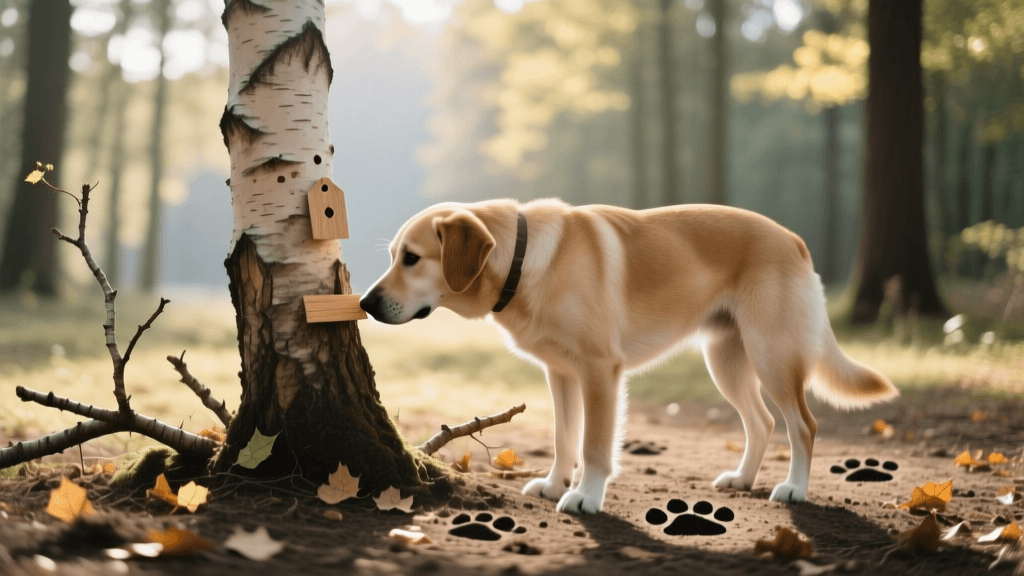
- Organic Birch Bark: The gold standard for foundational scent imprinting. Birch has a naturally sweet, complex profile that is highly detectable but gentle on the canine respiratory tract.
- Dried Anise Seed: Often used as a secondary scent, anise provides a sharp, distinct odor that cuts through environmental 'noise' like urban pollution or damp earth.
- Chamomile and Lavender Hydrosols: While not primary target scents for searching, spraying these calming hydrosols on the training perimeter creates a holistic 'scent bubble' that signals to the dog's limbic system that the environment is safe.
Step-by-Step Holistic Scent Imprinting Protocol
To successfully transition a reactive dog from a state of environmental panic to focused scent-work, we must build the behavior in low-stress, controlled environments before ever attempting it near a trigger. This six-week protocol forms the foundation of natural behavioral conditioning.
Phase 1: Scent Association (Weeks 1-2)
Begin in a quiet, familiar room in your home. Place a small piece of organic birch bark inside a ventilated metal tin. Hold the tin in your hand and allow your dog to investigate. The moment the dog's nose touches or hovers near the tin, mark the behavior with a calm, low-pitched 'yes' and offer a low-value, natural reward, such as a piece of freeze-dried beef lung. The goal is not to create frantic excitement, but to build a quiet, sustained association between the birch odor and a positive outcome. Repeat this in short, three-minute sessions twice daily.
Phase 2: The Natural Foraging Box (Weeks 3-4)
Once the dog reliably targets the birch tin, introduce environmental complexity using a natural foraging box. Take a shallow cardboard box and fill it with unbleached hemp shreds, dried oak leaves, or crumpled parchment paper. Hide the birch tin beneath the natural debris. Allow the dog to use their nose to part the material and locate the source. This phase mimics natural foraging behaviors, engaging the dog's innate prey-sequence in a controlled, non-reactive manner. If the dog becomes frustrated, gently toss a few pieces of kibble into the box to encourage them to re-engage their nose.
Phase 3: Environmental Generalization (Weeks 5-6)
Move the foraging box to different areas of your home, then to a fenced backyard, and eventually to a quiet, enclosed outdoor space. Hide the birch tin on low-level natural objects: a tree stump, a patio chair leg, or a rock. As the dog learns to search the environment for the scent, you will notice a physical transformation. The dog's posture will lower, their tail will adopt a relaxed, sweeping wag, and their breathing will deepen. Low-stress handling and nervous system regulation, championed by organizations like Fear Free Pets, are now foundational to this phase, ensuring the dog never feels pressured to perform.
Traditional Treat Training vs. Holistic Scent Conditioning
Understanding the difference between conventional methods and natural conditioning is vital for owners of reactive breeds. Below is a comparison of how these two paradigms address a dog's focus in a distracting environment.
| Feature | Traditional High-Value Treat Luring | Holistic Scent-Work Conditioning |
|---|---|---|
| Primary Motivator | Food drive and hunger | Olfactory curiosity and natural foraging instinct |
| Nervous System State | High arousal, sympathetic spike | Low arousal, parasympathetic regulation |
| Reaction to Triggers | Dog may ignore food if fear outweighs hunger | Sniffing naturally lowers cortisol, reducing fear response |
| Physical Impact | Can lead to weight gain or gastrointestinal upset | Mental fatigue without physical joint stress or caloric surplus |
| Long-Term Focus | Relies on constant external bribery | Builds intrinsic confidence and environmental resilience |
Recognizing Calming Signals During Olfactory Work
A core tenet of holistic training in 2026 is the ability to read and respect canine body language, specifically 'calming signals.' Coined by Norwegian dog trainer Turid Rugaas, calming signals are subtle physical cues dogs use to de-escalate stress and communicate peaceful intentions. During scent-work conditioning, you must actively monitor your dog for these signals to ensure the training remains therapeutic rather than stressful.
Common calming signals to observe include:
- Lip Licking and Yawning: If your dog repeatedly yawns or licks their lips while searching, it indicates mild cognitive overload or environmental stress. Lower the difficulty of the hide and allow the dog to rest.
- Whale Eye: Showing the whites of the eyes while keeping the head turned away signals anxiety. Increase the distance from any perceived triggers and return to a simpler, familiar scent box.
- Ground Sniffing: While sniffing is the goal, sudden, frantic ground-sniffing that ignores the target scent is often a displacement behavior indicating the dog feels pressured. Step back, breathe deeply yourself, and reset the exercise.
Synergizing Scent-Work with Holistic Nutrition
True holistic conditioning extends beyond the training field and into the dog's gut-brain axis. In 2026, veterinary nutritionists heavily emphasize the role of the microbiome in behavioral regulation. A reactive dog's nervous system cannot fully benefit from scent-work therapy if their gut is inflamed by highly processed, carbohydrate-heavy kibble.
To support your dog's olfactory conditioning, consider integrating natural, brain-supporting supplements into their daily routine. Foods rich in L-theanine, such as organic green tea extracts formulated for canines, promote alpha-brain waves associated with relaxed alertness. Additionally, offering fermented raw goat milk or kefir provides natural probiotics that support serotonin production in the gut. When a dog's internal biology is balanced, their capacity to engage in deep, focused scent-work increases exponentially, accelerating the rehabilitation of reactive behaviors.
Conclusion: Patience and the Power of the Nose
Holistic scent-work conditioning is not a quick fix; it is a profound lifestyle shift that honors your dog's natural biology. By replacing high-pressure treat luring with the soothing, intrinsic power of the nose, you provide your reactive dog with a coping mechanism that they can rely on for a lifetime. As you move through 2026 and beyond, remember that the goal of natural training is not to create a robotic, compliant pet, but to nurture a confident, emotionally regulated companion who can navigate the world with a calm mind and a busy nose.
aaron-whyte
All our authors care for dogs every day — read more of their work on the authors page.