Guide to Training Deep Pressure Therapy for PSDs 2026
Learn how to train deep pressure therapy for psychiatric service dogs in 2026 with step-by-step shaping techniques, gear recommendations, and safety tips.
Understanding Deep Pressure Therapy (DPT) in 2026
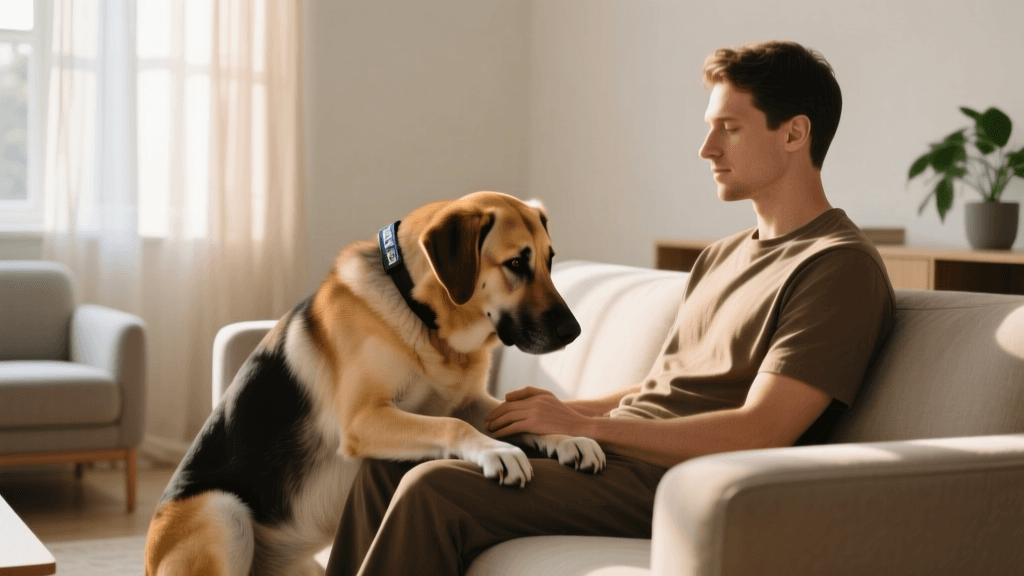
Deep Pressure Therapy (DPT) is a cornerstone task for Psychiatric Service Dogs (PSDs). Unlike emotional support animals, which provide comfort merely by their presence, PSDs must be trained to perform specific tasks that mitigate their handler's disability. DPT involves the dog using its body weight to apply firm, even pressure across the handler's lap, chest, or shoulders. This proprioceptive input stimulates the vagus nerve, helping to lower heart rate, reduce cortisol levels, and ground the handler during episodes of severe anxiety, panic attacks, or dissociation.
As of 2026, the training methodologies for DPT have evolved significantly. Trainers now heavily emphasize cognitive shaping over physical luring, ensuring the dog understands the task as a problem-solving behavior rather than a simple trick. Furthermore, the integration of biometric technology has revolutionized how handlers and trainers monitor the welfare and stress levels of working dogs during intense psychiatric episodes.
Essential Gear and Biometric Integration for 2026
Before beginning DPT training, it is crucial to equip your dog with the right gear. The physical act of applying pressure requires a harness that does not restrict the dog's shoulder movement or cause chafing during prolonged holds.
Recommended Harnesses
The Julius-K9 IDC Powerharness remains a top choice in 2026 due to its ergonomic chest strap and customizable patches. However, for dogs that need more structural support when leaning into a handler, the Ruffwear Web Master Pro with its integrated, reinforced handle provides excellent balance. Expect to invest between $80 and $130 for a high-quality, service-grade harness. Avoid standard walking harnesses, as they often lack the padding required for the dog to comfortably bear weight against a human body.
Biometric Smart Collars
One of the most exciting advancements in 2026 is the use of biometric smart collars, such as the latest Fi Series 4 or Whistle Health GO models. These collars track Heart Rate Variability (HRV) and resting respiratory rates. When training a PSD, monitoring the dog's HRV is critical. If a dog's HRV drops significantly during a simulated panic attack scenario, it indicates the dog is absorbing the handler's stress. Trainers use this data to adjust the duration of DPT sessions, ensuring the dog's mental welfare is protected. According to Assistance Dogs International (ADI), safeguarding the working dog's psychological health is just as important as the handler's.
Step-by-Step Shaping Protocol for DPT
Training DPT requires patience. The goal is to shape the behavior so the dog willingly offers the pressure and maintains it until released. We break this down into four distinct phases.
Phase 1: Targeting the Lap and Chest
Start with the handler seated in a sturdy chair. Place a familiar mat or target pad on the handler's lap. Use a clicker or a verbal marker ("Yes!") to reward the dog for simply looking at the mat, then for stepping one paw onto it, and finally for sitting on it. Once the dog reliably sits on the lap mat, fade the mat out so the dog is sitting directly on the handler's lap. Reward heavily for calm, settled behavior.
Phase 2: Shaping the "Chin Rest" and "Heavy" Cue
Once the dog is comfortable sitting on the lap, wait for the dog to naturally lower its head. The moment the chin touches the handler's chest or arm, mark and reward. Gradually shape this into a sustained "chin rest." Once the dog reliably rests its head, introduce the verbal cue "Heavy" or "Pressure." When the dog leans its body weight into the handler, mark and reward. The key here is to reward the exhalation and the physical relaxation of the dog's muscles, not just the physical position.
Phase 3: Building Duration and Fading the Lure
Begin extending the time between the marker and the reward. Start with three seconds of sustained pressure, then five, then ten. If the dog breaks position, simply reset without marking. In 2026, modern positive reinforcement protocols dictate that we never physically force the dog down or use leash pressure to keep them in place. The dog must choose to apply the pressure. Use high-value, low-calorie rewards like freeze-dried beef liver to maintain motivation without causing gastrointestinal upset during long sessions.
Phase 4: Positional Generalization
A PSD must be able to perform DPT in various environments and positions. Once the dog masters the task in a chair, move to the floor (handler sitting cross-legged), then to a bed (handler lying down), and eventually to public seating like booths or waiting room chairs. Each new position requires a mini-shaping process, as the dog must figure out the new geometry of applying pressure.
DPT Training Milestones and Timelines
Every dog learns at a different pace, but the following table outlines a standard timeline for a dog with a solid foundational obedience background.
| Training Phase | Estimated Timeline | Primary Objective | Success Metric |
|---|---|---|---|
| Phase 1: Targeting | Weeks 1-2 | Dog willingly climbs onto handler's lap/chest in a seated position. | 80% success rate on first verbal cue in a quiet room. |
| Phase 2: Shaping Pressure | Weeks 3-5 | Dog applies noticeable body weight and rests chin upon hearing "Heavy". | Dog leans into handler without physical prompting or luring. |
| Phase 3: Duration | Weeks 6-10 | Dog maintains DPT for 3 to 5 minutes continuously. | Dog remains relaxed (soft eyes, normal breathing) for the full duration. |
| Phase 4: Generalization | Months 3-6 | Dog performs DPT in public, on the floor, and in bed. | Successful deployment in 3 novel public environments with high distractions. |
Troubleshooting Common DPT Challenges
Even with meticulous shaping, handlers may encounter hurdles. Here is how to address the most common issues seen in PSD training programs today.
- The Dog Falls Asleep: It is common for dogs to find DPT so relaxing that they nap. While a sleeping dog provides weight, a sleeping dog cannot monitor the handler's environment or respond to a release cue. If your dog falls asleep, gently wake them, give a quick reward, and practice shorter durations (e.g., 2 minutes instead of 10) to keep them cognitively engaged.
- The Dog is Too Small: Breeds like Cavalier King Charles Spaniels or miniature poodles can still perform DPT, but they cannot cover the entire lap. Modify the task so the dog stands on the handler's chest while the handler is reclined, or rests across the handler's neck and shoulders. Always ensure the dog's spine is supported and they are not balancing precariously.
- Anticipation and Breaking Early: If the dog breaks the "Heavy" cue before the release word, you may be pushing duration too quickly. Drop back to a duration where the dog succeeds 90% of the time, and implement a variable reinforcement schedule (rewarding at 10 seconds, then 45 seconds, then 20 seconds) to build resilience.
Public Access, Welfare, and Legal Considerations
When taking a PSD trained in DPT into public spaces, handlers must be aware of the legal framework governing service animals. Under the Americans with Disabilities Act (ADA), a service dog is defined as a dog individually trained to do work or perform tasks for a person with a disability. DPT qualifies as a legitimate task because it requires specific training to mitigate psychiatric symptoms. However, staff at public facilities are only legally permitted to ask two questions: if the dog is required because of a disability, and what specific task the dog has been trained to perform.
"The welfare of the assistance dog must be paramount. Dogs should not be subjected to situations that cause them undue stress, and handlers must be trained to recognize signs of fatigue or anxiety in their dogs." — Assistance Dogs International (ADI) Guidelines
Furthermore, the American Kennel Club (AKC) emphasizes that public access training should only begin once the dog has achieved reliable task performance in low-distraction environments. Attempting DPT in a crowded airport or a noisy restaurant before the dog has fully generalized the behavior can lead to task failure and public access violations. Always prioritize the dog's mental health, utilize biometric data to monitor stress, and ensure your PSD remains a confident, willing partner in your daily life.
jonas-cole
All our authors care for dogs every day — read more of their work on the authors page.