Herding vs. Retriever Breeds: The Ultimate Training Guide
Discover how herding and retriever breeds compare in trainability. Learn selection tips, training timelines, and gear costs for your next active dog.
Selecting the Right Dog: Why Breed Dictates Training Success
When prospective dog owners browse shelters or breeder listings, they often select a puppy based on appearance or a fleeting emotional connection. However, as any professional dog trainer will tell you, behavioral conditioning and obedience training are deeply rooted in a dog's genetic blueprint. If you are an active owner looking for a highly trainable companion, you have likely narrowed your selection down to two primary groups: the Herding Group and the Sporting Group (specifically retrievers). While both groups boast high intelligence, their underlying drives, learning styles, and environmental triggers are vastly different.
Understanding these differences is critical before you invest hundreds of dollars and thousands of hours into obedience training. In this comprehensive guide, we will compare the trainability of herding breeds versus retriever breeds, providing actionable timelines, gear recommendations, and behavioral conditioning strategies to help you make the right selection for your lifestyle.
The Core Drive: Gathering vs. Fetching
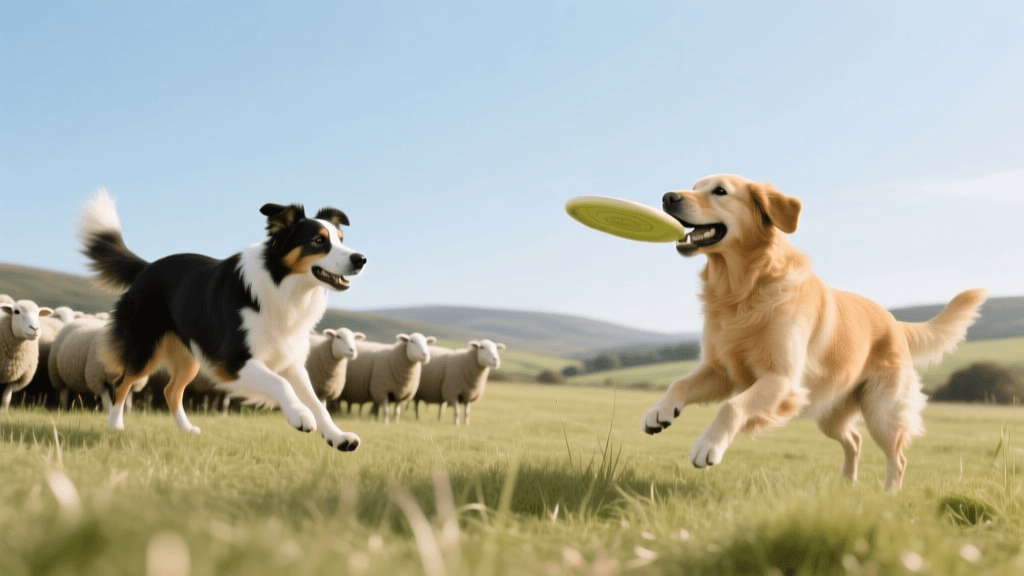
To train a dog effectively, you must speak their genetic language. The AKC Herding Group includes breeds like the Border Collie, Australian Shepherd, and Shetland Sheepdog. These dogs were bred to gather, hold, and move livestock in partnership with a human handler. Consequently, their training hallmark is intense handler focus, visual sensitivity, and a desire for complex problem-solving.
On the other hand, retrievers like the Labrador Retriever and Golden Retriever belong to the AKC Sporting Group. They were bred to flush and retrieve waterfowl, requiring a 'soft mouth', high biddability, and an eagerness to work closely with humans but with slightly more independent scanning of the environment. While a herding dog watches your hands and eyes for micro-movements, a retriever is often scanning the horizon for a dropped toy or a bird.
Trainability Comparison Chart
Below is a structured comparison of how these two breed groups typically respond to foundational training and behavioral conditioning.
| Trait | Herding Breeds (e.g., Border Collie, Aussie) | Retriever Breeds (e.g., Lab, Golden) |
|---|---|---|
| Primary Motivation | Movement, handler praise, complex tasks | Food, retrieving toys, physical affection |
| Focus Level | Intense, sustained eye contact | High, but easily distracted by scents/sounds |
| Learning Speed | Extremely fast (learns bad habits quickly too) | Fast, but requires more repetition for proofing |
| Common Behavioral Quirks | Nipping at heels, car chasing, shadow staring | Mouthing, jumping, counter-surfing |
| Best Training Style | Shaping, agility, trick training, mental fatigue | Lure-reward, fetch-based conditioning, scent work |
Obedience Training Timelines & Milestones
Whether you choose a herder or a retriever, the timeline for early behavioral conditioning remains relatively consistent, though the methods will diverge.
8 to 12 Weeks: Foundation and Bite Inhibition
At this stage, the focus is on socialization, house training, and bite inhibition. Retriever puppies are notoriously mouthy due to their breeding history of carrying game. You must redirect this behavior using a firm rubber toy like the Kong Classic ($15). Herding puppies, conversely, may exhibit early heel-nipping. If your herder nips at your ankles, immediately stop moving and become a 'tree.' Movement rewards the herding instinct. Enroll in a puppy kindergarten class, which typically costs between $100 and $150 for a 6-week course.
3 to 6 Months: Basic Obedience and Impulse Control
This is the critical window for teaching sit, stay, down, and recall. According to ASPCA training guidelines, keeping sessions short (5 to 10 minutes) prevents mental burnout. For retrievers, impulse control is vital; practice the 'leave it' command using high-value treats like Zuke's Mini Naturals ($7 per 6oz bag). For herding breeds, introduce a flirt pole (approx. $25 to $40) to safely satisfy their prey drive and teach an 'out' or 'drop' command before they begin chasing neighborhood cats or cars.
6 to 12 Months: Advanced Proofing and Adolescence
Adolescence brings a surge of hormones and testing of boundaries. Retrievers may experience a sudden spike in environmental distraction, requiring you to upgrade from a standard 6-foot leash to a 15-foot biothane long-line ($35) to safely proof their recall in open fields. Herding dogs may develop fear-based reactivity toward moving objects like skateboards or bicycles. Counter-conditioning is required here: feed high-value chicken breast every time a skateboard passes at a distance of 50 feet, gradually decreasing the distance over several weeks.
Essential Training Gear & Costs
Selecting the right equipment can drastically reduce your training timeline. Here is a curated list of gear tailored to the specific drives of herding and retrieving breeds:
- Rabbitgoo No-Pull Harness ($25): Excellent for retrievers who tend to forge ahead on walks. The front-clip attachment gently redirects their chest back toward you without causing tracheal damage.
- Herm Sprenger Ultra Plus Prong Collar ($35): Note: Only for experienced handlers and dogs over 6 months. Useful for high-drive herding dogs that ignore flat collars when triggered by fast-moving livestock or wildlife. Must be fitted high on the neck, just behind the ears.
- Chuckit! Ultra Ball Launcher ($45): A non-negotiable tool for retriever owners. It allows you to launch balls up to 140 feet, providing the deep aerobic fatigue that a simple neighborhood walk cannot achieve.
- Snuffle Mat ($30): Ideal for herding breeds. Since herders require intense mental stimulation, hiding kibble in a snuffle mat forces them to use their noses and problem-solving skills, burning as much energy as a two-mile run.
Socialization Techniques by Breed Group
'A well-socialized dog is not just a dog that has met many people; it is a dog that has learned how to remain neutral in the presence of novel stimuli.'
Socialization looks different depending on your breed selection. For herding dogs, environmental neutrality is the ultimate goal. Because they are visually stimulated, you must expose them to erratic movements. Visit outdoor cafes where people are waving their arms, or stand at a safe distance from a local park where children are playing tag. Reward your herder for maintaining a relaxed, 'soft' eye rather than a hard, locked stare.
For retrievers, socialization must focus on greeting manners. Because they are inherently social and physically demonstrative, they often jump on guests. Implement the 'four on the floor' rule: guests are only allowed to pet the dog when all four paws are touching the ground. If the retriever jumps, the guest must immediately cross their arms and look at the ceiling, withdrawing all social attention until the dog sits.
Final Verdict: Which Breed Should You Select?
If your definition of training involves intricate trick routines, agility courses, and a dog that watches your every breath, a herding breed is an unparalleled choice. However, they require a handler who is committed to providing rigorous daily mental stimulation to prevent neurotic behaviors.
If you prefer a dog that excels at traditional obedience, therapy work, and retrieving games, and you want a slightly more forgiving dog that shakes off mistakes easily, a retriever is the superior selection. By aligning your training expectations with the genetic realities of the breed, you set the stage for a harmonious, lifelong partnership.
marcus-aldridge
All our authors care for dogs every day — read more of their work on the authors page.