Expert Behavior Analysis: Curing Dog Leash Reactivity
Discover expert behavior analysis techniques to cure leash reactivity. Learn desensitization, threshold management, and counterconditioning protocols.

The Neurobiology and Behavior Analysis of Leash Reactivity
Leash reactivity is one of the most pervasive and frustrating behavioral challenges faced by modern dog owners. From an expert behavior analysis perspective, reactivity is not a symptom of a 'bad' or 'stubborn' dog, but rather a maladaptive emotional and behavioral response to environmental stimuli. When a dog lunges, barks, or snaps at the end of a leash, they are exhibiting a sympathetic nervous system arousal—commonly known as the fight-or-flight response. According to the American Veterinary Society of Animal Behavior (AVSAB), reward-based, force-free methods are the only scientifically validated approaches for modifying these deep-seated emotional responses. Punitive measures, such as leash corrections or shock collars, merely suppress the outward behavior without addressing the underlying emotional state, often leading to behavioral fallout and increased aggression.
Deconstructing the ABCs of Reactivity
In Applied Behavior Analysis (ABA), we evaluate behavior through the three-term contingency: Antecedent, Behavior, and Consequence (the ABCs). For a reactive dog, the Antecedent is the appearance of a trigger (e.g., an unfamiliar dog at 30 feet). The Behavior is the lunging and barking. The Consequence is often the removal of the trigger (the other dog walks away) or the owner dragging the reactive dog away. In operant conditioning terms, the dog's lunging is negatively reinforced because the aversive stimulus (the scary dog) increases in distance. To change this, we must alter the antecedent environment and systematically change the consequence using classical and operant conditioning protocols.
Establishing Baselines: Thresholds and Trigger Stacking
A cornerstone of behavioral modification is identifying the dog's 'threshold.' The threshold is the exact distance or intensity at which a trigger causes the dog to transition from a calm, thinking state (parasympathetic nervous system) to an aroused, reactive state (sympathetic nervous system). Training must exclusively occur sub-threshold. If your dog is over-threshold, the amygdala has hijacked the brain, and learning is neurologically impossible.
It is vital to distinguish between habituation and systematic desensitization. Habituation occurs when a dog is repeatedly exposed to a trigger at full intensity until they simply 'give up' reacting—a state known as learned helplessness. This floods the dog with stress hormones and damages their psychological well-being. True desensitization, conversely, involves gradual, controlled exposure that keeps the dog comfortably under threshold, allowing the nervous system to process the stimulus without triggering an adrenaline dump.
Furthermore, behaviorists must account for 'trigger stacking.' This phenomenon occurs when multiple sub-threshold stimuli accumulate, causing a spike in cortisol and adrenaline. A dog might ignore a bicycle, ignore a loud truck, but when a third trigger (a loose dog) appears, the cumulative stress pushes the dog over-threshold, resulting in an explosive reaction.
Essential Behavior Modification Equipment
Setting up for success requires precise equipment that facilitates rapid reinforcement without causing physical harm. Total startup costs for a professional-grade behavior modification kit are approximately $75 to $90. Essential items include:
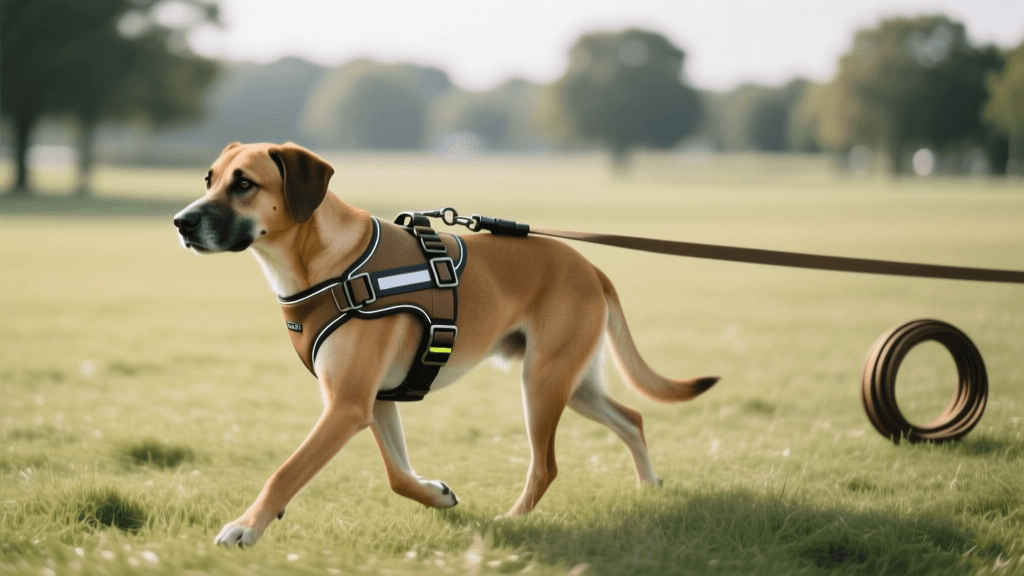
- Ruffwear Front Range Harness ($39.95): A dual-clip harness that provides chest-level steering without putting pressure on the trachea.
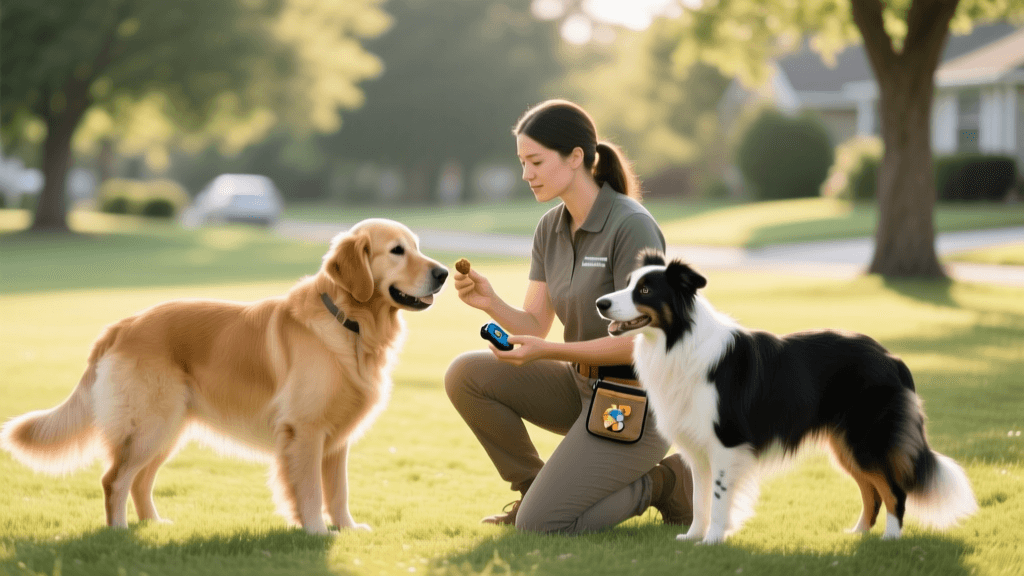
- Mighty Paw Leather Treat Pouch ($24.99): A wide-mouth pouch that allows for sub-second treat retrieval, which is critical for marking precise moments of disengagement.
- Zuke's Mini Naturals ($6.99 per bag): Low-calorie, high-value treats that can be consumed in under one second, preventing satiation and maintaining the dog's motivation.
- The i-Click Clicker by Karen Pryor ($3.99): A mechanical marker that provides a consistent, emotionally neutral sound to bridge the gap between behavior and reward.
The Engage-Disengage Protocol (D/CC)
The gold standard for treating leash reactivity is the Desensitization and Counterconditioning (D/CC) protocol, specifically utilizing the 'Engage-Disengage' game. This protocol leverages both classical conditioning (changing the emotional response to the trigger) and operant conditioning (reinforcing an alternative, incompatible behavior).
Step 1: Engage. While sub-threshold, the dog notices the trigger. The handler marks this exact moment of orientation with a click or a verbal marker ('Yes!') within 0.3 to 0.5 seconds.
Step 2: Disengage. The dog turns their head away from the trigger to look at the handler. If the dog fails to disengage within three seconds, the handler has made an error in antecedent arrangement—meaning the dog is too close to the trigger and is over-threshold. The handler must silently increase the distance without offering verbal corrections, as corrections only add to the environmental stress and validate the dog's fear response.
Step 3: Reinforce. The handler delivers a high-value treat directly to the dog's mouth. Over time, the dog's neurological pathway shifts. The antecedent (seeing a dog) no longer predicts a threat; it predicts a high-value reward, and the default behavior becomes orienting to the handler rather than lunging.
Data Table: Tracking Behavioral Metrics
Data collection is what separates amateur training from expert behavior analysis. Tracking latency (the time it takes for the dog to disengage) and arousal levels allows the handler to objectively measure progress and adjust distances accordingly. Below is a sample behavioral tracking chart used in clinical settings.
| Session Date | Trigger Type | Distance (ft) | Arousal (1-10) | Latency to Orient (sec) | Consequence Delivered |
|---|---|---|---|---|---|
| Oct 12 | Unfamiliar Dog | 45 | 3 | 2.5 | Boiled Chicken |
| Oct 14 | Unfamiliar Dog | 40 | 4 | 1.8 | Boiled Chicken |
| Oct 16 | Jogger | 25 | 5 | 3.2 | Freeze-dried Liver |
| Oct 19 | Unfamiliar Dog | 35 | 4 | 1.2 | Boiled Chicken |
Navigating Extinction Bursts and Spontaneous Recovery
As you implement the Engage-Disengage protocol and stop reinforcing the old reactive behavior (by preventing the dog from successfully driving triggers away via lunging), you may encounter an 'extinction burst.' An extinction burst is a sudden, temporary increase in the frequency, duration, or intensity of a behavior when the expected reinforcement is withheld. A dog that usually barks three times might suddenly bark ten times and pull harder on the harness.
The Positively Dog Training network emphasizes that handlers must not reinforce this burst by retreating in a panic. Instead, increase the distance immediately to drop the dog back under threshold, wait for a moment of calm, and resume the D/CC protocol. Yielding to an extinction burst teaches the dog that a higher magnitude of reactivity is required to achieve the desired consequence. Furthermore, handlers should be prepared for 'spontaneous recovery,' where a previously extinguished behavior briefly reappears after a period of rest. This is a normal part of the neurological rewiring process and should be met with calm, consistent management.
Expert Conclusions
Curing leash reactivity is not an overnight endeavor; it requires systematic data collection, emotional regulation from the handler, and strict adherence to sub-threshold exposure. By understanding the ABCs of behavior, managing trigger stacking, and utilizing precise mechanical markers, owners can rewire their dog's emotional responses. The ASPCA notes that consistent, reward-based behavior modification significantly improves the welfare of reactive dogs and the bond they share with their owners. Patience, precise timing, and high-value reinforcement are the ultimate tools in the behavior analyst's arsenal.
anouk-beaumont
All our authors care for dogs every day — read more of their work on the authors page.