Diagnose and Fix Dog Leash Reactivity: A Complete Guide
Discover how to diagnose the root cause of your dog's leash reactivity and apply proven, step-by-step training solutions to stop lunging and barking.
Understanding Leash Reactivity: It is Not Always Aggression
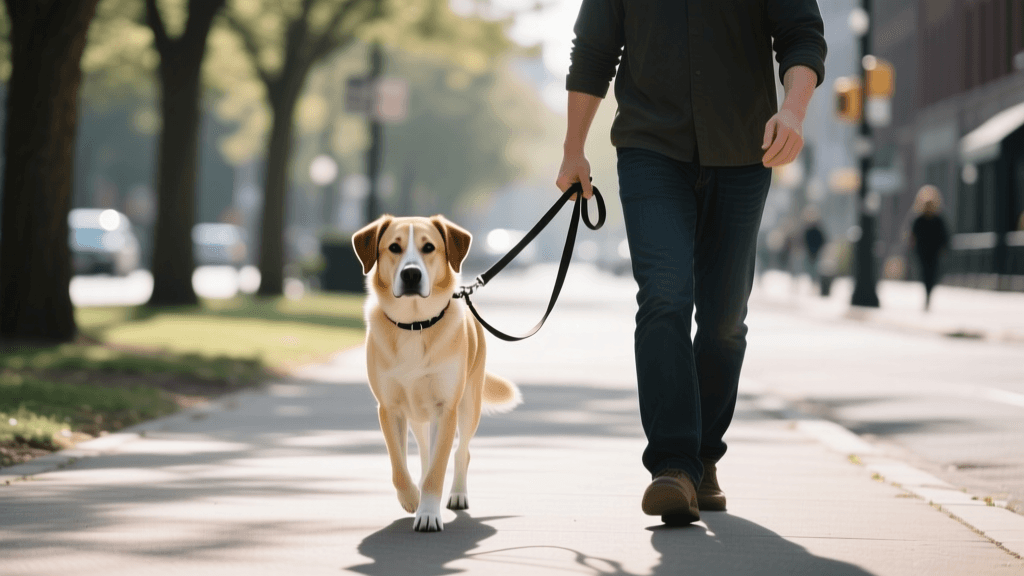
Leash reactivity is one of the most common and stressful behavioral issues reported by dog owners. Walking your dog should be a relaxing bonding experience, but if your pup transforms into a barking, lunging, and pulling mess at the sight of another dog, person, or bicycle, it can feel downright impossible. According to the American Kennel Club, leash reactivity is frequently misunderstood as pure aggression, when in reality, it is often rooted in barrier frustration or fear. Diagnosing the exact emotional driver behind your dog's behavior is the critical first step toward implementing effective, long-lasting solutions. This comprehensive guide will walk you through diagnosing your dog's specific type of reactivity, selecting the right training gear, and executing proven behavioral modification protocols to help you reclaim your walks.
Step 1: Diagnosing the Root Cause of the Reactivity
Before you can fix the behavior, you must understand the emotion driving it. Reactivity is an umbrella term that describes an overreaction to a specific trigger. To tailor your training approach, observe your dog's body language closely when a trigger appears. Below is a diagnostic comparison chart to help you identify whether your dog is experiencing barrier frustration, fear, or true aggression.
| Reactivity Type | Body Language | Vocalization | Primary Solution Focus |
|---|---|---|---|
| Barrier Frustration | Pulling forward, play bows, wiggly body, pawing at the air | High-pitched whining, excited barking, panting | Impulse control, obedience, redirection, and structured engagement |
| Fear-Based | Pinned ears, tucked tail, whale eye, lunging then retreating | Deep growling, frantic barking, yelping | Desensitization, counter-conditioning, increasing distance from triggers |
| Aggression-Based | Stiff posture, hard stare, raised hackles, complete stillness | Low, rumbling growl, snapping, silent staring | Strict management, muzzle conditioning, professional behaviorist intervention |
Most leash-reactive dogs fall into the first two categories. Frustrated greeters want to reach the trigger but are held back by the leash, causing a tantrum. Fearful dogs want the trigger to go away and use barking as a defensive shield. True aggression is rare and usually accompanied by a history of biting or severe resource guarding.
Step 2: Essential Gear for Reactive Dog Training
Using the wrong equipment can exacerbate reactivity or cause physical injury. Retractable leashes (like Flexi leashes) are highly discouraged for reactive dogs because they teach the dog that pulling yields more distance, and the thin cord can cause severe rope burn. Instead, invest in the following specialized gear to ensure safety and control:
- Front-Clip Harness (Cost: $25 - $35): The Rabbitgoo No-Pull Dog Harness is a top choice. The front D-ring gently redirects your dog's momentum toward you when they lunge, preventing them from using their full body weight to pull.
- Head Halter (Cost: $15 - $20): For powerful breeds or severe lungers, the Gentle Leader Headcollar provides steering control similar to a horse's halter. It must be conditioned slowly to prevent neck strain and ensure the dog is comfortable wearing it.
- Treat Pouch (Cost: $30 - $40): The Ruffwear Treat Trader features a magnetic closure for lightning-fast access to rewards, which is crucial for marking good behavior within a half-second window.
- Biothane Long Line (Cost: $35 - $45): A 15-foot Biothane long line is waterproof, durable, and prevents tangling. It allows you to practice recall and decompression walks in open fields without the tension of a standard 6-foot leash.
Step 3: The Engage-Disengage Training Protocol
Developed by canine behavior experts, the Engage-Disengage game is a cornerstone of counter-conditioning. The goal is to change your dog's emotional response to a trigger from 'threat' or 'excitement' to 'predictor of high-value treats.' You will need a clicker or a verbal marker word like 'Yes!', and ultra-high-value treats such as boiled chicken breast, freeze-dried liver, or Ziwi Peak air-dried lamb.
Phase 1: Engage (Mark and Treat)
Find your dog's 'threshold distance'—the distance at which they notice the trigger but do not react, bark, or lunge. For some dogs, this is 50 feet; for others, it is a quarter-mile. When your dog looks at the trigger, immediately mark the behavior with your clicker or 'Yes!' within 0.5 seconds, then deliver a treat. You are teaching the dog that seeing a trigger means a reward is coming from you.
Phase 2: Disengage (Voluntary Attention)
Once your dog reliably looks at you after hearing the marker, wait for them to voluntarily disengage from the trigger and look at you on their own. When they make eye contact, mark and reward heavily with a 'jackpot' of three to five treats. Over weeks of consistent practice at sub-threshold distances, you can gradually decrease the distance to the trigger by 5 to 10 feet at a time, ensuring the dog remains under their stress threshold.
Step 4: Emergency U-Turns and Environmental Management
Even with excellent training, you will inevitably encounter unexpected triggers, such as an off-leash dog rounding a corner or a sudden loud noise. You must have an emergency management plan. The 'About Face' or Emergency U-Turn is a vital skill. Practice this in your living room and backyard first. Say a cue word like 'Let's Go!', pivot 180 degrees on your heel, and encourage your dog to follow by tossing a high-value treat on the ground a few feet behind you. This turns a potentially scary encounter into a fun game of chase and scatter-feeding, quickly lowering your dog's heart rate and moving them away from the trigger.
Tracking Progress: The Reactivity Journal
Behavior modification is rarely linear. Keeping a reactivity journal helps you identify patterns and celebrate micro-victories that you might otherwise miss. Log the following data points after every walk:
- Date and Time: Note if reactivity worsens at dusk or during high-traffic hours.
- Trigger and Distance: E.g., 'Golden Retriever, 30 feet.'
- Reaction Intensity (1-10): A 1 is a brief glance; a 10 is a full-blown lunge and bark.
- Environmental Factors: Note the weather, noise levels, and how many hours of sleep your dog had the previous night. A sleep-deprived dog has a significantly lower threshold for reactivity.
Common Training Mistakes to Avoid
When dealing with a reactive dog, human frustration often leads to counterproductive training choices. The Association of Professional Dog Trainers strongly advises against using punishment-based tools like prong collars, e-collars, or leash pops to suppress reactive behavior. Punishing a growl or bark does not change the underlying fear or frustration; it merely suppresses the warning signs, which can lead to a dog that bites without warning. Furthermore, avoid 'flooding'—the practice of forcing your dog to sit right next to a trigger to 'get used to it.' Flooding spikes cortisol levels and reinforces the dog's belief that triggers are dangerous, ultimately making the reactivity worse.
Lowering Cortisol Through Decompression
A reactive dog is a stressed dog, and chronic stress keeps the nervous system in a constant state of fight-or-flight. According to resources provided by the ASPCA, managing a dog's overall stress levels is just as important as active training. Incorporate 'sniffaris' into your routine using your 15-foot Biothane long line in a quiet, empty field. Allowing a dog to sniff freely for 20 minutes lowers their heart rate and provides immense mental enrichment. Additionally, utilize indoor decompression tools like frozen lick mats or snuffle mats on days when the weather or environment is too overstimulating for a walk. By combining structured Engage-Disengage training, proper management gear, and proactive stress reduction, you can successfully help your dog navigate the world with confidence and calm.
aaron-whyte
All our authors care for dogs every day — read more of their work on the authors page.