Healthy weight checks for an adult dog
The 9-point body condition score, the rib test, the waist test — three home checks that tell you whether your dog is the right weight.
Understanding Your Dog's Ideal Weight
Keeping your adult dog at a healthy weight is one of the most impactful things you can do for their long-term health. Obesity in dogs is not simply a cosmetic concern — it is a medical condition linked to diabetes, osteoarthritis, cardiovascular disease, and a shortened lifespan. According to the Association for Pet Obesity Prevention (APOP, 2022), approximately 59% of dogs in the United States are classified as overweight or obese, making excess weight the most common preventable disease in companion animals today.
Yet many owners genuinely do not know whether their dog is carrying too much weight. Dogs come in hundreds of breeds with vastly different body structures, so a number on a scale tells only part of the story. A 30-pound Beagle and a 30-pound Whippet are in entirely different health situations. Proper weight assessment requires combining scale weight with hands-on body evaluation and, ideally, regular veterinary input.
The Body Condition Score: Your Most Reliable Tool
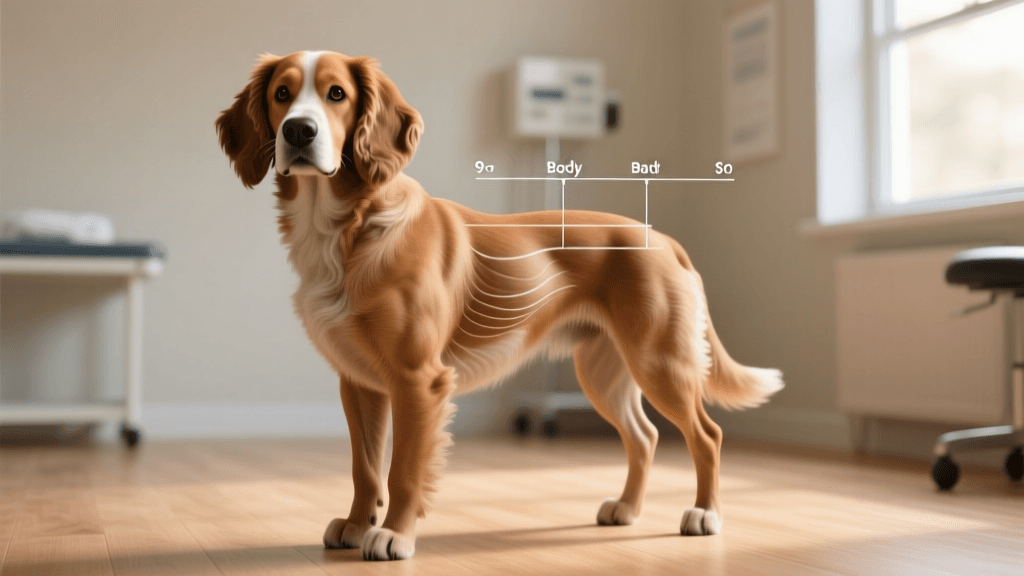
Veterinarians use a standardized system called the Body Condition Score (BCS) to evaluate a dog's fat coverage independent of breed or size. The most widely used version is a 9-point scale developed and validated by Purina and adopted by institutions including the American Veterinary Medical Association (AVMA). On this scale, a score of 4 or 5 is considered ideal, scores of 6–7 indicate overweight, and scores of 8–9 indicate obesity.
To assess your dog at home, run your hands firmly along both sides of the ribcage. You should be able to feel individual ribs without pressing hard, but they should not be visibly prominent. When viewed from above, the dog should have a visible waist — a narrowing behind the ribs. From the side, the abdomen should tuck upward behind the ribcage rather than hanging level or drooping.
How to Perform a Home BCS Assessment
- Rib check: Place both thumbs on the spine and spread your fingers across the ribcage. Ribs should feel like the back of your hand — detectable but cushioned.
- Waist check: Look down at your dog from directly above. A healthy dog shows a clear hourglass shape behind the last rib.
- Abdominal tuck: View your dog from the side. The belly should rise toward the hind legs, not hang parallel to the ground.
- Spine and hip bones: These should be palpable but not visually prominent. Visible hip bones or a sharp, easily felt spine suggest underweight.
- Overall muscle mass: Muscle wasting over the hindquarters or shoulders can indicate underweight or underlying illness even when fat coverage appears normal.
The Royal Veterinary College (RVC) in London recommends that owners perform this assessment monthly and record results alongside weight measurements to track trends over time. A single weigh-in is far less informative than a pattern observed over three to six months.
Breed-Specific Weight Ranges and What They Mean
Published breed weight standards from kennel clubs provide a useful starting point, but they describe a range, not a single target. A male Labrador Retriever, for example, has a breed standard weight of 65–80 pounds (29–36 kg), but a lean, athletic male at 63 pounds may be perfectly healthy while a sedentary male at 78 pounds may already be overweight for his individual frame.
Mixed-breed dogs present an additional challenge. Without knowing the contributing breeds, owners must rely almost entirely on BCS and veterinary assessment rather than published tables. DNA testing services such as Embark or Wisdom Panel can identify breed composition and help estimate an appropriate weight range, though these estimates should always be confirmed with a veterinarian.
Weight Ranges for Common Breeds
| Breed | Healthy Weight Range (Male) | Healthy Weight Range (Female) | Common Weight-Related Risk |
|---|---|---|---|
| Labrador Retriever | 65–80 lb (29–36 kg) | 55–70 lb (25–32 kg) | Obesity, joint disease |
| Beagle | 22–25 lb (10–11 kg) | 20–23 lb (9–10 kg) | Obesity, intervertebral disc disease |
| German Shepherd | 65–90 lb (29–41 kg) | 50–70 lb (23–32 kg) | Hip dysplasia worsened by excess weight |
| French Bulldog | 20–28 lb (9–13 kg) | 18–26 lb (8–12 kg) | Respiratory compromise, spinal issues |
| Golden Retriever | 65–75 lb (29–34 kg) | 55–65 lb (25–29 kg) | Obesity, cancer risk |
How Often Should You Weigh Your Dog?
For most healthy adult dogs, a weight check every one to three months is sufficient to catch gradual changes before they become significant. Dogs in weight-loss programs should be weighed every two to four weeks to monitor progress and adjust caloric intake accordingly. Many veterinary clinics, including those affiliated with the Banfield Pet Hospital network across the United States, offer free walk-in weigh-ins between appointments — a service worth using regularly.
At home, you can weigh a small or medium dog by stepping on a bathroom scale while holding the dog, then subtracting your own weight. For larger dogs, a livestock or luggage scale placed on the floor works well. Dedicated pet scales are available from brands such as Brecknell and American Weigh Scales, with models accurate to 0.1 lb suitable for dogs up to 110 lb (50 kg).
"Weight management is the single most modifiable risk factor for osteoarthritis progression in dogs. A 6.5-year study by Purina found that dogs maintained at lean body condition lived a median of 1.8 years longer than their overweight littermates, with significantly delayed onset of chronic disease."
— AVMA Proceedings on Preventive Care, 2021
Tracking Weight Over Time
A simple log — whether a notebook, a spreadsheet, or an app like PetDesk — makes trends visible that would otherwise go unnoticed. Record the date, weight, BCS score, and any relevant notes such as a change in food brand, an increase in treats, or a reduction in exercise due to injury or weather. Over six months, even a slow gain of 0.5 lb per month adds up to 3 lb — roughly 5–10% of body weight for a medium-sized dog, which is clinically significant.
The British Veterinary Dental Association (BVDA, 2023) notes that dental disease, which affects over 80% of dogs by age three, is more prevalent and more severe in overweight dogs, likely because excess weight is associated with systemic inflammation that accelerates periodontal breakdown. This connection underscores that weight management affects nearly every body system, not just joints and metabolism.
Caloric Needs and Feeding Adjustments
Adult dogs require roughly 25–30 calories per pound of body weight per day for maintenance, though this varies considerably based on activity level, neuter status, age, and individual metabolism. A neutered, sedentary 50-lb dog may need as few as 900–1,000 kcal/day, while an active intact male of the same weight might need 1,400–1,600 kcal/day. These figures are starting points — actual needs must be calibrated based on weight response over four to six weeks.
Most commercial dog foods list a feeding guide on the packaging, but these guides are often set on the generous side. A better approach is to calculate your dog's Resting Energy Requirement (RER) using the formula: RER = 70 × (body weight in kg)^0.75. Multiply this by an appropriate life-stage factor (1.6 for typical adult maintenance) to get daily caloric needs. Your veterinarian can help apply this calculation and adjust it for your dog's specific situation.
Practical Feeding Strategies for Weight Control
- Measure every meal: Use a kitchen scale rather than a measuring cup. Cup measurements can vary by 20–30% depending on how the food is scooped, which adds up to hundreds of extra calories per week.
- Account for treats: Treats should make up no more than 10% of daily caloric intake. Low-calorie options such as baby carrots, plain green beans, or small pieces of apple (without seeds) can satisfy a dog's desire for extras without significant caloric impact.
- Consider a weight-management formula: Foods such as Hill's Science Diet Perfect Weight, Royal Canin Satiety Support, or Purina Pro Plan Weight Management are formulated with higher protein and fiber and lower fat to support satiety at reduced caloric density.
- Split meals: Feeding two smaller meals per day rather than one large meal helps regulate blood glucose and reduces begging behavior that leads to overfeeding.
- Slow feeders and puzzle bowls: Products like the Outward Hound Fun Feeder or Kong Wobbler extend mealtime, reduce gulping, and provide mental stimulation — all of which support healthy weight management.
Real Cases: What Weight Management Looks Like in Practice
At the University of California Davis Veterinary Medical Teaching Hospital, a five-year-old female Labrador named Rosie was presented with early-stage hip dysplasia and a BCS of 7/9 at 82 lb — approximately 15 lb above her ideal weight. Her veterinary team placed her on a 12-week structured weight-loss program combining a prescription satiety diet at 1,100 kcal/day with daily 20-minute leash walks. At her 12-week recheck, Rosie had lost 9 lb and her owners reported a marked improvement in her willingness to rise from rest and climb stairs. Her orthopedic pain scores dropped from 4/10 to 1/10 without any change in pain medication.
A contrasting case involved a three-year-old Whippet named Atlas seen at a private practice in Edinburgh, Scotland. Atlas presented at 22 lb with a BCS of 3/9 — underweight for his frame. His owner had been feeding a grain-free boutique diet that was calorically insufficient and poorly balanced. After transitioning to a complete AAFCO-certified diet at appropriate caloric levels, Atlas reached his target weight of 27 lb within eight weeks and his coat condition and energy levels improved substantially.
These cases illustrate that weight problems run in both directions, and that both overweight and underweight conditions respond well to structured, veterinarian-guided intervention. The key in both situations was consistent monitoring, a clear caloric target, and follow-up weigh-ins to confirm the plan was working.
If your dog's weight is not responding as expected after four to six weeks of dietary adjustment, ask your veterinarian to screen for underlying conditions. Hypothyroidism, hyperadrenocorticism (Cushing's disease), and insulinoma can all cause weight gain or loss that does not respond to dietary changes alone. These conditions are diagnosable with routine bloodwork and are manageable once identified.
Regular weight monitoring, combined with hands-on body condition assessment and open communication with your veterinary team, gives your dog the best chance at a long, comfortable, and active life. The investment of a monthly weigh-in and a brief physical check costs almost nothing — and the return in quality years is substantial.
Dr. Hannah Wickes
All our authors care for dogs every day — read more of their work on the authors page.