Signs your dog needs to see a vet
Twelve red flags that should prompt a vet call within 24 hours, plus four emergency signs that mean go now.

Recognizing When Your Dog Is Telling You Something Is Wrong
Dogs are remarkably good at masking discomfort. Rooted in survival instinct, this tendency to hide pain or illness means that by the time a dog shows obvious signs of distress, the underlying problem may already be well advanced. Knowing which symptoms warrant a same-day call to your veterinarian — and which ones can wait for a scheduled appointment — is one of the most important skills a dog owner can develop.
This guide draws on clinical guidance from the American Veterinary Medical Association (AVMA) and the British Veterinary Dental Association (BVDA), as well as case examples from practicing veterinarians, to help you make informed decisions about your dog's health.
Emergency Warning Signs That Require Immediate Veterinary Attention
Some symptoms should never be monitored at home. If your dog displays any of the following, contact an emergency veterinary clinic without delay. The Cornell University College of Veterinary Medicine lists bloat (gastric dilatation-volvulus, or GDV) as one of the most time-critical emergencies in dogs — without surgery, it can be fatal within 1 to 2 hours of onset.
- Distended or hard abdomen combined with unproductive retching — a hallmark of GDV, most common in large, deep-chested breeds such as Great Danes and German Shepherds
- Difficulty breathing — labored breathing, blue or grey gums (cyanosis), or open-mouth breathing in a dog that is not panting from heat
- Collapse or sudden inability to stand — may indicate internal bleeding, cardiac event, or severe neurological episode
- Seizures lasting more than 5 minutes, or more than 2 seizures within a 24-hour period (cluster seizures)
- Suspected poisoning — ingestion of xylitol, grapes, raisins, rodenticide, or any unknown substance
- Pale, white, or grey gums — a sign of shock or severe anemia requiring immediate intervention
- Eye injuries or sudden vision loss — conditions like acute glaucoma can cause permanent blindness within 24 to 48 hours if untreated
"Owners often wait to see if a dog 'improves on its own.' With emergencies like GDV or acute glaucoma, that wait can cost the animal its life. When in doubt, call your vet — they would always rather hear from you early." — Dr. Sarah Holloway, Emergency Clinician, Royal Veterinary College, London
Subtle Behavioral Changes That Signal Underlying Illness
Not every health problem announces itself dramatically. Many serious conditions — including early-stage kidney disease, hypothyroidism, and certain cancers — present first as subtle shifts in behavior or routine. The AVMA (2023) recommends that owners establish a clear baseline for their dog's normal behavior so that deviations are easier to spot.
Changes in Appetite and Thirst
A dog that suddenly refuses food for more than 48 hours, or conversely begins eating significantly more than usual, deserves veterinary evaluation. Increased thirst and urination together — a pattern called PU/PD (polyuria/polydipsia) — is a classic early indicator of diabetes mellitus, Cushing's disease, or chronic kidney disease. In a study published by the AVMA (2022), PU/PD was identified as the presenting complaint in approximately 30% of dogs later diagnosed with diabetes.
If your dog is drinking noticeably more water than its typical intake of roughly 1 ounce of water per pound of body weight per day, document the change and bring it to your vet's attention.
Lethargy and Exercise Intolerance
All dogs have off days. But lethargy that persists beyond 24 to 48 hours, or a dog that tires after minimal exertion when it previously had good stamina, is a red flag. This pattern is associated with heart disease, anemia, Lyme disease, and hypothyroidism. Breeds like Cavalier King Charles Spaniels are genetically predisposed to mitral valve disease, and exercise intolerance is often the first owner-noticed symptom.
Personality and Cognitive Shifts
Aggression or withdrawal in a previously sociable dog can indicate pain. A dog that snaps when touched in a specific area is communicating discomfort. In older dogs (typically 9 years and above), disorientation, house soiling, disrupted sleep cycles, and apparent confusion may point to Canine Cognitive Dysfunction Syndrome (CCDS), a condition analogous to Alzheimer's disease in humans. The American College of Veterinary Behaviorists estimates that over 50% of dogs aged 11 and older show at least one sign of CCDS.
Physical Symptoms You Should Never Ignore
Regular hands-on contact with your dog — running your hands along its body during grooming or play — helps you notice lumps, tender spots, or changes in coat and skin before they become serious problems.
Skin, Coat, and Eye Changes
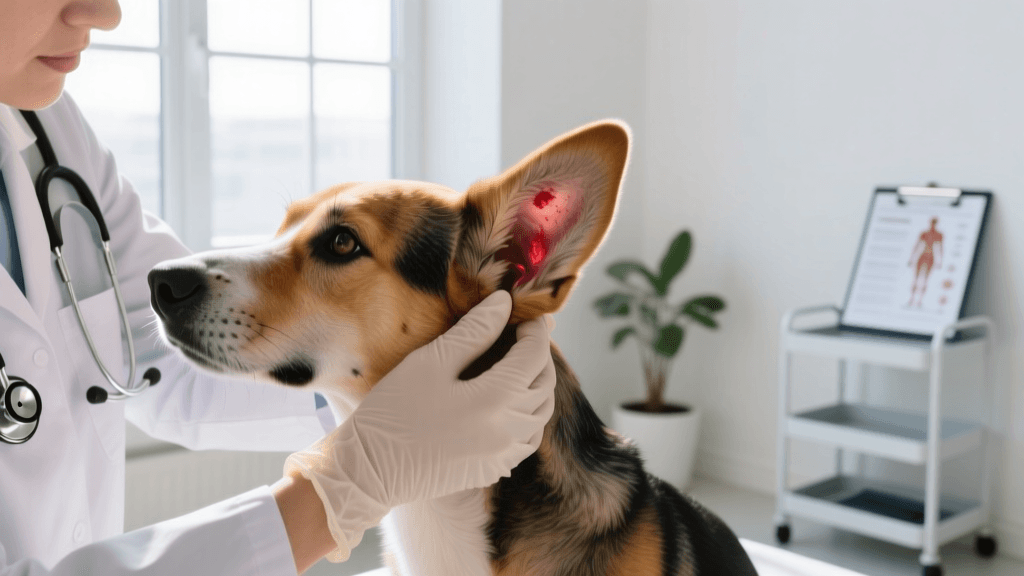
A dull, brittle coat, excessive shedding, or patchy hair loss can reflect nutritional deficiencies, thyroid dysfunction, or skin infections. Redness, discharge, or cloudiness in the eyes warrants prompt attention. Conditions like corneal ulcers are painful and can deteriorate rapidly — the Animal Eye Clinic in Melbourne, Australia, reports that untreated corneal ulcers can perforate within 3 to 5 days in some cases.
Persistent eye discharge, squinting, or pawing at the face should be evaluated within 24 hours rather than managed with over-the-counter drops, which can mask symptoms and delay diagnosis.
Digestive Symptoms
Occasional vomiting or loose stools are common in dogs and often self-limiting. However, the following patterns require veterinary assessment:
- Vomiting more than 3 times in a 24-hour period
- Blood in vomit or stool (bright red or dark, tarry black — the latter indicating digested blood from the upper GI tract)
- Diarrhea lasting more than 48 hours, especially with lethargy or loss of appetite
- Straining to defecate with little or no output — this can indicate obstruction or, in male dogs, prostate enlargement
- Sudden weight loss of more than 10% of body weight over a 4-week period
Dental and Oral Health: The Most Overlooked Area
The BVDA (2023) estimates that 80% of dogs over the age of 3 have some degree of periodontal disease, yet oral health remains one of the most neglected aspects of canine care. Bacteria from infected gums can enter the bloodstream and damage the heart, kidneys, and liver — a process well-documented in veterinary literature.
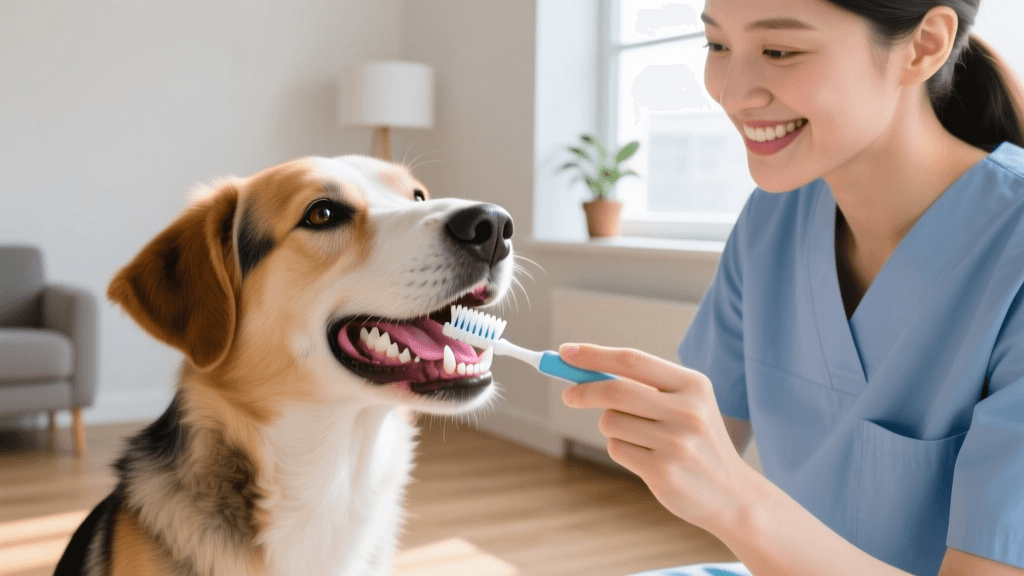
Signs that your dog needs a dental examination include persistent bad breath (beyond normal "dog breath"), visible tartar buildup (yellow-brown deposits at the gum line), red or bleeding gums, pawing at the mouth, dropping food while eating, or reluctance to chew on toys it previously enjoyed.
For at-home dental maintenance between professional cleanings, veterinary dentists commonly recommend enzymatic toothpastes such as Virbac C.E.T. Enzymatic Toothpaste, which is accepted by the Veterinary Oral Health Council (VOHC). Dental chews carrying the VOHC seal — such as Greenies Dental Treats — have demonstrated efficacy in reducing plaque and tartar in controlled studies. These products complement but do not replace annual professional dental cleanings under anesthesia.
Monitoring Chronic Conditions Between Vet Visits
Dogs diagnosed with ongoing conditions such as arthritis, epilepsy, or heart disease require consistent monitoring at home. Keeping a simple symptom diary — noting changes in mobility, appetite, breathing rate, and behavior — gives your veterinarian actionable data and can help detect deterioration before it becomes a crisis.
Resting respiratory rate (RRR) is a particularly useful metric for dogs with known heart disease. A normal resting respiratory rate is 15 to 30 breaths per minute. The Cummings School of Veterinary Medicine at Tufts University recommends that owners of dogs with congestive heart failure measure RRR weekly; a rate consistently above 30 breaths per minute at rest should prompt a same-day call to the vet.
| Symptom | Urgency Level | Recommended Action |
|---|---|---|
| Distended abdomen with retching | Emergency | Go to emergency vet immediately |
| Seizure lasting >5 minutes | Emergency | Go to emergency vet immediately |
| Vomiting 3+ times in 24 hours | Urgent (same day) | Call vet for same-day appointment |
| Persistent lethargy >48 hours | Urgent (within 24 hours) | Schedule prompt appointment |
| Increased thirst and urination | Non-emergency but important | Schedule appointment within 1 week |
| Mild bad breath, visible tartar | Routine | Raise at next scheduled visit |
| Resting respiratory rate >30 bpm | Urgent (same day, heart patients) | Call vet immediately |
A Real Case: When "Slowing Down" Was Something More
Max, a 7-year-old Labrador Retriever seen at the University of Edinburgh's Royal (Dick) School of Veterinary Studies, was brought in by his owner after three weeks of what she described as "just getting older." He was less enthusiastic on walks, sleeping more, and had gained weight despite no change in diet. His owner assumed it was normal aging.
Blood work revealed severely elevated thyroid-stimulating hormone (TSH) and low T4 levels — a clear diagnosis of hypothyroidism. After six weeks on levothyroxine (Soloxine), Max had returned to his previous energy levels and lost 2.1 kg of the excess weight he had gained. His owner later said she wished she had brought him in sooner, noting that the signs had been present for at least two months before the appointment.
This case illustrates a pattern veterinarians see regularly: gradual onset conditions are easy to rationalize as normal aging, particularly in middle-aged and senior dogs. The rule of thumb used by many clinicians is straightforward — if you have noticed a change and it has persisted for more than two weeks, it is worth a conversation with your vet.
Preventive care remains the most effective tool available. Annual wellness exams — or biannual exams for dogs over 7 years old, as recommended by the AVMA (2023) — allow veterinarians to catch subclinical changes through physical examination and routine bloodwork before symptoms become apparent to owners. The cost of early detection is almost always lower, financially and medically, than the cost of treating advanced disease.
Dr. Hannah Wickes
All our authors care for dogs every day — read more of their work on the authors page.