How To Give A Dog A Tablet Or Medication
Learn about how to give a dog a tablet or medication with expert tips and data-backed advice.
Getting Medication Into Your Dog Without the Struggle
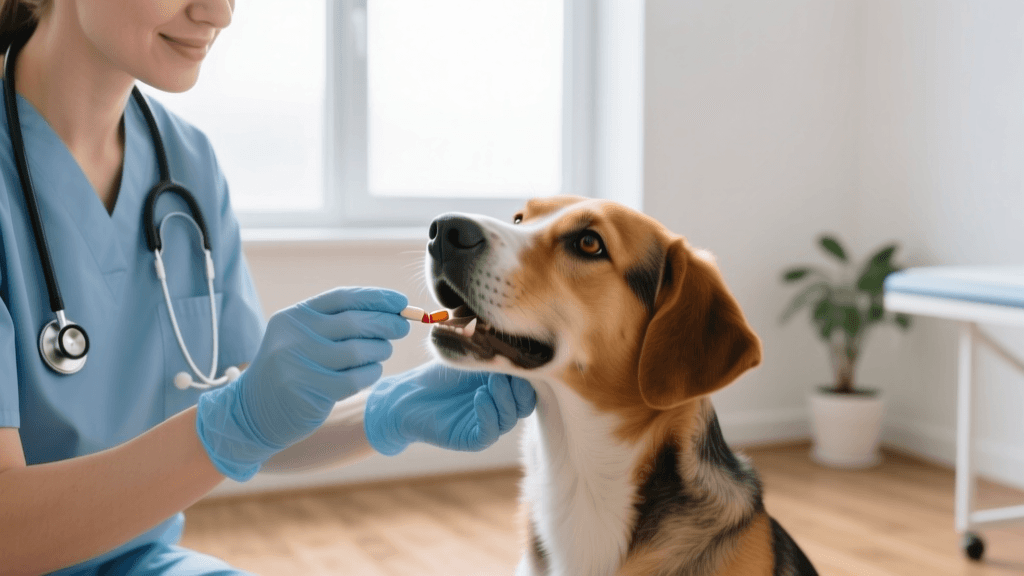
Giving a dog a tablet sounds simple until you try it. Most dog owners have experienced the moment where a carefully hidden pill reappears on the kitchen floor, spat out with impressive precision. Whether your dog needs a short course of antibiotics, a monthly flea preventative, or long-term medication for a chronic condition, learning the right technique makes the process safer for both of you and far less stressful for your pet.
According to the British Small Animal Veterinary Association (BSAVA, 2023), medication non-compliance is one of the leading reasons treatments fail in companion animals. Owners who struggle to administer tablets often skip doses or abandon courses early, which can lead to treatment failure, antibiotic resistance, or worsening of the underlying condition. Getting this right matters clinically, not just practically.
Understanding Your Dog's Medication
Before you attempt to give any tablet, read the dispensing label and the information leaflet carefully. Some tablets must be given with food to reduce stomach irritation, while others are absorbed more effectively on an empty stomach. Certain medications — particularly some anti-inflammatory drugs and antibiotics — should never be crushed or split, as this can alter the release mechanism or expose your dog to an unsafe dose all at once.
The PDSA (People's Dispensary for Sick Animals, 2022) advises owners to always confirm with their vet or veterinary nurse whether a tablet can be hidden in food before doing so. Some medications interact with dairy products or high-fat foods, and a small number are toxic to humans if handled without gloves.
Tablet Forms and What They Mean
Tablets come in several forms, each with different handling requirements:
- Standard tablets: Can usually be split or crushed unless labelled otherwise.
- Enteric-coated tablets: Have a protective coating designed to dissolve in the intestine, not the stomach. Crushing destroys this protection.
- Modified-release (MR) or sustained-release (SR) tablets: Must never be split or crushed. Doing so releases the full dose immediately, which can be dangerous.
- Chewable tablets: Designed to be eaten voluntarily; many are flavoured with chicken, beef, or liver.
- Spot-on and liquid alternatives: Available for dogs that consistently refuse oral medication.
If you are unsure which type your dog has been prescribed, call your veterinary practice before administering. Most practices in the UK, including those affiliated with the Royal College of Veterinary Surgeons (RCVS), have a nurse helpline for exactly this kind of query.
The Food-Hiding Method
For many dogs, the easiest approach is concealing the tablet inside a small amount of food. This works best when the food is strongly scented, soft enough to mould around the tablet, and given as a treat rather than mixed into a full meal where the dog might eat around it.
Popular options include a small ball of cream cheese, a piece of cooked chicken, a cube of soft cheese, or a commercial pill pocket treat. Pill pockets — soft, hollow treats designed specifically for this purpose — are available from most veterinary practices and pet retailers. They come in sizes suitable for tablets ranging from 5mm to over 20mm in diameter.
The Three-Treat Technique
A reliable method used by veterinary nurses involves offering three treats in quick succession. Give the first treat without any medication so the dog is relaxed and expecting a reward. Give the second treat with the tablet hidden inside. Immediately offer the third treat so the dog swallows quickly to get to the next one rather than investigating what it just ate. This sequence works because it creates anticipation and momentum.
A study cited in the BSAVA Small Animal Formulary (9th edition, 2023) noted that palatability-enhanced delivery methods increased successful tablet administration rates by approximately 68% compared to direct oral placement in a sample of 200 dogs across three UK veterinary practices.
Direct Oral Administration
When food hiding is not possible — either because the medication cannot be given with food or because your dog has learned to extract the tablet — direct oral placement is necessary. This technique requires calm, confident handling. Dogs pick up on anxiety, and a hesitant approach often results in more resistance.
Follow these steps for safe direct administration:
- Have the tablet ready in your dominant hand before you approach your dog.
- Ask your dog to sit. Kneel beside them rather than standing over them, which can feel threatening.
- Place your non-dominant hand over the top of the muzzle, with your thumb and fingers curling gently behind the upper canine teeth on each side.
- Tilt the head back slowly until the nose points upward. The lower jaw will naturally drop slightly.
- Use your dominant hand's middle finger to open the lower jaw further by pressing gently on the lower incisors.
- Place the tablet as far back on the tongue as possible — ideally past the base of the tongue where the swallowing reflex is triggered.
- Close the mouth, hold it gently shut, and stroke the throat downward or blow lightly on the nose to encourage swallowing.
- Wait for your dog to lick their lips, which indicates they have swallowed.
- Reward immediately with praise and a treat (if permitted with the medication).
The entire process should take no more than 10 to 15 seconds. Prolonged handling increases stress for the dog and makes future administrations harder.
Following Up With Water
After direct oral placement, offering a small amount of water via a syringe or encouraging your dog to drink from their bowl helps ensure the tablet reaches the stomach and does not lodge in the oesophagus. Oesophageal lodging is uncommon in dogs but can cause irritation or, in rare cases, ulceration. The PDSA (2022) recommends following any dry tablet with at least 5–10ml of water for small dogs under 10kg, and 15–20ml for larger breeds.
Dosage, Timing, and Missed Doses
Always follow the dosage instructions on the dispensing label exactly. Veterinary prescriptions in the UK are calculated by body weight, typically in milligrams per kilogram (mg/kg). A common antibiotic such as amoxicillin-clavulanate is often prescribed at 12.5mg/kg twice daily, while anti-inflammatory medications like meloxicam are typically dosed at 0.1mg/kg once daily after an initial loading dose. These figures vary by product and condition — never adjust the dose without speaking to your vet.
"Owners should never double up on a missed dose unless specifically instructed to do so by their veterinary surgeon. For most medications, if a dose is missed, simply continue with the next scheduled dose at the normal time."
— BSAVA Guide to Responsible Use of Antimicrobials in Small Animal Practice, 2023
If your dog vomits within 30 minutes of receiving a tablet, contact your veterinary practice for advice on whether to re-administer. For some medications, particularly those with a narrow therapeutic window, this is important to clarify rather than assume.
Handling Difficult or Anxious Dogs
Some dogs become genuinely distressed during medication, particularly if they have had negative experiences in the past. Forcing a frightened dog increases the risk of biting and makes the problem worse over time. If your dog is showing signs of significant stress — trembling, growling, snapping, or attempting to flee — stop and contact your vet.
There are several practical alternatives worth discussing with your veterinary team:
- Compounded liquid formulations: Many tablets can be reformulated as flavoured liquids by a veterinary compounding pharmacy, making administration easier for small or resistant dogs.
- Transdermal gels: A small number of medications are available in gel form applied to the inner ear flap, absorbed through the skin.
- Long-acting injectable alternatives: For some conditions, a single injection at the clinic replaces a course of daily tablets entirely.
- Behavioural desensitisation: A veterinary behaviourist or trained nurse can work with you to reduce your dog's anxiety around handling over several weeks.
The Royal Veterinary College (RVC) in London runs a behaviour referral service and has published guidance noting that approximately 14% of dogs seen in general practice show clinically significant handling-related anxiety, a figure that rises to over 30% in dogs with a history of painful procedures.
Medication Safety and Storage
Store all veterinary medications according to the label instructions. Most tablets should be kept below 25°C in a dry location away from direct sunlight. Some medications, including certain eye drops and reconstituted antibiotics, require refrigeration between 2°C and 8°C. Never store medications in a bathroom cabinet where humidity can degrade them.
Keep all medications out of reach of children and other pets. Accidental ingestion of veterinary medications by humans or by the wrong animal species can be serious. If accidental ingestion occurs, contact the NHS 111 service for human exposure or the Animal Poison Line (operated in the UK by the Veterinary Poisons Information Service) for animal exposure.
| Medication Type | Can Be Crushed? | Give With Food? | Follow With Water? |
|---|---|---|---|
| Standard tablet | Usually yes | Check label | Recommended |
| Enteric-coated tablet | No | Often yes | Recommended |
| Modified-release tablet | Never | Check label | Recommended |
| Chewable/flavoured tablet | Not needed | Yes or as treat | Optional |
| Scored tablet | Split only at score line | Check label | Recommended |
Completing the full course of any prescribed medication is essential, even if your dog appears to have recovered before the course ends. Stopping antibiotics early, for example, risks leaving a small population of bacteria alive — those most resistant to the drug — which can then multiply and cause a harder-to-treat relapse. This principle underpins antimicrobial stewardship guidance issued by both the BSAVA and the European Medicines Agency.
If you have leftover medication at the end of a course, do not save it for future use without veterinary advice. Return unused tablets to your veterinary practice or a pharmacy for safe disposal. Flushing medications down the drain contributes to environmental contamination and is discouraged by the Veterinary Medicines Directorate (VMD), the UK regulatory body for veterinary medicines.
With the right technique, a little patience, and good communication with your veterinary team, giving your dog a tablet can become a routine part of care rather than a daily battle. Most dogs adapt well once a consistent, calm approach is established — and many come to associate medication time with treats and attention rather than something to avoid.
Beth Carrasco
All our authors care for dogs every day — read more of their work on the authors page.