Apartment Dogs: Greyhound vs French Bulldog Compared
Discover whether a Greyhound or French Bulldog is the better apartment dog. Compare space needs, exercise, costs, and daily routines for small-space living.
The Great Apartment Dog Debate: Size vs. Space
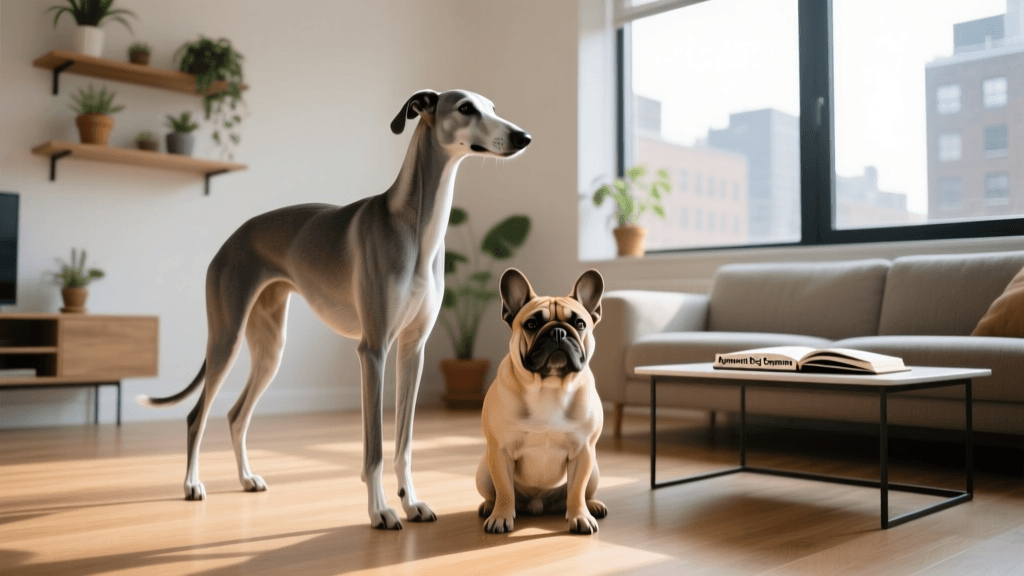
When most people think of apartment living, they automatically assume that smaller dogs are the only viable option. However, the reality of sharing a small space with a canine companion is far more nuanced than simple square footage. Two breeds that perfectly illustrate this paradox are the towering Greyhound and the compact French Bulldog. While one is a massive, deep-chested sighthound and the other is a small, brachycephalic companion, both are frequently recommended for apartment dwellers. But which one truly fits your lifestyle?
Choosing the right dog for an apartment requires looking beyond their physical footprint. You must evaluate their daily energy expenditure, vocalization tendencies, grooming needs, and the financial realities of caring for them in an urban environment. According to the American Kennel Club's Greyhound breed profile, these athletic dogs are famously known as '45-mph couch potatoes' because they conserve their energy indoors. Conversely, the AKC's French Bulldog profile highlights their adaptable, low-endurance nature, making them a staple in city apartments. Let us break down the practical realities of living with both breeds to help you make an informed decision.
Space, Setup, and Indoor Environment
At first glance, the Greyhound seems entirely unsuited for a 600-square-foot apartment. Males can stand up to 30 inches tall at the shoulder and weigh up to 70 pounds. However, Greyhounds are notorious for sleeping up to 18 hours a day. They do not require vast indoor spaces to run; instead, they require a soft, orthopedic bed to protect their bony prominences and thin skin. For an apartment setup, you will need a large 48x30x33-inch wire or soft-sided crate if you choose to crate train, alongside a thick memory foam dog bed placed in a quiet corner.
The French Bulldog, weighing under 28 pounds and standing around 11 to 13 inches tall, physically occupies much less space. A standard 24x18x21-inch crate is sufficient for their den. However, French Bulldogs are highly social and often suffer from separation anxiety. They prefer to be in the same room as their owners at all times, often demanding to share your sofa or bed. While they take up less physical space, their psychological need for proximity means they will be underfoot much more often than a sleeping Greyhound.
Exercise Requirements and Essential Gear
The exercise needs of these two breeds are drastically different, which heavily impacts your daily routine in an apartment building where you must navigate hallways, elevators, and busy city streets.
The Greyhound: Sprint and Snooze
Greyhounds are built for short, explosive bursts of speed rather than endurance. An apartment-dwelling Greyhound typically requires two 20-minute leash walks per day for mental stimulation and bathroom breaks. Once a week, they need access to a securely fenced area to run off-leash. Because their necks are often wider than their heads, standard buckle collars can easily slip off. You must invest in a properly fitted martingale collar, such as the Country Brook Design martingale, to ensure safe walks in busy urban environments.
The French Bulldog: Strolls and Sniffs
French Bulldogs require moderate, low-impact exercise. A daily routine of two 15-minute neighborhood strolls is usually sufficient. However, their flat faces make them highly susceptible to heat exhaustion. During summer months, walks must be scheduled before 8:00 AM or after 8:00 PM. Furthermore, because of their compromised airways, you should never attach a leash directly to a Frenchie's collar. A well-padded, front-clip harness like the Ruffwear Front Range is essential to prevent tracheal damage and give you better control in crowded apartment lobbies.
Health Considerations in Urban Environments
Apartment living often means dealing with stairs, elevators, and varying indoor temperatures, all of which affect these breeds differently. French Bulldogs are a brachycephalic breed. The American College of Veterinary Surgeons warns that Brachycephalic Obstructive Airway Syndrome (BOAS) can severely limit a dog's ability to breathe, regulate body temperature, and exercise. In an apartment without central air conditioning, a Frenchie can easily overheat, requiring you to run cooling mats and fans continuously during warmer months.
Greyhounds, on the other hand, have very little body fat and thin coats. They are highly sensitive to cold drafts, which can be an issue in poorly insulated apartment buildings during winter. You will need to purchase a fleece dog coat for indoor wear if your apartment gets chilly. Additionally, Greyhounds are prone to Gastric Dilatation-Volvulus (bloat). To mitigate this risk in a small apartment, you must use a slow-feeder bowl and enforce a strict one-hour rest period after meals before taking them out for their evening walk.
Financial Breakdown: The Cost of Apartment Ownership
While the initial adoption or purchase price varies, the ongoing monthly costs of maintaining these dogs in an apartment setting differ significantly, particularly regarding food and veterinary care.
| Expense Category | Greyhound (Est. Monthly) | French Bulldog (Est. Monthly) |
|---|---|---|
| Premium Diet | $90 - $120 (4-5 cups/day) | $45 - $60 (1-1.5 cups/day) |
| Pet Insurance | $35 - $50 | $70 - $110 (High BOAS/IVDD risk) |
| Preventative Meds | $25 (Large dog dosage) | $15 (Small dog dosage) |
| Grooming & Wipes | $10 (Nail trims, basic bath) | $30 (Daily face wrinkle cleaning) |
| Urban Pet Fees | $50 - $100 (Breed restrictions may apply) | $50 - $100 (Generally accepted) |
| Total Estimated | $210 - $305 | $210 - $325 |
Note: Many apartment complexes have breed restrictions that unfortunately target Greyhounds due to their large size and speed, even if they are retired racers. French Bulldogs rarely face breed-specific legislation (BSL) or weight restrictions in rental properties.
Daily Routine Comparison
To truly understand what life looks like with either breed, consider this typical weekday schedule for an apartment dweller working a hybrid remote job.
- 7:00 AM: Both breeds wake up. The Frenchie demands immediate attention and breakfast, while the Greyhound stretches and waits patiently.
- 7:30 AM: Walk time. The Greyhound takes a brisk 20-minute walk to sniff and relieve themselves. The Frenchie takes a 15-minute leisurely stroll, stopping to greet neighbors.
- 9:00 AM to 5:00 PM: The Greyhound finds a sunbeam on the rug and sleeps deeply for 8 hours. The Frenchie sleeps in short bursts but may whine or pace if left alone in a separate room, requiring a pet camera and treat-dispensing toy for enrichment.
- 6:00 PM: Evening walk. The Greyhound enjoys a longer 30-minute sniffari. The Frenchie does a quick 10-minute potty break, as they are tired from monitoring the hallway noises all day.
- 9:00 PM: Couch time. The Greyhound takes up the entirety of a three-seater sofa. The Frenchie burrows under a blanket directly on your lap.
Training and Socialization in Shared Spaces
Living in an apartment means you share walls, floors, and elevators with others. Vocalization is a critical factor. Greyhounds are remarkably quiet dogs; they rarely bark, making them excellent neighbors. However, their high prey drive means they may lunge at small dogs or fast-moving objects in the lobby. Extensive desensitization training is required to navigate shared spaces safely.
French Bulldogs are not excessive barkers, but they are notorious for snoring, grunting, and snorting, which can be heard through thin apartment walls at night. They are generally friendly with other dogs and people, making elevator rides and lobby encounters much more manageable. However, their stubborn streak can make recall and potty training a longer process, requiring high-value treats and immense patience.
The Verdict: Which Breed Fits Your Apartment?
Ultimately, the choice between a Greyhound and a French Bulldog comes down to your specific apartment constraints and personal lifestyle. If you live in a slightly larger apartment, have access to a nearby fenced dog park, and prefer a quiet, independent companion who sleeps the workday away, the Greyhound is an unmatched apartment roommate. Just be prepared to navigate potential breed restrictions with your landlord and invest in a warm winter coat.
Conversely, if you live in a tiny studio, travel frequently (as Frenchies can sometimes fit in-cabin on airplanes), and want a deeply affectionate, clownish companion who will follow you from room to room, the French Bulldog is the ideal choice. However, you must be financially prepared for the high veterinary costs associated with brachycephalic breeds and commit to strict climate control within your home. Both breeds can thrive in small spaces, provided their unique physical and emotional needs are met with dedication and care.
marcus-aldridge
All our authors care for dogs every day — read more of their work on the authors page.