Golden Retriever Puppy Care: A Complete First Year Guide
Discover essential Golden Retriever puppy care tips for the first year. Learn about feeding schedules, teething, socialization, and growth milestones.
The Golden Retriever Puppy Journey
Welcoming a Golden Retriever puppy into your home is an exhilarating experience. Known for their friendly, tolerant attitude and high intelligence, Golden Retrievers consistently rank among the most popular dog breeds in the United States. However, raising a Golden from an eight-week-old fluffball into a well-mannered adult requires dedication, structured training, and breed-specific knowledge. The first twelve months are critical for establishing lifelong habits, managing their rapid physical growth, and navigating their infamous chewing phases. This comprehensive guide dives deep into the unique needs of Golden Retriever puppies, providing actionable advice on nutrition, training, and developmental milestones to ensure your pup thrives. According to the American Kennel Club, Goldens are eager to please, which makes them highly trainable, but their exuberant energy demands consistent boundaries from day one.
Month-by-Month Growth and Milestones
Golden Retrievers are a large breed, meaning they grow rapidly during their first six months before the growth rate begins to slow. Monitoring their weight and developmental milestones is crucial to ensure they are growing at a healthy rate, which helps prevent orthopedic issues like hip and elbow dysplasia later in life. The Golden Retriever Club of America emphasizes the importance of keeping puppies lean during their growth spurts to protect their developing joints.
| Age (Months) | Expected Weight (lbs) | Key Milestones & Care Focus |
|---|---|---|
| 2 | 10 - 15 | First vaccinations, bite inhibition, crate introduction, and bonding. |
| 3 | 20 - 25 | Peak socialization window, basic commands (sit, stay), potty training consistency. |
| 4 | 30 - 40 | Teething begins, increased chewing, second round of vaccinations. |
| 5 | 40 - 50 | Fear period may occur, advanced socialization, leash walking refinement. |
| 6 | 50 - 60 | Spay/neuter discussions with vet, transition to two meals a day, adult teeth emerge. |
| 8 | 60 - 70 | Adolescent rebellion phase, recall training reinforcement, increased exercise needs. |
| 10 | 65 - 75 | Approaching adult height, mental stimulation games, advanced obedience classes. |
| 12 | 65 - 80 | Transition to adult food (if advised by vet), full coat development, emotional maturity begins. |
Feeding Your Large Breed Puppy
Nutrition is the cornerstone of your Golden Retriever's health. Because they are prone to joint issues, it is vital to feed a diet specifically formulated for large breed puppies. These diets contain controlled levels of calcium and phosphorus to prevent bones from growing faster than the supporting muscles and tendons. According to VCA Animal Hospitals, large breed puppy foods should have a calcium content of around 1.2% to 1.5% on a dry matter basis, and a strict calcium-to-phosphorus ratio between 1.1:1 and 1.4:1.
Recommended Diet and Schedule
A highly recommended option is the Purina Pro Plan Large Breed Puppy Chicken & Rice Formula, which includes DHA for brain and vision development. A 34-pound bag typically costs around $70 and will last several weeks depending on the puppy's age.
- 8 to 12 Weeks: Feed 3 to 4 small meals a day. Total daily intake should be roughly 1.5 to 2 cups, divided equally.
- 3 to 6 Months: Transition to 3 meals a day. Total daily intake increases to 2.5 to 3.5 cups.
- 6 to 12 Months: Transition to 2 meals a day (morning and evening). Total daily intake ranges from 3.5 to 5 cups.
Pro Tip: Golden Retrievers are notoriously food-motivated and prone to obesity. Never free-feed your Golden. Measure their food precisely using a standard measuring cup, and adjust portions based on their body condition score rather than just the bag's guidelines.
Crate and Potty Training Essentials
Golden Retrievers respond beautifully to crate training when introduced positively. A crate provides a safe den for your puppy and is the most effective tool for potty training. Because Goldens grow so large, you will need a MidWest Homes for Pets Ultima Pro 42-inch Double Door Crate (approximately $80). Crucially, you must use the included divider panel to restrict the space to just enough for the puppy to stand, turn around, and lie down. If the space is too large, they will eliminate in one corner and sleep in the other.
The Potty Training Schedule
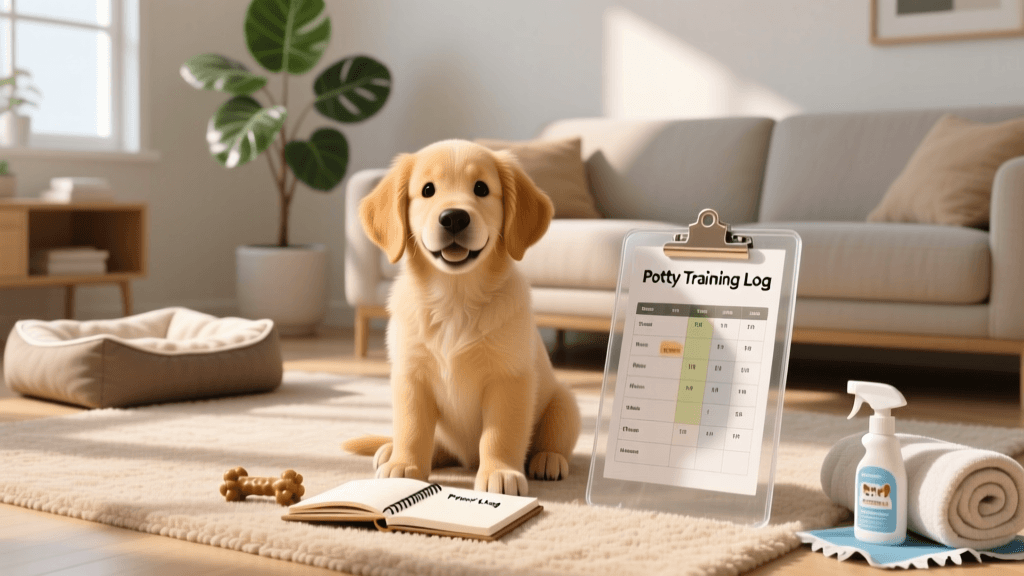
Puppies can generally hold their bladder for one hour per month of age. Therefore, an eight-week-old puppy needs a potty break every two hours, including overnight. Take your puppy out immediately after waking up, after every meal, after vigorous play, and right before bed. Always use a high-quality enzymatic cleaner like Nature's Miracle Advanced Stain and Odor Eliminator (around $15) for indoor accidents. Standard household cleaners leave behind uric acid traces that encourage the puppy to soil the same spot again.
Surviving the Teething and Chewing Phase
Between 12 and 24 weeks, your Golden Retriever will enter the teething phase, often earning them the nickname 'land sharks.' Their baby teeth will fall out to make way for 42 adult teeth, causing significant gum discomfort. If you do not provide appropriate outlets, your baseboards, shoes, and furniture will become their chew toys.
Must-Have Teething Products
- KONG Classic Dog Toy (Large, Red): Costing about $15, this is a lifesaver. Fill it with plain canned pumpkin puree (not pie filling) or plain Greek yogurt, and freeze it overnight. The cold soothes inflamed gums while the mental effort of extracting the food tires them out.
- Nylabone Puppy Chew Teething Rings: Designed specifically for puppies without adult teeth, these help massage gums and clean early plaque buildup.
- Bully Sticks: A natural, high-protein chew that is fully digestible. Always supervise your puppy with any consumable chew to prevent choking hazards.
Early Socialization and Obedience
The socialization window for puppies closes around 16 weeks of age. During this critical period, your Golden Retriever needs to be exposed to a wide variety of people, environments, sounds, and other vaccinated dogs. Poor socialization can lead to fear-based reactivity, which is entirely preventable in this typically gentle breed.
The Socialization Checklist
Aim to expose your puppy to at least one new experience every day. This includes walking on different surfaces (grass, gravel, metal grates), hearing loud noises (vacuum cleaners, traffic), and meeting people wearing hats, uniforms, or carrying umbrellas. Enroll your puppy in an AKC S.T.A.R. Puppy class as soon as they have received their second set of vaccinations. These classes cost between $150 and $250 for a six-week course and provide a controlled environment for off-leash play and foundational obedience training.
Grooming the Famous Golden Coat
Golden Retrievers boast a beautiful, water-repellent double coat that requires regular maintenance. While they do not need professional haircuts—in fact, you should never shave a Golden Retriever, as this ruins their coat's ability to regulate temperature and protects them from sunburn—they do require consistent brushing.
Brushing Routine and Tools
Plan to brush your puppy two to three times a week for 15 minutes to get them accustomed to the handling. As they mature and their adult coat blows (sheds heavily) in the spring and fall, daily brushing may be required.
- Slicker Brush: A high-quality slicker brush, such as the Chris Christensen Big G Slicker (approx. $65), is excellent for removing loose topcoat and preventing tangles behind the ears and on the 'feathers' of their legs.
- Undercoat Rake: Use a long-toothed undercoat rake once a week to gently pull out the dense, dead undercoat close to the skin.
- Nail Trimming: Trim your puppy's nails every two to three weeks. If you hear them clicking on hard floors, they are too long. Use a guillotine-style or scissor-style clipper, and always keep styptic powder on hand in case you accidentally cut the quick.
Conclusion: Setting the Stage for Adulthood
Raising a Golden Retriever puppy is a deeply rewarding endeavor that requires patience, consistency, and a willingness to invest time and resources into their early development. By strictly managing their large-breed nutrition, enforcing positive crate and potty training routines, providing appropriate teething outlets, and prioritizing early socialization, you are laying the groundwork for a healthy, well-adjusted adult dog. The effort you put into your Golden's first year will be repaid with a lifetime of unwavering loyalty, joy, and companionship.
anouk-beaumont
All our authors care for dogs every day — read more of their work on the authors page.