8 to 12 Week Puppy Care Guide: First Month at Home
Discover essential care tips for your 8 to 12-week-old puppy. Learn feeding schedules, potty training, and socialization milestones for the first month.

Welcome to the 8 to 12-Week Life Stage
The 8 to 12-week window is widely considered the most critical developmental period in a dog's life. Often referred to as the "infancy" stage, this is when your puppy transitions from the litter to your home. During this time, their brain is rapidly developing, making them highly impressionable but also vulnerable to fear periods. This comprehensive life stage care guide will walk you through the exact steps, costs, and schedules required to survive and thrive during your puppy's first month home.
Setting Up Your Puppy's Safe Space
Before your puppy crosses the threshold, you must establish a secure environment. Puppies explore the world with their mouths, which means puppy-proofing is non-negotiable. Expect to spend between $50 and $100 on proofing supplies.
Essential Gear and Measurements
- Crate: A wire crate allows for visibility and airflow. For a small breed (under 20 lbs adult weight), a 24-inch crate like the MidWest iCrate ($45) is ideal. For medium-to-large breeds (like Labrador Retrievers), purchase a 36-inch or 42-inch crate with an adjustable divider panel to prevent them from soiling one side and sleeping on the other.
- Playpen: A metal exercise pen (approx. 4x8 feet) costs around $40 and provides a safe zone when you cannot actively supervise.
- Puppy Proofing: Use Gorilla Tape to secure loose electrical cords to baseboards. Apply bitter apple spray ($10) to wooden furniture legs to deter chewing.
Feeding Schedule and Nutrition
At 8 weeks old, a puppy's digestive system is still maturing. They require three to four small meals a day to maintain stable blood sugar levels and support rapid growth. Always ask your breeder or rescue what the puppy is currently eating, and transition to your preferred high-quality puppy food (such as Purina Pro Plan Puppy or Royal Canin Puppy) over 7 days to avoid gastrointestinal upset.
The 7-Day Food Transition Protocol
- Days 1-2: 75% old food, 25% new food.
- Days 3-4: 50% old food, 50% new food.
- Days 5-6: 25% old food, 75% new food.
- Day 7: 100% new food.
Portion sizes depend on the brand and the puppy's expected adult weight. Generally, an 8-week-old puppy weighing 10 pounds will eat about 1/2 to 3/4 cup of dry kibble per day, divided into three meals. Always measure with a standard measuring cup rather than guessing, as overfeeding can cause rapid growth and joint issues in large breeds.
Daily Schedule for an 8-Week-Old Puppy
Routine is the foundation of puppy training. An 8-week-old puppy has a maximum bladder control of roughly one hour per month of age, meaning they need a potty break every two hours, plus immediately after eating, playing, or waking up. Below is a structured daily schedule to follow.
| Time | Activity | Actionable Tip |
|---|---|---|
| 7:00 AM | Wake Up & Potty | Carry them outside immediately. Do not let them walk to avoid accidents. |
| 7:30 AM | Breakfast | Use a slow feeder bowl to prevent gulping and bloat. |
| 8:00 AM | Potty & Play | 15 minutes of gentle play. Avoid high-impact jumping. |
| 9:00 AM | Morning Nap | Crate time. Puppies need 18-20 hours of sleep daily. |
| 11:00 AM | Potty & Training | 5 minutes of basic lure training (sit, name recognition). |
| 12:00 PM | Lunch | Second meal of the day. Fresh water provided. |
| 12:30 PM | Potty & Nap | Back in the crate or playpen for enforced rest. |
| 3:00 PM | Potty & Socialization | Expose to new sounds or surfaces in a controlled manner. |
| 5:00 PM | Dinner | Final meal of the day. Remove water 2 hours before bed. |
| 6:00 PM | Potty & Chew Time | Provide a frozen Kong Classic (Red, ~$15) stuffed with puppy-safe peanut butter. |
| 8:00 PM | Final Potty & Bed | Set an alarm for 2:00 AM for a midnight potty break. |
Potty Training: The 15-Minute Rule
Housebreaking requires immense patience. According to the ASPCA's house training guidelines, consistency and positive reinforcement are the most effective methods. Never punish a puppy for an accident; they do not possess the cognitive ability to connect a past action with your current anger.
Actionable Potty Training Steps
- Supervision: Keep the puppy on a 6-foot leash attached to your belt loop while indoors if they are not in their crate.
- The Command: Say "Go Potty" in a calm voice while they are eliminating. Reward immediately with a high-value treat (like Zuke's Mini Naturals) within 3 seconds of them finishing.
- Accident Cleanup: You must use an enzymatic cleaner like Nature's Miracle Advanced ($15). Standard household cleaners do not break down the uric acid crystals, meaning the puppy will smell their scent marker and return to the same spot.
Early Socialization and Bite Inhibition
The 8 to 12-week window is the peak of the primary socialization period. The American Veterinary Medical Association (AVMA) emphasizes that early, positive exposure to novel stimuli is crucial for preventing behavioral issues later in life. Read more about foundational puppy care and behavioral development on the AVMA puppy care resource page.
The Socialization Checklist
Aim to expose your puppy to the following safely (remember, they are not fully vaccinated, so carry them in public spaces or use a stroller):
- Surfaces: Gravel, wet grass, metal grates, and bubble wrap.
- Sounds: Vacuum cleaners, thunderstorms (play audio at low volume while feeding treats), and traffic noise.
- People: Individuals wearing hats, sunglasses, uniforms, and using mobility aids.
Managing Puppy Bites
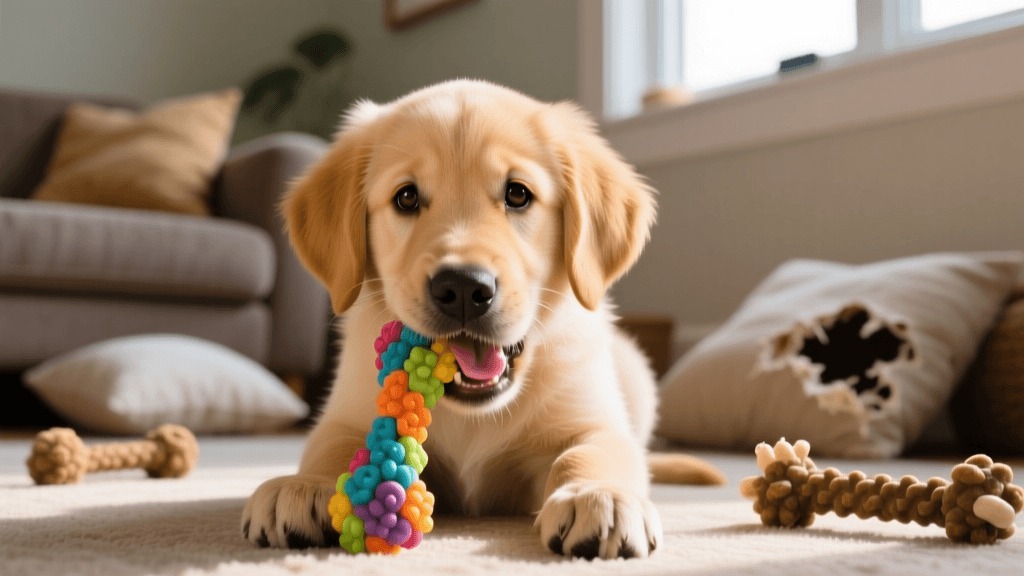
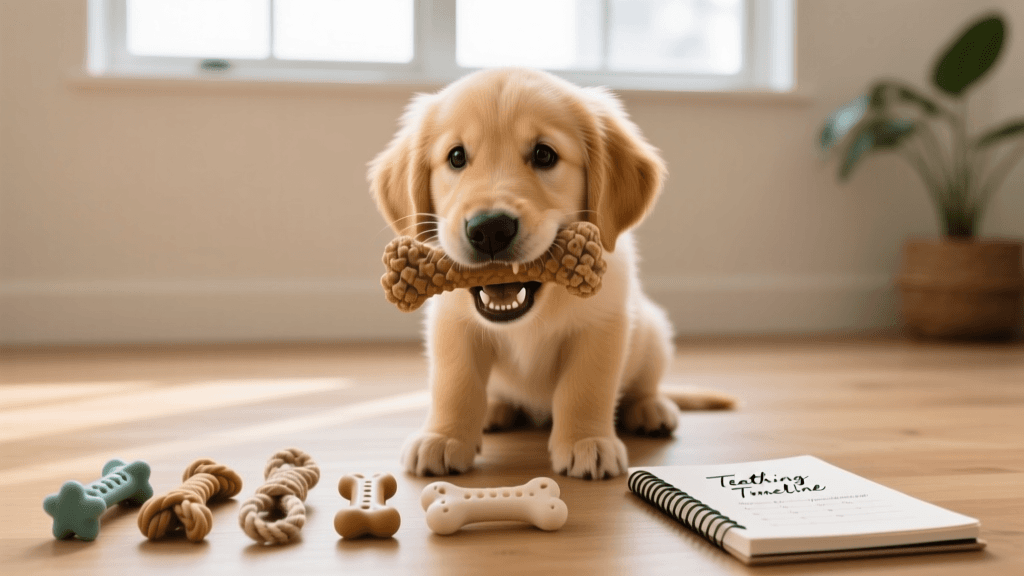
Puppies explore with their mouths, and their needle-like teeth can be painful. When they bite your skin, let out a high-pitched "Ouch!" and immediately redirect them to an appropriate chew toy. If they continue to bite, implement a 30-second "time out" by stepping out of the playpen. This mimics littermate behavior and teaches bite inhibition.
Veterinary Care and Vaccination Timeline
Your puppy's immune system is heavily reliant on maternal antibodies during this stage, which gradually wane. Following the AAHA Canine Vaccination Guidelines is critical to protecting your puppy from life-threatening diseases like Parvovirus and Distemper.
The 8-12 Week Vet Schedule
- 8 Weeks: First DHPP (Distemper, Hepatitis, Parainfluenza, Parvovirus) vaccine. Deworming treatment. Fecal exam for parasites.
- 12 Weeks: Second DHPP booster. Optional Bordetella (Kennel Cough) vaccine if attending puppy classes. Heartworm prevention initiation.
Expect to spend between $100 and $250 per veterinary visit during this life stage. Consider purchasing pet insurance (such as Trupanion or Healthy Paws) before your first vet visit, as pre-existing conditions are not covered, and enrolling early ensures congenital issues are covered later in life.
Final Thoughts on the First Month
The 8 to 12-week stage is exhausting but fleeting. By strictly adhering to a daily schedule, managing their environment, and prioritizing positive socialization, you are laying the neurological and behavioral groundwork for a confident, well-adjusted adult dog. Remember to prioritize your own rest during this period; raising a puppy is a marathon, not a sprint.
aaron-whyte
All our authors care for dogs every day — read more of their work on the authors page.