Step-by-Step Puppy Potty Training Guide and Schedule
Master puppy potty training with our step-by-step guide. Includes daily schedules, crate tips, and accident cleanup advice for new dog owners.
Introduction to Puppy Potty Training
Welcome to Paws-Tales! Bringing a new puppy home is an exhilarating experience, but it quickly becomes apparent that housebreaking is one of the most demanding challenges of early dog ownership. Potty training is not just about keeping your floors clean; it is a foundational exercise in communication, trust, and routine building between you and your new canine companion. According to the American Kennel Club (AKC), consistency and positive reinforcement are the absolute cornerstones of successful house training. In this comprehensive, step-by-step guide, we will walk you through the exact methodology, daily schedules, and product recommendations you need to potty train your puppy efficiently and humanely during their crucial first year.
Step 1: Gather Your Essential Supplies
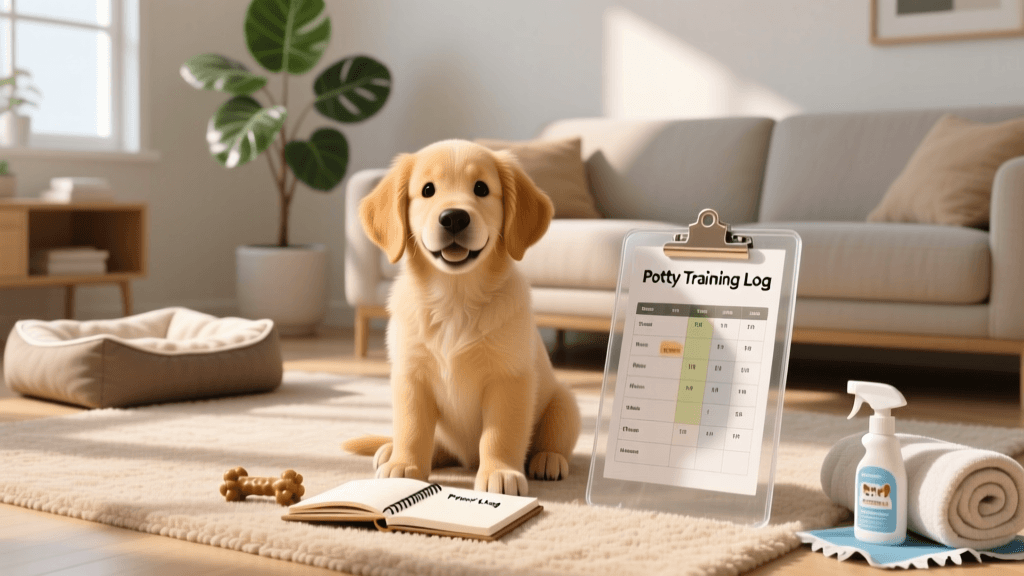
Before you begin the training process, you need to set up your environment for success. Having the right tools on hand will save you time, money, and frustration. Here is a breakdown of the specific products we recommend, along with estimated costs:
- Properly Sized Crate: We recommend the MidWest Homes for Pets iCrate (approx. $60 to $90). It is crucial to use the included divider panel so the crate is only large enough for the puppy to stand, turn around, and lie down. If the crate is too large, the puppy may soil one corner and sleep in the other.
- Enzymatic Cleaner: Standard household cleaners will not eliminate the uric acid crystals in dog urine. Invest in Nature's Miracle Advanced Stain & Odor Eliminator (approx. $15 for a 32oz bottle). This breaks down the biological enzymes that attract puppies back to the same spot.
- High-Value Training Treats: Keep a dedicated stash of treats that your puppy only gets during potty breaks. Zuke's Mini Naturals (approx. $8 per pouch) are excellent because they are low-calorie and soft, allowing for rapid consumption.
- Potty Bells: The Mighty Paw Smart Bell (approx. $15) hangs on your doorknob and provides an auditory cue for your puppy to signal when they need to go outside.
Step 2: Establish a Strict Daily Schedule
Puppies thrive on predictability. The general rule of thumb for a puppy's bladder capacity is that they can hold it for one hour per month of age, up to a maximum. Therefore, an 8-week-old (2-month-old) puppy needs a potty break every two hours maximum, and much more frequently when active. The ASPCA emphasizes that taking your puppy out after every major transition (waking up, eating, playing) is critical to preventing indoor accidents.
Below is a sample daily potty training schedule for a 10-week-old puppy:
| Time | Activity | Potty Action Required |
|---|---|---|
| 7:00 AM | Wake up and immediate outdoor trip | Leash walk to designated potty spot |
| 7:30 AM | Breakfast and water | Wait 15-20 mins, then potty break |
| 8:00 AM | Supervised playtime | Potty break after 30 mins of play |
| 9:00 AM | Morning nap in crate | Potty immediately upon waking (11:00 AM) |
| 12:00 PM | Lunch and water | Wait 15-20 mins, then potty break |
| 1:00 PM | Afternoon nap in crate | Potty immediately upon waking (3:00 PM) |
| 4:00 PM | Training and play session | Potty break every 45-60 mins |
| 6:00 PM | Dinner and water | Wait 15-20 mins, then potty break |
| 8:00 PM | Water bowl removed for the night | Final evening potty break |
| 10:00 PM | Bedtime in crate | Set alarms for 2:00 AM and 5:00 AM |
Step 3: Teach the Potty Command and Reward System
When you take your puppy to their designated outdoor potty spot, keep them on a leash to prevent them from wandering off to play. Stand still and allow them to sniff. As soon as they begin to eliminate, calmly say your chosen command, such as "go potty" or "do your business."
The timing of your reward is the most critical factor in this step. According to canine behavioral science, you have a three-second window to reward the puppy after they finish eliminating so they associate the action with the treat. Do not wait until you go back inside to reward them, or they will associate the treat with coming indoors, not with eliminating outside. Keep your high-value treats in a pocket or treat pouch, offer enthusiastic verbal praise, and deliver the treat immediately while they are still outside.
Step 4: Integrate Crate Training and Nighttime Alarms
Crate training is inherently linked to potty training because dogs possess a natural instinct not to soil their sleeping quarters. However, this only works if the crate is appropriately sized. Use the divider panel to restrict the space. At night, place the crate in your bedroom so the puppy feels secure and you can hear them if they whine.
For the first few weeks, you must set alarms to take the puppy out in the middle of the night. If you are dealing with an 8-to-10-week-old puppy, set an alarm for roughly four hours after bedtime. Keep these nighttime trips strictly business: no playing, no talking, and dim lighting. Take them directly to the potty spot, wait for them to eliminate, reward quietly, and return them immediately to the crate. As the puppy's bladder matures (usually around 14 to 16 weeks), you can gradually push the nighttime alarm back by 30-minute increments until they are sleeping through the night.
Step 5: Handle Accidents the Right Way
Accidents are an inevitable part of the process. How you react to them will dictate how quickly your puppy learns. If you catch your puppy in the act of eliminating indoors, do not yell, rub their nose in it, or physically punish them. The Humane Society of the United States warns that punishment only teaches the puppy to hide from you when they need to eliminate, leading to sneaky accidents behind furniture.
Instead, interrupt the behavior with a sharp, neutral sound like a clap or a firm "Ah-ah!" Scoop the puppy up immediately and carry them outside to their designated spot to finish. If they finish outside, reward them heavily. If you find an accident after the fact, simply clean it up. The puppy will not connect your anger to the mess they made an hour ago; they will only learn to fear your unpredictable reactions.
Pro Tip for Cleanup: When using your enzymatic cleaner, do not just spray the surface. You must saturate the carpet and the padding underneath to reach the urine crystals. Allow the enzymatic cleaner to sit for at least 10 to 15 minutes before blotting it dry with paper towels. Cover the area with a laundry basket or upside-down chair to keep the puppy away while it dries completely.
Troubleshooting Common Setbacks
Even with a perfect schedule, you may encounter specific behavioral hurdles. Here is how to address the most common issues:
- Submissive Urination: If your puppy leaks a small amount of urine when greeting you or when being scolded, this is a submissive gesture, not a potty training failure. Keep greetings incredibly low-key, ignore the puppy for the first two minutes upon entering the house, and never scold them for this behavior. They will naturally outgrow it as their confidence builds.
- Excitement Peeing: Similar to submissive urination, this happens when a puppy loses bladder control due to overwhelming joy. Manage the environment by taking the puppy outside immediately when guests arrive and asking visitors to ignore the puppy until they are calm.
- Sudden Regression: If a previously housebroken puppy suddenly starts having accidents, rule out medical issues first. Urinary tract infections (UTIs) or gastrointestinal parasites are common culprits for sudden regression. If the vet gives a clean bill of health, revert to the strict schedule outlined in Step 2 for one week to rebuild the habit.
Conclusion
Potty training a puppy is a marathon, not a sprint. It requires immense patience, a watchful eye, and an unwavering commitment to your daily schedule. By utilizing a properly sized crate, leveraging high-value rewards, maintaining a strict feeding and potty timetable, and cleaning accidents with enzymatic solutions, you will set your puppy up for lifelong success. Remember that every puppy learns at their own pace, and setbacks are a normal part of the developmental journey. Stay consistent, celebrate the small victories, and look forward to the day when your furry companion confidently rings their potty bells to ask for a trip outside.
priya-sutaria
All our authors care for dogs every day — read more of their work on the authors page.