Golden Retriever Puppy Care: The First Year Guide
Discover essential Golden Retriever puppy care tips for the first year. Learn about feeding, training, teething, and health milestones for your pup.

Welcome to the Golden Retriever Puppy Journey
Bringing a Golden Retriever puppy into your home is an unforgettable experience marked by wagging tails, muddy paws, and endless affection. As one of the most popular dog breeds in the world, Goldens are famously friendly, reliable, and devoted. According to the American Kennel Club, their eager-to-please temperament makes them highly trainable, but their exuberant puppy phase requires structured guidance, patience, and breed-specific care. The first twelve months of a Golden Retriever's life are critical for establishing lifelong habits, managing their rapid physical growth, and nurturing their gentle disposition. This comprehensive guide will walk you through the essential milestones, nutritional needs, and training protocols required to raise a healthy, well-adjusted Golden Retriever from eight weeks to one year of age.
Month-by-Month Growth and Feeding Schedule
Feeding a large-breed puppy requires precision. Golden Retrievers are prone to joint issues like hip and elbow dysplasia, which can be exacerbated by rapid growth spurts caused by overfeeding or calorie-dense diets. It is vital to feed a diet specifically formulated for large-breed puppies, as these formulas contain controlled calcium and phosphorus levels to support steady bone development.
Below is a general feeding and growth chart for male Golden Retriever puppies. Females will typically weigh 10 to 15 pounds less at maturity. Always adjust portions based on your veterinarian's recommendations and your puppy's body condition score.
| Age | Expected Weight | Daily Food (Cups) | Est. Monthly Cost |
|---|---|---|---|
| 2 - 3 Months | 15 - 25 lbs | 1.5 - 2.5 cups (3 meals) | $60 - $80 |
| 4 - 5 Months | 35 - 50 lbs | 3.0 - 4.0 cups (2 meals) | $80 - $100 |
| 6 - 8 Months | 55 - 70 lbs | 4.0 - 5.0 cups (2 meals) | $90 - $110 |
| 9 - 12 Months | 70 - 80 lbs | 4.5 - 5.5 cups (2 meals) | $100 - $120 |
Recommended Large-Breed Puppy Foods
- Royal Canin Golden Retriever Puppy: Tailored kibble shape and specific nutrients for the breed's unique jaw and coat needs.
- Purina Pro Plan Large Breed Puppy: Excellent protein-to-fat ratio with added DHA for brain and vision development.
- Hill's Science Diet Large Breed Puppy: Clinically proven antioxidant blend and controlled mineral levels for joint health.
Crate Training and Potty Logistics
Golden Retrievers are highly den-oriented and generally take to crate training with minimal resistance if introduced positively. Because a fully grown Golden will require a 42-inch crate, purchasing a crate of that size immediately is cost-effective. However, you must use an adjustable divider panel. If a young puppy has too much space, they will designate one corner for sleeping and the opposite corner for eliminating, which completely undermines potty training.
Actionable Setup: Invest in a 42-inch double-door crate, such as the Midwest Homes for Pets iCrate (approximate cost: $75). Set the divider so the puppy has just enough room to stand up, turn around, and lie down comfortably. Take your puppy outside to their designated potty spot immediately after waking up, after every meal, after vigorous play sessions, and right before bed. Use a high-value treat like Zuke's Mini Naturals to reward them the exact second they finish eliminating outdoors.
Surviving the Teething Phase
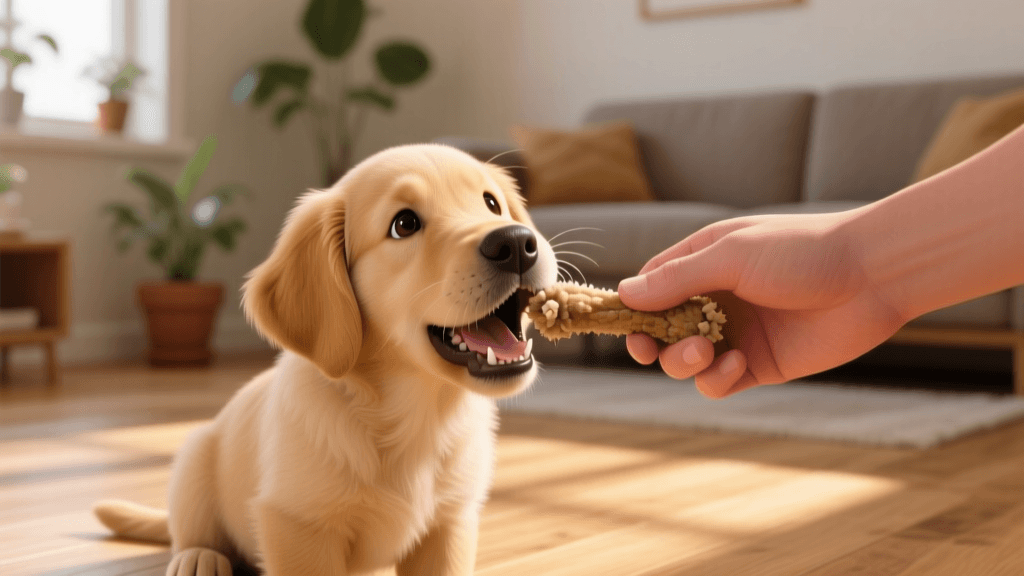
Between 12 and 16 weeks of age, your Golden Retriever will begin losing their baby teeth, a process that continues until they are about six months old. During this window, their urge to chew will be insatiable. Goldens are naturally 'mouthy' dogs—they were bred to carry waterfowl—so providing appropriate outlets for their chewing instinct is mandatory to save your furniture and baseboards.
Stock up on durable, safe chew toys. The KONG Classic (Red) or KONG Extreme (Black) is a staple. Stuff it with a mixture of plain Greek yogurt, mashed bananas, and peanut butter (ensure it is xylitol-free), then freeze it overnight. The cold texture soothes inflamed gums while the mental challenge of extracting the food tires them out. Additionally, Nylabone Power Chew Textured Dog Chews are excellent for heavy chewers. Avoid rawhides and cooked bones, which pose severe choking and intestinal blockage hazards.
Early Socialization and Tapping into Retrieving Instincts
The critical socialization window for puppies closes around 16 weeks of age. During this time, your Golden Retriever needs to be exposed to a wide variety of people, surfaces, sounds, and other vaccinated dogs. Enroll in a puppy kindergarten class (typically costing $150 to $300 for a six-week session) that utilizes positive reinforcement methods. This environment is crucial for teaching bite inhibition, as Golden puppies often play too rough with their littermates and need to learn how to moderate their jaw pressure.
Because Goldens are natural retrievers, you can begin harnessing their genetic instincts early. Instead of traditional fetch, which can be hard on developing joints, play 'find it' games. Hide their kibble or favorite plush toys around the living room and encourage them to use their nose to track the items down. This builds confidence, engages their brain, and satisfies their working drive without the physical impact of repetitive jumping and fetching.
Grooming the Golden Coat
A Golden Retriever's glorious double coat requires a dedicated grooming routine from day one to get them accustomed to being handled. The outer coat is water-repellent, while the dense undercoat provides insulation. As your puppy matures, their undercoat will thicken, making them prone to severe matting behind the ears, under the armpits, and on the 'feathers' of their legs and tail.
Essential Grooming Tools:
- Slicker Brush: A high-quality brush like the Chris Christensen Big G (approx. $65) is an investment that easily glides through the coat without scratching the skin.
- Undercoat Rake: Use this gently once a week to remove loose undercoat hairs and prevent tangles.
- Steel Comb: Perfect for checking for mats behind the ears and on the tail feathers.
Bathe your puppy only when necessary (usually once a month) using a gentle, oatmeal-based puppy shampoo. Over-bathing strips the natural oils from their coat, leading to dry, itchy skin. Brush your puppy's teeth daily using a dog-specific enzymatic toothpaste, and trim their nails every two to three weeks to prevent orthopedic issues caused by altered foot placement.
Health Screenings and Veterinary Milestones
While Golden Retrievers are generally robust, the breed is predisposed to certain genetic health conditions. Responsible breeding and proactive veterinary care are your first lines of defense. The Golden Retriever Club of America strongly advises that breeders screen their breeding stock for hip and elbow dysplasia, cardiac issues, and specific eye disorders. As an owner, you must ensure your puppy maintains a lean, healthy weight throughout their first year to minimize stress on their developing joints.
According to the Orthopedic Foundation for Animals, environmental factors such as rapid growth, excessive exercise on hard surfaces, and obesity during puppyhood can significantly increase the severity of hip dysplasia in genetically predisposed dogs. Avoid forcing your puppy to run on pavement, jump into the back of an SUV, or navigate slippery hardwood floors. Use area rugs to provide traction in your home and carry your puppy up and down steep stairs until they are at least six months old.
Veterinary Checklist for the First Year:
- 8, 12, and 16 weeks: DAPP (Distemper, Adenovirus, Parainfluenza, Parvovirus) vaccines.
- 12 to 16 weeks: Rabies vaccine (as mandated by local law).
- 16 weeks: Bordetella vaccine (required for puppy classes and doggy daycare).
- Monthly: Broad-spectrum heartworm, flea, and tick prevention (e.g., Simparica Trio or NexGard).
- 12 months: Transition to adult large-breed food and schedule a comprehensive wellness exam.
Raising a Golden Retriever puppy is a labor of love that demands time, financial commitment, and unwavering consistency. By adhering to a structured feeding regimen, prioritizing early positive socialization, and staying vigilant about their joint health, you will lay the groundwork for a joyful, well-mannered companion who will enrich your life for the next decade and beyond.
hannah-wickes
All our authors care for dogs every day — read more of their work on the authors page.