Getting a Dog in Winter: Home Prep and First Week
Adopting a dog in winter requires special preparation. Discover essential home prep, cold-weather gear, and first-week survival tips for your new puppy.
Bringing a new dog or puppy into your home is a life-changing event filled with joy, companionship, and a fair share of chaos. However, when your adoption date falls in the middle of winter, the learning curve steepens. Freezing temperatures, hazardous sidewalk chemicals, and shortened daylight hours introduce unique challenges that first-time and seasoned owners alike must navigate. According to the American Veterinary Medical Association (AVMA), cold weather brings specific health and safety risks that require proactive management, especially for young puppies or senior dogs transitioning into a new environment.
Whether you are adopting a cold-weather breed like a Siberian Husky or a short-coated companion like a Greyhound, preparing your home and schedule for a winter arrival is critical. This comprehensive guide covers winterizing your home, selecting the right cold-weather gear, mastering winter potty training, and safely socializing your new dog during the most crucial developmental weeks.
Winterizing Your Home Against Hidden Hazards
Before your new dog crosses the threshold, you must puppy-proof your home with a winter-specific lens. The coziness of a winter home often hides severe toxicological and physical hazards for curious canines.
Toxic Winter Chemicals
The most notorious winter danger is antifreeze (ethylene glycol). It has a sweet taste that attracts dogs, but even a few licks can cause fatal kidney failure. Ensure all automotive fluids are stored in locked cabinets or high shelves. Similarly, rock salt and chemical ice melts (often containing calcium chloride or sodium chloride) can cause gastrointestinal distress if licked off paws, and severe chemical burns on the paw pads themselves. The ASPCA strongly recommends using pet-safe ice melts around your property and wiping your dog’s paws with a damp towel immediately after every outdoor excursion.
Heating Sources and Fire Safety
Space heaters, radiators, and fireplaces are magnets for cold dogs seeking warmth. Puppies, in particular, lack the spatial awareness to avoid burning their skin or singeing their fur. Install sturdy fireplace screens and place space heaters in areas restricted by baby gates. Furthermore, ensure your carbon monoxide and smoke detectors are fully functional, as dogs are just as susceptible to indoor air quality issues as humans.
Essential Cold-Weather Gear for New Dogs
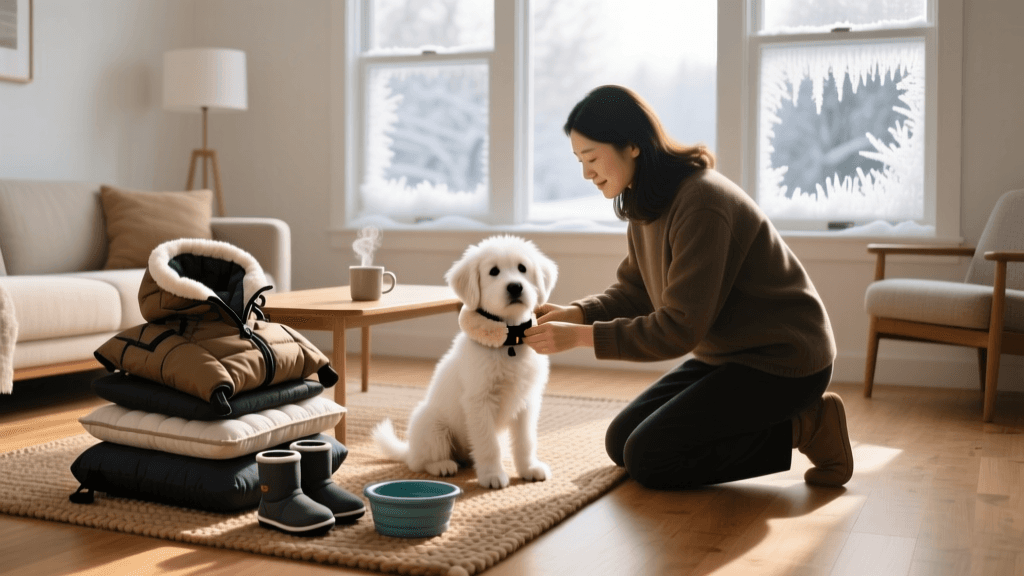
Equipping your new dog with the right gear is not just about comfort; it is a matter of health and safety. Below is a structured comparison of essential winter gear you should purchase before bringing your dog home.
| Gear Item | Primary Purpose | Estimated Cost | Top Features to Look For |
|---|---|---|---|
| Insulated Dog Coat | Core warmth and wind protection | $35 - $80 | Waterproof outer shell, fleece lining, belly coverage, reflective trim |
| Paw Protection Wax | Shielding pads from ice and salt | $15 - $25 | Beeswax base, vitamin E, non-toxic if licked (e.g., Musher's Secret) |
| Dog Booties | Physical barrier against snow/ice | $20 - $60 | Anti-slip rubber soles, adjustable velcro, water-resistant fabric |
| Indoor Potty System | Emergency relief during blizzards | $25 - $150 | Real grass patches (e.g., Fresh Patch) or elevated grates with pee pads |
| Calming Heat Bed | Warmth and anxiety reduction | $40 - $90 | Self-heating thermal layers, removable washable cover, bolstered edges |
Note: Not all dogs require coats. Double-coated breeds (e.g., Malamutes, Newfoundlands) naturally regulate heat and may overheat in insulated clothing. Reserve coats for short-haired, small, elderly, or sick dogs.
Potty Training in Freezing Temperatures
Potty training is notoriously difficult in the winter. Puppies despise the feeling of cold snow on their bare bellies and paws, often leading them to hold their bladder until they return indoors, only to have an accident on your rug. To combat this, you must create a welcoming outdoor environment.
The 'Clear Zone' Method
Before bringing your puppy home, shovel a designated 4x4 foot 'potty zone' in your yard down to the bare grass or dirt. Spread a thin layer of pet-safe ice melt to keep it clear. When you take your puppy out, lead them directly to this familiar, snow-free zone on a leash. This minimizes their exposure to the cold and encourages them to do their business quickly.
Timing and Patience
A general rule of thumb for puppy bladder control is one hour for every month of age (e.g., a 3-month-old puppy can hold it for about 3 hours). However, cold weather can increase urgency. Take your puppy out immediately upon waking, after every meal, and after vigorous play sessions. If the weather is dangerously cold (below 20°F / -6°C), limit outdoor potty breaks to 5 minutes. If they do not go, bring them inside, confine them to a small playpen to prevent accidents, and try again 15 minutes later.
Indoor Alternatives
For high-rise apartment dwellers or areas experiencing severe blizzards, an indoor potty system is a lifesaver. Real grass subscription services like Fresh Patch or Porch Potty provide a natural texture that translates well to outdoor grass once the weather warms up. Place the indoor potty in a consistent location, such as a bathroom or enclosed balcony, and use an enzymatic cleaner for any missed spots to eliminate lingering odors.
Navigating the Critical Socialization Window
One of the greatest tragedies of winter adoptions is delayed socialization. A puppy’s primary socialization window closes between 12 and 16 weeks of age. Waiting until spring to introduce your puppy to the world can result in lifelong fear and anxiety. The Humane Society of the United States emphasizes that safe, controlled exposure to new stimuli is vital for behavioral health, regardless of the season.
Safe Winter Socialization Tactics
- The Pet Stroller: If the ground is covered in ice and toxic salts, place your puppy in a pet stroller or carry them in a canine sling. Walk through busy shopping centers, near train stations, or outside grocery stores. This exposes them to strange noises, diverse groups of people, and moving objects without risking frostbite or chemical burns on their paws.
- Indoor Puppy Classes: Enroll in a positive-reinforcement puppy kindergarten held in a climate-controlled indoor facility. Ensure all attending puppies have had their first round of vaccinations. This provides crucial dog-to-dog play in a safe environment.
- Car Rides: Winter is the perfect time to acclimate your dog to the car. Take short, 10-minute drives to the drive-thru for a 'puppuccino' or simply park near a busy intersection with the engine running and the heater on, letting your puppy watch the world go by from the safety of the backseat.
- Surface Exposure: Indoors, lay out different textures for your puppy to walk on: bubble wrap, baking sheets, grates, and slick rugs. This builds confidence and prepares their paws for the slippery ice they will eventually encounter outdoors.
First-Week Winter Schedule and Enrichment
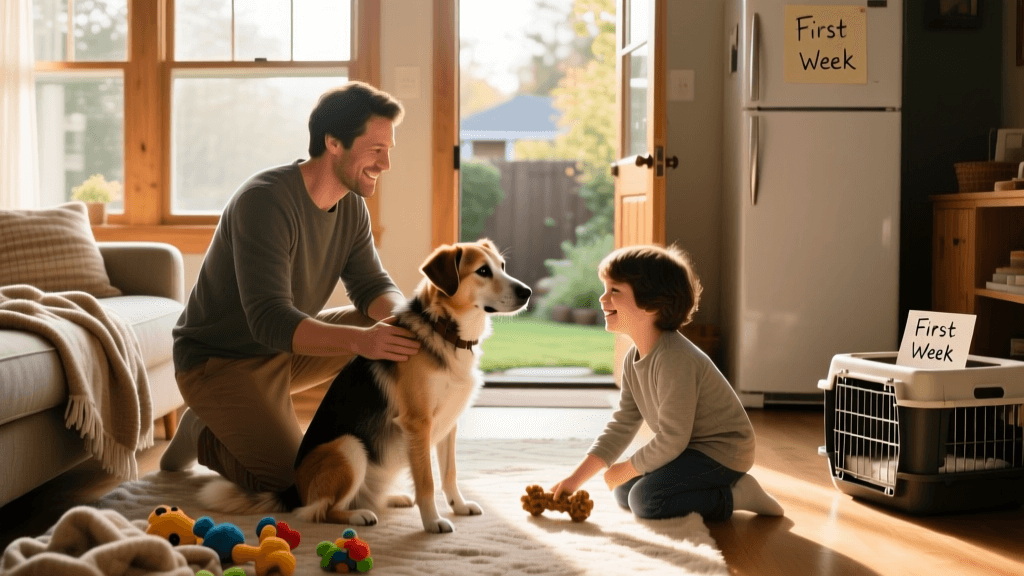
The first week with a new dog should focus on decompression and bonding. Winter naturally lends itself to indoor nesting, making it an ideal time to establish routines and mental enrichment habits.
Beating the 'Winter Cabin Fever'
Because your outdoor exercise time will be limited by daylight and temperature, you must replace physical exhaustion with mental fatigue. Mental enrichment tires a dog out just as effectively as a long run. Prepare the following before your dog arrives:
- Snuffle Mats and Lick Mats: Hide your dog’s daily kibble ration in a snuffle mat to encourage natural foraging behaviors. Spread wet food or plain pumpkin puree on a textured lick mat and freeze it; licking is a proven self-soothing behavior for anxious dogs.
- Food-Dispensing Toys: Ditch the food bowl. Use toys like the KONG Classic (stuffed with soaked kibble and frozen overnight) or puzzle feeders to make your dog work for their meals. This prevents boredom-induced destructive chewing.
- Short Training Bursts: Keep training sessions to 3–5 minutes, multiple times a day. Teach foundational cues like 'touch' (hand targeting), 'sit', and 'leave it' using high-value treats like boiled chicken or freeze-dried liver.
The Winter Walk Rule: For puppies, limit structured outdoor walks to 5 minutes per month of age, twice a day. In winter, this time may need to be halved depending on the temperature and the dog's coat type. Always prioritize mental stimulation indoors over forced outdoor endurance.
Adjusting Diet and Monitoring Health
Finally, monitor your dog’s caloric intake. Dogs that spend a significant amount of time outdoors in the cold burn more calories to maintain their core body temperature and may require a 10-20% increase in food. Conversely, a dog whose exercise routine has plummeted due to winter storms may quickly gain unhealthy weight. Consult your veterinarian during your first-week checkup to establish a baseline weight and tailor a winter-specific feeding plan.
Bringing a dog home in the winter requires extra vigilance, specialized gear, and a commitment to indoor enrichment. By winterizing your home, protecting their paws, and creatively navigating the socialization window, you will lay the foundation for a resilient, well-adjusted companion ready to enjoy the changing seasons by your side for years to come.
priya-sutaria
All our authors care for dogs every day — read more of their work on the authors page.