Best Smart Pet Cameras for Separation Anxiety in 2026
Compare the best smart pet cameras for separation anxiety in 2026. We review Furbo 360, Petcube Bites, and Eufy features, treat tossing, and AI alerts.
The Modern Reality of Canine Separation Anxiety in 2026
As we navigate the settled hybrid-work landscape of 2026, our dogs have grown accustomed to a specific rhythm of human presence and absence. While flexible schedules have been a boon for pet owners, the inconsistent comings and goings have triggered a unique wave of canine stress. Separation anxiety is no longer just a pandemic-era phenomenon; it has evolved into a chronic challenge for multi-pet households and single-dog homes alike. When left alone, dogs suffering from this condition may exhibit destructive chewing, excessive vocalization, inappropriate elimination, and even self-harm.
Understanding the root of this distress is the first step toward mitigation. According to the ASPCA, separation anxiety is triggered when dogs become upset because of separation from their guardians, the people to whom they are most attached. It is not a display of spite or poor training, but rather a genuine panic response. To manage this effectively in 2026, veterinary behaviorists strongly recommend combining gradual desensitization training with modern smart home technology. Specifically, interactive smart pet cameras have become indispensable tools for monitoring, interrupting, and rewarding calm behavior while you are out of the house.
Why a Smart Camera is Your Best Training Tool
In the past, owners had to rely on neighbors or expensive daycare services to gauge how their dog was handling alone time. Today, high-definition smart cameras allow you to observe your dog's body language in real-time. You can pinpoint the exact moment their anxiety escalates—whether it is when you pick up your keys, when the garage door closes, or twenty minutes after you leave. More importantly, two-way audio and remote treat-tossing capabilities allow you to actively participate in your dog's desensitization protocol from anywhere in the world.
The Humane Society of the United States emphasizes that managing the environment and providing positive reinforcement for calm, independent behavior are cornerstones of treating separation-related distress. A smart camera bridges the gap between your physical absence and your dog's need for positive association.
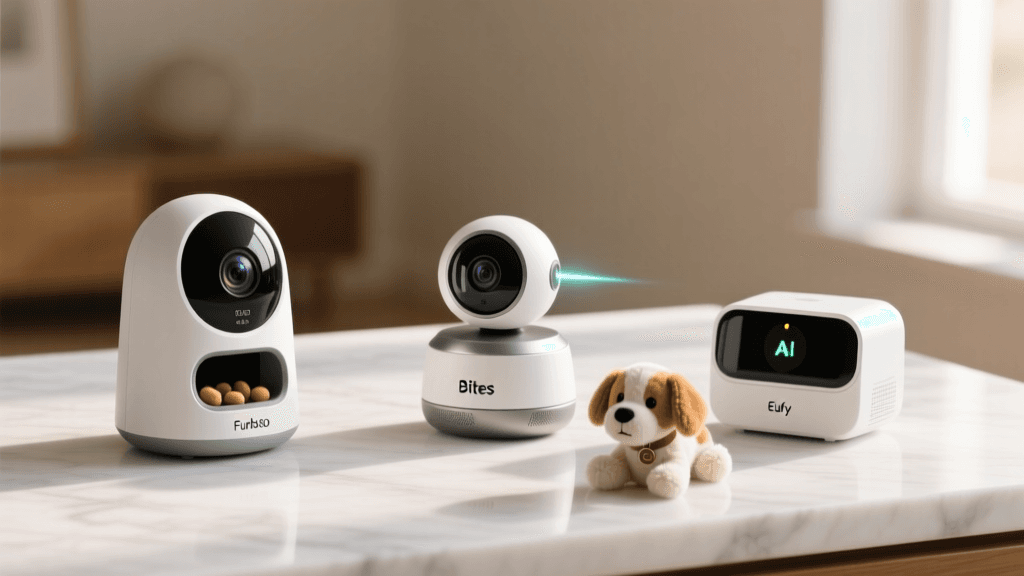
Top 3 Pet Cameras for Alone Time in 2026
1. Furbo 360: The Premium Treat-Tossing Experience
The Furbo 360 remains the gold standard for interactive pet monitoring in 2026. Its motorized base allows the camera to rotate a full 360 degrees, ensuring that no corner of your dog's sanctuary is out of sight. The auto-toss feature can be programmed to dispense treats at randomized intervals, which is critical for keeping anxious dogs engaged and preventing them from fixating on the front door. Furbo's proprietary Dog Nanny subscription service utilizes advanced AI to send push alerts for specific distress behaviors, including continuous barking, crying, and even vomiting. Priced at approximately $249, with a $6.99 monthly subscription, it is an investment in your dog's mental health.
2. Petcube Bites 2 Lite: The Budget-Friendly Interactive Choice
For owners who need treat-dispensing capabilities without the premium price tag, the Petcube Bites 2 Lite is an outstanding option. Retailing around $149 in 2026, it features 1080p HD video, a 160-degree wide-angle lens, and a built-in treat hopper that holds up to half a pound of kibble or small snacks. The treat-tossing mechanism is slightly louder than the Furbo, which can actually serve as a useful auditory cue for dogs undergoing clicker-style remote training. The Petcube app also includes a vet chat feature, providing quick access to professionals if you notice concerning behavioral changes on the live feed.
3. Eufy Security Indoor Cam Dog and Cat: The AI Behavior Tracker
If your primary goal is behavioral tracking rather than treat tossing, the Eufy Security Indoor Cam is the top contender for 2026. Priced aggressively at $99, its standout feature is the on-device AI chip that specifically recognizes pet movements and sounds without requiring a monthly cloud subscription. It stores footage locally on a microSD card, appealing to privacy-conscious owners. The Eufy app generates daily activity reports, allowing you to track exactly how many hours your dog spent sleeping versus pacing. While it lacks a treat dispenser, its crystal-clear two-way audio is perfect for delivering verbal reassurance during mild anxiety spikes.
2026 Smart Camera Comparison Chart
| Camera Model | Resolution | Treat Capacity | AI Alerts | 2026 Est. Price |
|---|---|---|---|---|
| Furbo 360 | 1080p HD | 1 Cup | Bark, Cry, Vomit, Person | $249 |
| Petcube Bites 2 Lite | 1080p HD | 0.5 lb | Bark, Motion | $149 |
| Eufy Indoor Cam | 2K QHD | N/A | Pet Detection, Crying | $99 |
Step-by-Step Camera Desensitization Protocol
Simply buying a camera will not cure separation anxiety; it is how you use the device that matters. Follow this structured protocol to build your dog's confidence in 2026.
Phase 1: Baseline Assessment (Days 1-3)
Set up your camera and leave the house for just 5 minutes. Do not make a fuss when leaving or returning. Review the footage to identify your dog's specific stress triggers and threshold. Do they pace immediately? Do they settle after two minutes? This data dictates your starting point.
Phase 2: Micro-Departures and Remote Rewarding (Days 4-14)
Begin leaving for intervals that fall just below your dog's anxiety threshold. If your dog panics at the 5-minute mark, start with 2-minute absences. While watching the live feed, the moment your dog lies down or exhibits a relaxed posture, use the app to toss a high-value treat or speak through the two-way audio in a calm, soothing voice. You are teaching them that being alone predicts good things.
Phase 3: Variable Interval Reinforcement (Weeks 3-6)
Anxiety thrives on predictability. Use your camera's auto-toss features or manual app controls to dispense treats at randomized intervals. A treat might drop after 3 minutes, then 12 minutes, then 7 minutes. This variable reinforcement schedule keeps the dog's brain engaged in a positive scavenger hunt rather than fixating on your return.
Phase 4: Duration Building (Weeks 7+)
Gradually increase your time away by 10% to 20% each week, provided the camera footage shows your dog remaining relaxed. If you see a regression (pacing, panting, whining), you have pushed too fast. Drop back to the previous successful duration and rebuild.
Beyond the Camera: Building a 2026 Sanctuary
A smart camera is the eye in the sky, but your dog's physical environment must also be optimized for alone time. Creating a dedicated sanctuary space can drastically reduce cortisol levels.
- Pheromone Therapy: The Adaptil Optimum Diffuser has been updated for 2026 with a broader coverage radius and a refined pheromone profile that mimics the comforting messages of a nursing mother dog. Plug it in near your dog's bed at least 24 hours before you begin your training protocol.
- Long-Lasting Enrichment: Ditch the standard food bowl. Use a Kong Classic stuffed with frozen bone broth and goat milk, or a specialized lick mat. Licking is a naturally soothing behavior for dogs that releases endorphins, helping to counteract the adrenaline spike of your departure.
- Acoustic Masking: Anxious dogs are easily triggered by external noises like delivery trucks or neighbors. Use a smart speaker to play continuous brown noise or specially designed canine calming playlists to mask auditory triggers while you are away.
When to Call a Professional
While smart cameras and at-home protocols are highly effective for mild to moderate separation anxiety, severe cases require professional intervention. If your camera footage reveals that your dog is injuring themselves trying to escape crates or windows, or if they completely refuse high-value treats while you are gone, their panic is overriding their survival instincts. In these instances, pause the alone-time training and consult a board-certified veterinary behaviorist. They may recommend a combination of SSRIs, anti-anxiety medications, and a modified, slower-paced behavioral modification plan.
Ultimately, managing separation anxiety in 2026 is about leveraging technology to foster independence. By pairing the right smart camera with patience, positive reinforcement, and a calming environment, you can help your dog realize that alone time is not something to fear, but rather an opportunity to rest and recharge.
robin-maitland
All our authors care for dogs every day — read more of their work on the authors page.