Best Treat-Tossing Pet Cameras for Dog Separation Anxiety 2026
Discover the best treat-tossing pet cameras for dog separation anxiety in 2026. Compare Furbo, Eufy, and Petcube with expert desensitization tips.
Navigating Canine Separation Anxiety in 2026
As hybrid work models and return-to-office mandates continue to evolve in 2026, millions of dog owners are facing a familiar challenge: leaving their pets home alone. For dogs that struggle with isolation, the transition from constant companionship to hours of solitude can trigger severe distress. Canine separation anxiety is a complex behavioral condition characterized by destructive behavior, excessive vocalization, and inappropriate elimination when a dog is left alone or separated from their primary attachment figures. According to the ASPCA's guide on separation anxiety, this condition affects a significant portion of the pet population, requiring patience, structured training, and the right environmental management tools.
In recent years, smart home technology has become a cornerstone of modern dog care. Specifically, treat-tossing pet cameras have transitioned from novelty gadgets to essential behavioral training aids. When used correctly as part of a broader desensitization protocol, these devices allow owners to monitor their dog's stress levels, interrupt anxiety loops, and deliver positive reinforcement remotely. However, not all cameras are created equal, and simply throwing treats at a panicked dog will not cure underlying anxiety. This guide explores the top treat-tossing cameras available in 2026 and outlines a professional-grade protocol for using them to help your dog thrive when home alone.
Understanding Separation Anxiety vs. Isolation Distress
Before investing in smart pet technology, it is crucial to understand what your dog is experiencing. True separation anxiety is a panic response triggered specifically by the absence of a particular person or group of people. In contrast, isolation distress occurs when a dog simply does not want to be left alone and will accept the company of any human or even another pet. Dogs with true separation anxiety often exhibit signs of panic before you even leave the house, triggered by 'departure cues' such as picking up your keys, putting on your shoes, or grabbing your work bag.
The Humane Society's separation anxiety resources emphasize that punishment is never an effective treatment for these conditions. Because the behavior is rooted in fear and panic, scolding a dog for chewing a doorframe or barking will only increase their overall stress levels. Instead, modern veterinary behaviorists recommend a combination of counter-conditioning, systematic desensitization to departure cues, and environmental enrichment. This is where interactive cameras bridge the gap between your physical absence and your dog's need for positive association.
Top Treat-Tossing Cameras for Anxiety Relief in 2026
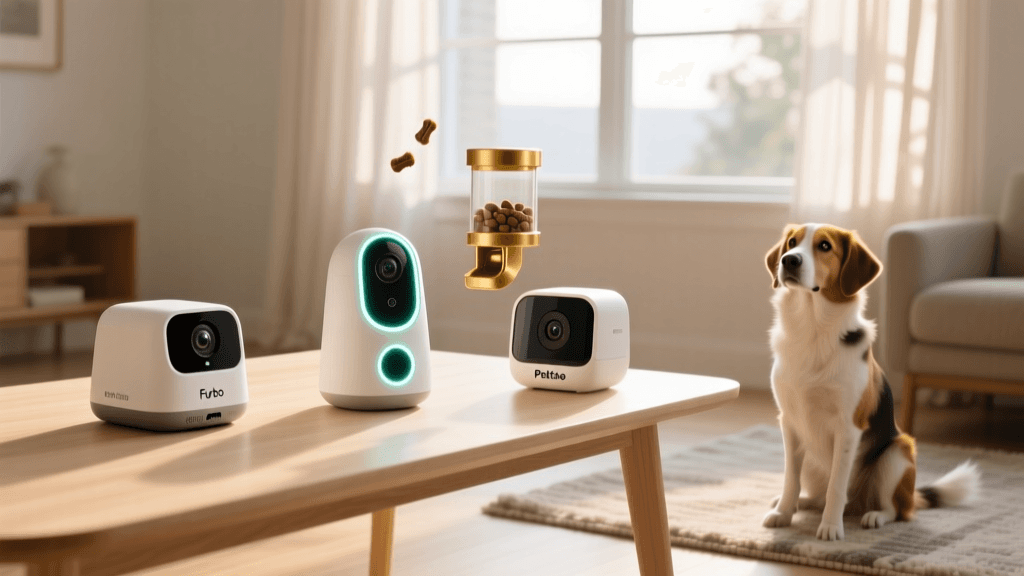
When selecting a camera specifically for separation anxiety training, you need more than just a video feed. You need reliable two-way audio, high-definition night vision, precise treat-tossing mechanics, and AI-driven smart alerts that notify you if your dog is barking or crying. Here are the top three contenders dominating the market in 2026.
1. Furbo 360 (3rd Generation)
The Furbo brand remains synonymous with pet cameras, and their latest 360-degree model is a powerhouse for anxiety management. The rotating base allows you to follow your dog around the room, ensuring they never wander out of frame during a panic episode. The treat-tossing mechanism is highly adjustable, allowing you to dispense up to 30 treats of varying sizes. Crucially for anxiety training, the Furbo features 'Smart Dog Alerts' that send push notifications to your phone when it detects barking, vomiting, or crying, allowing you to intervene via two-way audio before a full-blown panic attack escalates.
2. Eufy Pet Dog Camera D605
Eufy has made massive strides in the pet tech space by prioritizing local storage and superior wide-angle lenses without requiring a mandatory monthly subscription. The D605 model features a 170-degree ultra-wide lens, meaning you can place it in the corner of a room and still capture the entire space without a rotating base. The treat tosser is notably quiet compared to competitors, which is vital for noise-sensitive dogs who might be startled by the mechanical whir of a dispenser. It also includes a built-in laser pointer and automated treat schedules, which can be programmed to dispense treats at randomized intervals to keep your dog engaged throughout the day.
3. Petcube Bites 2 Lite
For owners on a budget who still need reliable treat-dispensing capabilities, the Petcube Bites 2 Lite offers excellent value. While it lacks the 360-degree rotation of the Furbo and the ultra-wide lens of the Eufy, its 1080p HD video, 160-degree viewing angle, and 4x digital zoom are more than sufficient for monitoring a single room. The treat hopper holds a generous amount of kibble or small training treats, and the accompanying app allows for easy scheduling. It is an ideal entry-level device for owners beginning the initial stages of departure desensitization.
2026 Smart Camera Comparison Chart
| Feature | Furbo 360 (3rd Gen) | Eufy Pet D605 | Petcube Bites 2 Lite |
|---|---|---|---|
| Field of View | 360° Rotating | 170° Ultra-Wide | 160° Fixed |
| Video Resolution | 2K HD | 2K HD | 1080p HD |
| Treat Capacity | ~30 Treats | ~35 Treats | ~40 Treats |
| Smart Alerts | Bark, Cry, Vomit, Person | Bark, Cry, Motion | Bark, Motion |
| Monthly Subscription | Optional (Furbo Dog Nanny) | None (Local Storage) | Optional (Petcube Care) |
| Est. 2026 Retail Price | $249.99 | $199.99 | $149.99 |
The Desensitization Protocol: Using Cameras for Training
Buying the camera is only the first step. To actually alleviate separation anxiety, you must use the device to execute a systematic desensitization and counter-conditioning protocol. Never use the camera to yell at your dog or toss treats while they are actively panicking, as this can inadvertently reinforce the fearful state. Follow these steps to build your dog's confidence.
Step 1: Baseline Observation and Trigger Mapping
For the first week, use the camera purely for observation. Leave your dog alone for very short periods (5 to 10 minutes) and watch the playback. Take notes on exactly when your dog begins to show signs of stress. Do they pace immediately? Do they stare at the door? Do they bark after three minutes? Understanding your dog's specific threshold and timeline is critical for the next steps.
Step 2: Desensitizing Departure Cues
Dogs with separation anxiety often begin to panic before you even walk out the door. You must decouple your departure cues from the actual act of leaving. Pick up your keys, then sit back down on the couch. Put on your coat, then make a cup of coffee. Do this repeatedly throughout the day without ever leaving. Once your dog stops reacting to these cues, you can begin stepping outside for mere seconds, then returning, all while monitoring their reaction via your camera's live feed.
Step 3: The 'Toss and Retreat' Method
Once your dog is comfortable with you stepping out for a few minutes, introduce the treat tosser. The goal is to create a positive association with your absence. Step outside, close the door, and wait for your dog to settle. Toss a high-value treat through the camera. Wait 30 seconds. Toss another. The camera becomes a predictable, positive event that occurs only when you are gone. Over weeks, gradually increase the time between treat tosses, and extend the duration of your absences from minutes to hours.
Step 4: Automated Enrichment Scheduling
As your dog's confidence grows, transition from manual treat tossing to automated schedules. Use the Eufy or Furbo app to program random treat dispenses throughout your workday. This keeps your dog's brain engaged in 'foraging' behavior, which naturally lowers cortisol levels and promotes relaxation. Pair this with long-lasting chews or frozen lick mats left on the floor before you depart.
Complementary Alone-Time Strategies
Technology should be part of a holistic approach to canine mental health. In 2026, veterinary behaviorists strongly recommend combining smart cameras with environmental modifications. Consider using synthetic dog-appeasing pheromone (DAP) diffusers, such as Adaptil, in the room where your dog rests. These pheromones mimic the comforting scent of a nursing mother dog and can significantly reduce baseline anxiety levels.
Additionally, acoustic therapy is highly effective. Leave a white noise machine running or play specially designed canine calming music to mask outside triggers like passing cars, delivery drivers, or neighborhood dogs. Finally, ensure your dog receives adequate physical exercise and mental enrichment before you leave. A 45-minute sniffari (a decompression walk where the dog leads the pace and sniffs freely) does more to tire a dog's nervous system than a simple walk around the block.
When Technology Isn't Enough
While treat-tossing cameras and rigorous training protocols can resolve mild to moderate isolation distress, severe separation anxiety is a medical condition that often requires pharmaceutical intervention. If your dog is injuring themselves trying to escape through windows or doors, refusing food for hours, or exhibiting extreme panic that does not respond to desensitization, it is time to consult a professional. A board-certified veterinary behaviorist can evaluate your dog and may prescribe anti-anxiety medications, such as SSRIs, to lower their panic threshold enough for training to actually take effect. Remember, seeking professional help is not a failure; it is a vital step in ensuring your dog's long-term welfare and your own peace of mind.
anouk-beaumont
All our authors care for dogs every day — read more of their work on the authors page.