Cross-Country Moving With A Senior Dog: 2026 Survival Guide
Discover essential tips, orthopedic gear, and calming strategies for relocating cross-country with an arthritic senior dog in 2026.
The Unique Challenges of Relocating an Aging Canine
Moving across the country is a monumental task for any pet owner, but when your companion is a senior dog, the logistics become significantly more complex. As we navigate 2026, advancements in veterinary care mean our dogs are living longer, healthier lives. However, the biological realities of aging—such as osteoarthritis, sensory decline, and Canine Cognitive Dysfunction (CCD)—remain unchanged. A cross-country move disrupts the familiar scents, routines, and physical environments that aging dogs rely on to feel secure. According to the American Kennel Club, senior dogs thrive on predictability; stripping that away abruptly can lead to severe anxiety, regression in house training, and exacerbated joint pain. This comprehensive guide will walk you through the exact steps, gear, and veterinary preparations required to safely relocate your senior dog in 2026.
Pre-Move Veterinary Prep and Documentation
Your relocation timeline should begin at least 45 days before your departure date. Schedule a comprehensive senior wellness exam with your primary veterinarian. In 2026, while veterinary telehealth is excellent for follow-ups and behavioral consultations, a physical exam is mandatory to assess joint mobility, cardiac health, and dental status before a grueling road trip.
Securing Health Certificates and Refills
If you are driving, you might assume a health certificate is unnecessary. However, the American Veterinary Medical Association strongly recommends carrying a current Certificate of Veterinary Inspection (CVI) regardless of your mode of transport. Some states and almost all pet-friendly hotel chains require proof of a recent health exam and up-to-date rabies vaccination. Additionally, secure a 90-day supply of all daily medications, joint supplements (like Dasuquin Advanced or GlycoFlex), and prescription diets. Supply chain fluctuations can still occur, and finding a specific prescription diet in a new, unfamiliar town during your first week of unpacking is a stressor you can easily avoid.
Choosing the Right Travel Gear for Senior Joints
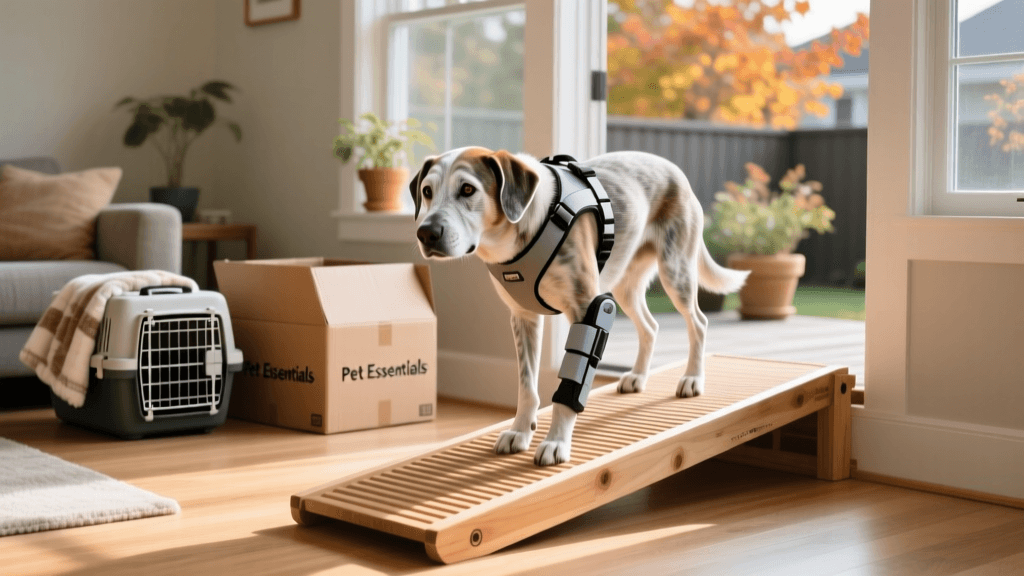
The physical act of entering and exiting a vehicle can cause micro-traumas to arthritic joints. Relying on your aging dog to 'jump in' is no longer viable. Investing in specialized, ergonomically designed travel gear is non-negotiable for a cross-country move. Below is a comparison of essential 2026 travel gear tailored specifically for the senior canine body.
| Gear Category | Recommended Model | Why It Works for Seniors | Estimated Cost |
|---|---|---|---|
| Telescoping Ramp | PetSafe Happy Ride Extra Long | Provides a gentle 18-degree incline; 20-inch width prevents side-stepping missteps. | $130 - $160 |
| Support Harness | Ruffwear Web Master Harness | Features a padded, reinforced top handle to safely lift and support the dog's hindquarters. | $75 - $90 |
| Orthopedic Travel Bed | Kurgo Loft Travel Bed | Water-resistant, 3-inch memory foam base protects joints from hard hotel floors and car trunks. | $80 - $110 |
| GPS Tracker | Tractive GPS Dog 5 / 2026 Edition | Real-time tracking and virtual fences; crucial if a disoriented senior dog slips out at a rest stop. | $50 + Sub |
The Importance of Ramp Angles
When selecting a ramp, length is more important than portability. A shorter ramp creates a steeper incline, which places immense strain on a dog's carpal (wrist) and shoulder joints. Aim for a ramp that extends to at least 60 inches for an SUV or truck bed. Always train your dog to use the ramp on flat ground weeks before the move, using high-value treats to build positive associations.
Managing Anxiety and Motion Sickness on the Road
Senior dogs are particularly susceptible to motion sickness and travel-induced anxiety. The unfamiliar motion of a car, combined with the fading of their senses, can cause severe distress. The ASPCA recommends a multi-modal approach to calming pets during major transitions.
Pharmaceutical and Supplement Interventions
Consult your veterinarian about situational anti-anxiety medications. Medications like Gabapentin or Trazodone are frequently prescribed for travel in 2026 due to their dual-action benefits: they provide mild sedation while also offering neuropathic pain relief for arthritic dogs. Administer a test dose two weeks before the move to monitor for adverse reactions, such as excessive lethargy or gastrointestinal upset. Pair pharmaceuticals with natural supplements like Solliquin or L-theanine chews to promote a baseline of calm.
Pheromones and Environmental Control
Adaptil Transport spray is a synthetic dog-appeasing pheromone that mimics the comforting scent of a nursing mother. Spray it on your dog's travel bed and the car's interior 15 minutes before loading your dog. Keep the car temperature strictly between 68°F and 72°F, as senior dogs have impaired thermoregulation and can overheat or become chilled much faster than younger dogs.
The Drive: Routing and Rest Stops
A cross-country drive with a senior dog cannot be treated like a solo road trip. The goal is to minimize joint stiffness and prevent dehydration. Plan your route to include a rest stop every 3 to 4 hours. During these stops, do not force your dog to walk long distances. A 5-to-10-minute slow sniffari on a soft grassy area is sufficient to allow them to eliminate, stretch, and gather new environmental scents without exhausting their limited energy reserves.
Hydration Strategies
Older dogs often have a diminished thirst drive, which is dangerous in the dry, recycled air of a vehicle. Bring a familiar water bowl and a large jug of water from your home tap. The familiar taste encourages drinking. If your dog refuses water, offer low-sodium bone broth or hydrate their kibble with warm water during hotel stops.
Settling Into the New Home: The First 72 Hours
The arrival at your new home marks the beginning of the decompression phase. The Fear Free initiative emphasizes that the environment must be adapted to the pet, not the other way around. Do not give your senior dog full access to the entire new house immediately; the vast, unfamiliar space will trigger cognitive overload and anxiety.
Creating a Safe Room
Before bringing your dog inside, set up a 'safe room'—a quiet bedroom or den. Place their familiar orthopedic bed, unwashed blankets carrying the scent of your old home, and their water bowls in this room. Keep them confined to this space, with supervised potty breaks on a leash, for the first 48 to 72 hours. This allows their nervous system to acclimate to the new sounds and smells in a controlled, manageable way.
Re-establishing Routine
Dogs with cognitive decline rely heavily on routine to navigate their world. Feed them at the exact same times, walk them for the exact same duration, and administer medications on the same schedule as you did in your previous home. Within a week, gradually expand their access to the rest of the house, one room at a time. Use baby gates to block off hazardous areas like steep staircases until you are confident in their spatial awareness and mobility.
Conclusion
Relocating cross-country with a senior dog requires patience, meticulous planning, and a deep empathy for the physical limitations of an aging body. By leveraging modern veterinary support, investing in joint-friendly travel gear, and prioritizing a slow, scent-driven decompression period in your new home, you can ensure your loyal companion arrives safely and comfortably. Your dog has spent their life guiding you through your own transitions; in 2026, it is your turn to guide them through theirs with grace and care.
beth-carrasco
All our authors care for dogs every day — read more of their work on the authors page.