2026 Furbo 360 Desensitization Protocol for Separation Anxiety
Master your dog's separation anxiety in 2026 with our step-by-step Furbo 360 treat-tossing desensitization protocol, featuring expert timing and routines.
The 2026 Separation Anxiety Landscape: Navigating the New Normal
As we settle into the permanent hybrid work structures of 2026, a secondary wave of canine separation anxiety has emerged. Dogs adopted during the remote-work boom are now facing consistent three-to-four-day office mandates, leaving them confused, stressed, and prone to destructive behaviors. Separation anxiety is not merely 'missing you'; it is a profound panic disorder characterized by elevated cortisol levels, pacing, vocalization, and attempts to escape confinement. According to the ASPCA's comprehensive guide on separation anxiety, this condition requires systematic desensitization and counterconditioning rather than simple obedience training.
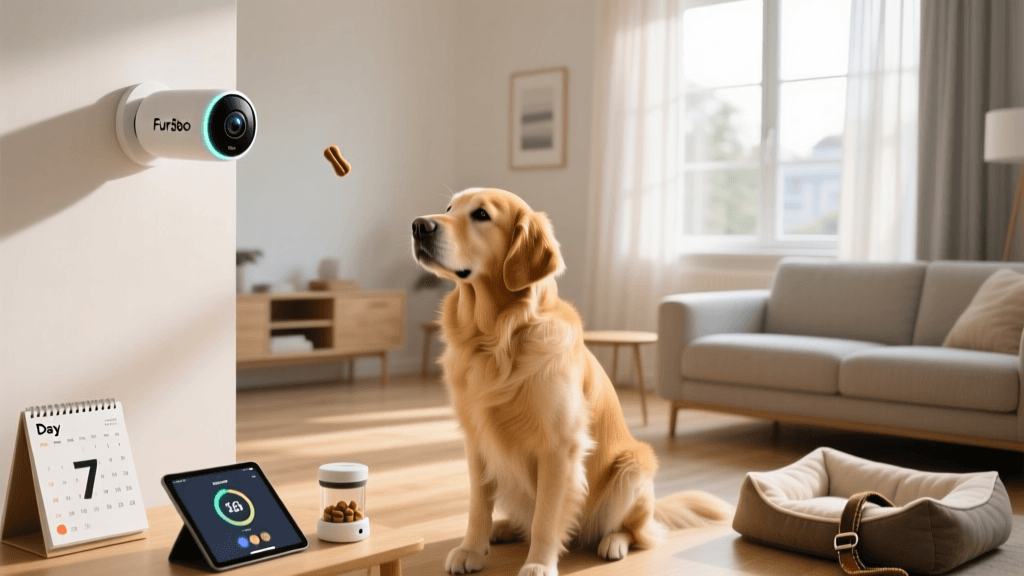
To combat this, modern dog owners are turning to smart home technology to bridge the gap between departure and return. The Furbo 360 Dog Camera has become the gold standard for behavioral conditioning in 2026. With its rotating 360-degree view, auto-tossing capabilities, and AI-driven bark alerts, it allows owners to actively interrupt anxiety cycles before they escalate into full-blown panic attacks. This article outlines a rigorous, science-backed 30-day protocol utilizing the Furbo 360 to rewire your dog's emotional response to being left alone.
Why the Furbo 360 is Essential for Alone-Time Conditioning
Traditional training methods often rely on passive desensitization—leaving the dog alone for short intervals and hoping they self-soothe. However, for a dog in a state of hyperarousal, self-soothing is biologically impossible. The amygdala has hijacked their nervous system, and they are trapped in a 'fight or flight' response. The Furbo 360, currently retailing around $199 in 2026, solves this by allowing for active interruption.
By utilizing the treat-tossing feature via the smartphone app, or by setting up the automated treat-dispensing schedules, you can deliver high-value rewards precisely when your dog's anxiety markers (like pacing or whining) begin to spike. Furthermore, the 360-degree panning feature ensures you can track your dog's movements across the entire room, eliminating the blind spots that plagued older, fixed-lens pet cameras. This visual data is crucial for identifying environmental triggers, such as a dog reacting to shadows or street noise while you are away.
The Science of Treat-Tossing and Cortisol Interruption
Behavioral conditioning relies on altering the brain's neurochemical response to a trigger. When your departure cues (putting on shoes, grabbing keys) occur, your dog's brain anticipates isolation and releases stress hormones. By introducing a highly palatable treat via the Furbo 360 immediately after you leave, you force the brain to engage the parasympathetic nervous system through the act of chewing and swallowing. This stimulates the release of dopamine and serotonin, directly counteracting the cortisol spike.
The Humane Society's behavioral resources emphasize that counterconditioning must occur before the dog crosses the threshold of panic. If a dog is already barking frantically, tossing a treat will only reinforce the barking. The Furbo 360's AI bark alerts notify you the moment vocalization begins, allowing you to assess whether to intervene with a voice command, a treat toss, or a return home to reset the training threshold.
The 30-Day Furbo 360 Desensitization Protocol
This protocol is designed for dogs with mild to moderate separation anxiety. For severe cases involving self-mutilation or extreme property destruction, please consult a board-certified veterinary behaviorist before attempting this protocol. Ensure your Furbo 360 is mounted securely at your dog's eye level or slightly above, and filled with small, high-value, low-calorie training treats to prevent gastrointestinal upset.
| Phase | Duration | Absence Time | Furbo 360 Toss Interval | Behavioral Goal |
|---|---|---|---|---|
| Phase 1: Trigger Desensitization | Days 1-7 | 1-5 Minutes | Every 1 Minute | Decouple departure cues (keys, shoes) from the panic response. |
| Phase 2: Short-Term Tolerance | Days 8-14 | 5-15 Minutes | Every 3 Minutes | Break the initial panic cycle and promote immediate settling. |
| Phase 3: Medium-Term Engagement | Days 15-21 | 15-45 Minutes | Every 10 Minutes | Build tolerance to medium gaps; shift focus from door to environment. |
| Phase 4: Real-World Simulation | Days 22-30 | 45-120 Minutes | Randomized (20-40 Mins) | Simulate 2026 hybrid work absences; foster independent relaxation. |
Phase 1: Trigger Desensitization (Days 1-7)
During this phase, you do not actually leave the house for long periods. Instead, you perform your departure routine—putting on your coat, picking up your keys, opening the door—and then immediately close the door and sit on the couch. Use the Furbo app to toss a treat the moment you sit down. This teaches the dog that the sound of the door locking does not always result in prolonged isolation.
Phase 2: Short-Term Tolerance (Days 8-14)
Now you actually leave. Step outside, lock the door, and immediately open the Furbo app. Watch your dog. If they stand at the door and whine, wait for a three-second pause in the whining, then toss a treat away from the door. This rewards the pause and lures them away from the exit point. Set the auto-toss feature to dispense a treat every three minutes to keep them engaged in the center of the room.
Phase 3: Medium-Term Engagement (Days 15-21)
Extend your absences to 45 minutes. At this stage, you should pair the Furbo treat tosses with a long-lasting enrichment toy, such as a frozen Kong or a lick mat. Toss the Furbo treats periodically to check in, but allow the dog to focus primarily on the enrichment item. This builds independent problem-solving skills and reinforces that alone time equals 'buffet time.'
Phase 4: Real-World Simulation (Days 22-30)
Begin leaving for 1 to 2 hours, mimicking your actual 2026 work schedule. Disable the predictable auto-toss schedule and switch to randomized intervals. Unpredictable reward schedules create stronger, more resilient behavioral conditioning. If the Furbo alerts you to barking, do not toss a treat. Wait for silence, or use the two-way audio to issue a calm 'settle' cue, then reward the compliance.
Daily Execution: Step-by-Step Guide
To ensure success, your daily routine must be meticulously managed. Dogs are highly observant of patterns, and any deviation can trigger an anxiety response.
- The Pre-Departure Wind Down: 20 minutes before you leave, ignore your dog. No dramatic goodbyes, no petting, no eye contact. This lowers their emotional arousal baseline.
- The Departure Cue: Pick up your keys and put on your shoes in a different room than usual to prevent predictive anxiety. Grab your coat and leave calmly.
- The Alone-Time Environment: Leave the television or a white noise machine on to mask outdoor triggers. Ensure the room temperature is comfortable, as dogs with anxiety often overheat.
- The Return Protocol: When you return, your dog will likely be overly excited. Ignore them until all four paws are on the floor and they are calm. Only then offer a calm greeting. This prevents the 'return' from becoming an overstimulating event that they spend the entire day anticipating.
Troubleshooting Camera Fixation and Treat Refusal
A common issue in 2026 smart-camera training is 'camera fixation,' where the dog spends the entire absence staring at the Furbo 360, waiting for a treat, rather than relaxing. If your dog exhibits this, you must transition from app-controlled tossing to randomized auto-tossing, and place a visual barrier (like a piece of furniture) partially blocking the camera so the dog cannot stare directly into the lens. The goal is for the treat to appear as a pleasant surprise, not a vending machine they must guard.
Another issue is treat refusal. If your dog ignores the tossed treats, it means their cortisol levels are too high for them to eat. This is a clear biological indicator that you have pushed the absence duration too far, too fast. Immediately return home, calmly let the dog out, and regress to the previous phase's time limit for the next three days. Never force a dog to 'tough it out' when they refuse food; this only deepens the neural pathways associated with panic.
Complementary 2026 Alone-Time Tools
While the Furbo 360 is a phenomenal interactive tool, it should be part of a broader environmental management strategy. Consider integrating these complementary tools into your 2026 training regimen:
- Smart Pheromone Diffusers: Devices like the Adaptil Calm Home Diffuser now feature smart-plug compatibility, allowing you to turn on synthetic dog-appeasing pheromones 30 minutes before you leave via your smart home hub.
- Biometric Calming Wearables: Compression shirts like the ThunderShirt remain highly effective for proprioceptive input, which naturally soothes the nervous system during your absences.
- Automated Puzzle Feeders: Pairing the Furbo's treat tosses with automated puzzle toys on the floor keeps the dog's brain engaged in foraging behaviors, which are naturally tire-inducing and anxiety-reducing.
Conclusion
Overcoming separation anxiety requires patience, consistency, and the strategic use of modern technology. By leveraging the Furbo 360's interactive features through this structured 30-day protocol, you can fundamentally alter your dog's emotional response to being left alone. Remember that behavioral conditioning is a marathon, not a sprint. Celebrate the small victories, respect your dog's biological stress thresholds, and enjoy the peace of mind that comes with a happy, confident, and independent companion in 2026 and beyond.
jonas-cole
All our authors care for dogs every day — read more of their work on the authors page.