Furbo 360 Separation Anxiety Training Protocol Guide 2026
Master your dog's separation anxiety in 2026 using the Furbo 360 camera and our step-by-step systematic desensitization training protocol.
Navigating Separation Anxiety in the 2026 Hybrid Work Era
As we settle into the permanent hybrid work landscapes of 2026, canine separation anxiety remains one of the most prevalent behavioral challenges faced by dog owners. Unlike the sudden lockdowns of the early 2020s, today's dogs are dealing with unpredictable schedules—some days you are home, and other days you are gone for eight hours. This inconsistency can trigger severe isolation distress and true separation anxiety. While love and patience are essential, modern behavioral conditioning requires precise data and real-time feedback. This is where the Furbo 360 Dog Camera, combined with a structured systematic desensitization protocol, becomes an invaluable tool for pet parents.
According to the ASPCA, separation anxiety is triggered when a dog becomes upset because of separation from their guardians. It is not a result of spite or poor obedience, but rather a profound panic response. To effectively treat this, we must change the dog's emotional response to being alone. The Furbo 360, with its rotating lens, AI-driven bark alerts, and treat-tossing mechanics, allows us to monitor stress thresholds and reward calm behavior without physically being in the room.
Understanding the Tech: Why the Furbo 360?
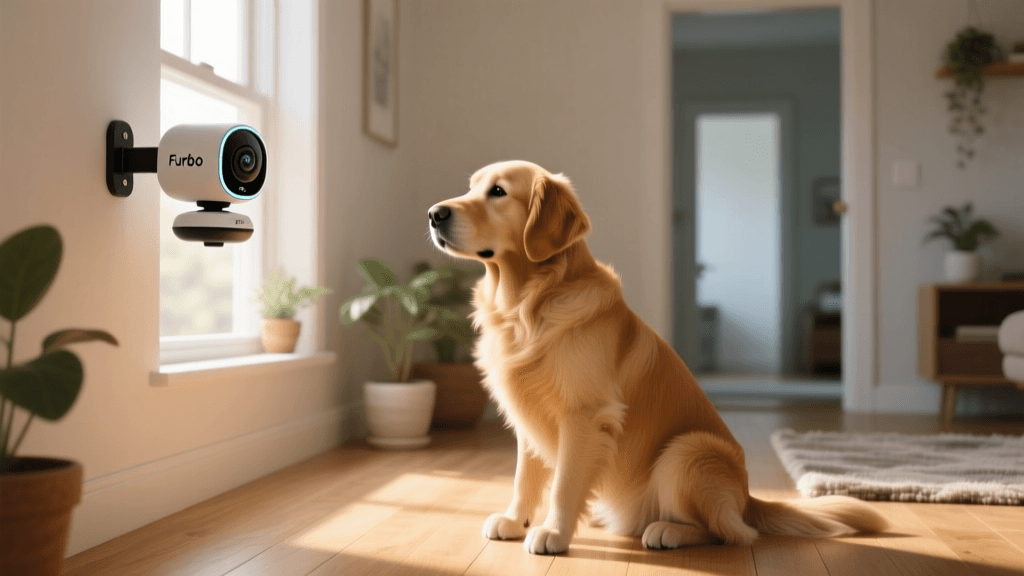
Standard stationary cameras only show a single slice of a room. A dog suffering from separation anxiety will often pace, hide in corners, or scratch at doors outside the frame of a static lens. The Furbo 360 (retailing around $210 in 2026) features a motorized base that rotates up to 360 degrees, allowing you to track your dog's movements via the smartphone app. More importantly for training, it features an adjustable treat-tossing mechanism. In classical counter-conditioning, we pair a scary stimulus (being left alone) with a high-value reward. The Furbo allows you to deliver that reward remotely, precisely at the moment your dog exhibits relaxed body language.
The 6-Week Furbo 360 Desensitization Protocol
Before beginning, ensure your dog has been cleared by a veterinarian to rule out underlying medical conditions causing distress. You will need high-value treats (e.g., freeze-dried beef liver or small pieces of boiled chicken) cut into pea-sized pieces. Load the Furbo 360 with these treats daily.
Week 1: Camera Acclimation and Classical Conditioning
Do not leave the house yet. The goal is to make the camera a predictor of good things. Sit in the room with your dog. Using the app, toss a treat. Repeat this 10 to 15 times per session, twice a day. Next, begin tossing treats when you are out of the dog's direct line of sight but still in the house. This teaches the dog that the mechanical whir of the Furbo means a reward is coming, regardless of your physical proximity.
Week 2: Desensitizing Pre-Departure Cues
Dogs with separation anxiety often panic before you even leave, triggered by cues like picking up keys or putting on shoes. Perform these actions, then immediately sit back down and use the Furbo to toss a treat. Jingle your keys, walk to the door, touch the handle, and then walk back to the couch. Use the camera's two-way audio to offer calm verbal praise if your dog remains settled. The American Kennel Club emphasizes that breaking down these triggers into non-threatening micro-events is crucial for lowering the dog's baseline anxiety.
Week 3: Micro-Departures and Threshold Testing
Now you will actually leave. Step out the front door, close it, and wait exactly 3 seconds. Return before your dog has time to vocalize or pace. When you return, ignore your dog for 5 minutes to keep greetings low-key. Use the Furbo app to review the footage. Did your dog pant heavily? Did their ears pin back? If yes, you are moving too fast. If they simply watched the door, you can gradually increase the time to 10 seconds, then 30 seconds, then 1 minute over the course of the week.
Week 4: Duration Building and Remote Rewarding
Increase your absences to 5 through 15 minutes. During this time, monitor your dog via the Furbo 360 app. If you observe your dog lying down, resting their chin, or engaging in calm sniffing, use the app to toss a treat. You are actively rewarding the physiological state of relaxation. Avoid using the two-way audio if your dog is resting, as hearing your voice without seeing you can sometimes trigger frustrated pacing.
Week 5: Introducing Long-Lasting Enrichment
At the 30-minute mark, food-dispensing cameras alone are not enough. You must pair your departures with long-lasting enrichment. Before leaving, prepare a frozen West Paw Toppl or a Hyper Pet IQ Treat Mat smeared with dog-safe peanut butter and plain yogurt. Licking and chewing release endorphins that naturally soothe the canine nervous system. Leave for 30 to 45 minutes, using the Furbo to monitor how long the enrichment occupies them and noting the exact minute anxiety behaviors begin.
Week 6: Real-World Application and Fading the Tech
Extend your absences to 1 to 2 hours. Begin to fade the frequency of treat tosses from the Furbo. Instead of tossing a treat every 5 minutes, toss one every 15 minutes, then randomly. The goal is to transition from a continuous reinforcement schedule to a variable one, which builds greater behavioral resilience.
According to veterinary behaviorists, technology should never replace foundational behavioral modification; it should only serve to bridge the communication gap during absence and provide data to refine your training thresholds.
Comparison Chart: Standalone Training vs. Tech-Assisted Protocol
| Training Variable | Traditional Desensitization | Furbo 360 Assisted Protocol (2026) |
|---|---|---|
| Stress Monitoring | Guessed upon return based on destruction or accidents | Real-time 1080p video, AI bark alerts, and pacing tracking |
| Counter-Conditioning | Limited to pre-departure food puzzles | Remote, timed treat delivery paired with calm body language |
| Threshold Identification | Trial and error, often pushing dog into panic | Precise timestamping of anxiety onset to adjust durations |
| Owner Confidence | High anxiety for the owner, projecting stress to the dog | Peace of mind via live feed, resulting in calmer departures |
Ancillary Products to Support Your 2026 Training Regimen
While the Furbo 360 is an excellent mechanical aid, a holistic approach to separation anxiety requires environmental management and nutritional support.
- Snuffle Mats and Foraging Toys: Engaging a dog's olfactory system tires them out mentally. A 15-minute sniffing session before you leave can mimic the energy expenditure of a one-hour walk.
- Calming Supplements: Products containing L-Theanine, Ashwagandha, and Hemp extract, such as Zesty Paws Advanced Calming Bites (approx. $28 in 2026), can help lower the dog's baseline cortisol levels. Administer these 45 minutes before your planned departure.
- White Noise Machines: Exterior noises (delivery trucks, neighbors) can trigger reactive barking when you are gone. A dedicated white noise machine placed near the dog's safe space masks these auditory triggers.
- Adaptil Optimum Diffusers: Pheromone therapy remains a staple in veterinary behavior plans. Plugging an Adaptil diffuser into the outlet nearest your dog's resting area provides a constant stream of synthetic dog-appeasing pheromones.
When to Consult a Veterinary Behaviorist
Systematic desensitization is highly effective for mild to moderate isolation distress. However, severe separation anxiety can lead to self-injury, such as broken teeth from chewing on window frames or torn nails from digging at doors. The Humane Society of the United States strongly advises seeking professional help if your dog exhibits extreme panic, self-mutilation, or refuses to eat high-value treats even when you are home. In these severe cases, a board-certified veterinary behaviorist may need to prescribe psychotropic medications (such as Fluoxetine or Clomipramine) to lower the dog's panic threshold enough for the behavioral training to take hold.
Conclusion
Overcoming separation anxiety is a marathon, not a sprint. By leveraging the Furbo 360 camera in 2026, you are no longer flying blind when you leave your home. You have the power to observe, analyze, and reward your dog in real-time, transforming a terrifying experience into a predictable, manageable, and eventually rewarding part of their daily routine. Stick to the protocol, respect your dog's thresholds, and celebrate the micro-victories along the way.
hannah-wickes
All our authors care for dogs every day — read more of their work on the authors page.