Best No Pull Dog Harness For Joint Health In 2026
Discover how front-clip no pull dog harnesses protect large breed joints in 2026. Compare top ergonomic designs to prevent shoulder strain and hip dysplasia.
The Hidden Health Costs of Leash Pulling
As we navigate the evolving landscape of canine health and wellbeing in 2026, veterinary orthopedists and canine sports medicine specialists are sounding the alarm on a common but overlooked issue: the biomechanical impact of leash pulling. When a dog pulls on a traditional flat collar, the force is concentrated directly on the delicate structures of the neck. This repetitive strain can lead to severe health complications, including tracheal collapse, cervical disc herniation, and even increased intraocular pressure, which is particularly dangerous for breeds predisposed to glaucoma.
Transitioning to a no pull dog harness is no longer just a behavioral training choice; it is a critical orthopedic intervention. However, not all harnesses are created equal. In 2026, the veterinary consensus heavily favors ergonomically designed, Y-shaped front-clip harnesses that distribute kinetic energy across the sternum and ribcage while preserving the natural range of motion in the shoulder joints. Choosing the wrong harness can inadvertently cause chafing, restrict the bicep tendon, and alter your dog's natural gait, leading to long-term joint degradation.
The Biomechanics of Canine Gait and Harness Design
To understand why the right no pull dog harness matters, we must look at canine biomechanics. A dog's front limbs bear approximately 60% of their total body weight. When a dog walks or runs, the shoulder joint requires full extension and flexion to maintain a healthy stride. Older, traditional harness designs often featured a horizontal strap that cut directly across the chest and biceps brachii muscle. This 'T-shaped' design physically blocks shoulder extension, forcing the dog to take shorter, choppier steps. Over time, this altered gait can lead to compensatory strain on the hips and spine, exacerbating conditions like hip dysplasia and osteoarthritis.
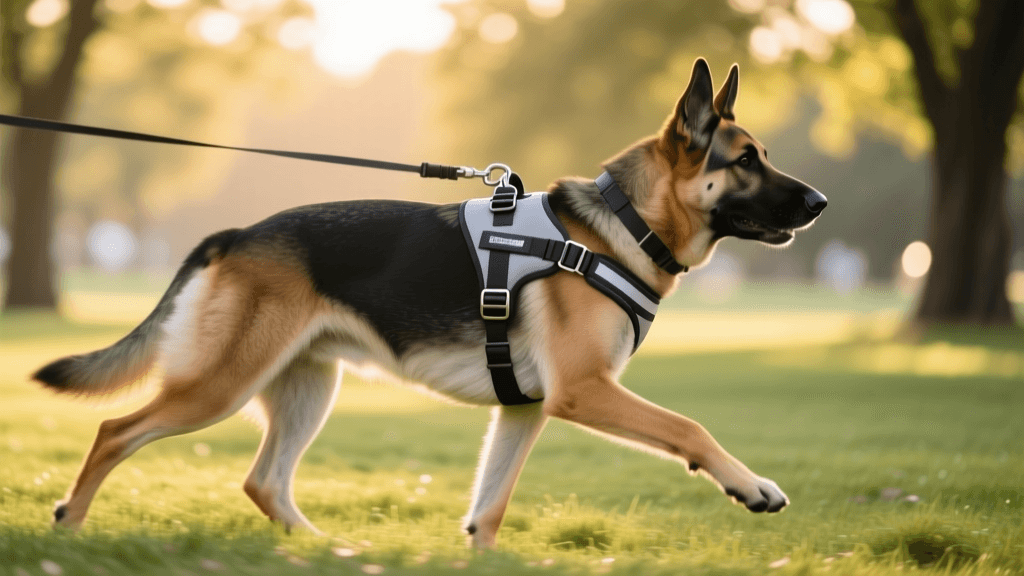
Modern 2026 harness models prioritize a 'Y-shaped' chest plate. This design routes the straps safely away from the shoulder joints, allowing for full, uninhibited extension. When combined with a front-clip D-ring located at the sternum, the harness gently redirects the dog's forward momentum back toward the handler when they pull, effectively neutralizing the kinetic force without putting pressure on the neck or restricting the shoulders.
Front-Clip vs. Back-Clip vs. Dual-Clip: A Biomechanical Comparison
Understanding the mechanical differences between harness attachment points is vital for protecting your dog's joint health. Below is a comparison chart to help you identify the best configuration for your dog's specific needs.
| Feature | Front-Clip | Back-Clip | Dual-Clip |
|---|---|---|---|
| Pull Correction | Redirects forward motion safely | Encourages pulling (sled dog effect) | Maximum versatility for training |
| Shoulder Biomechanics | Excellent (if Y-shaped design) | Allows full shoulder extension | Depends on active clip usage |
| Tracheal Protection | High (zero neck pressure) | High (zero neck pressure) | High (zero neck pressure) |
| Best For | Heavy pullers, joint protection | Small dogs, casual walkers | Large breeds, multi-environment |
As highlighted in the ongoing harness versus collar debate, moving away from neck-based restraints is universally recommended by veterinary professionals, but the front-clip configuration remains the gold standard for behavioral correction and joint preservation in large, energetic breeds.
Top 3 Veterinarian-Recommended No Pull Harnesses for 2026
Based on current 2026 veterinary guidelines, material advancements, and biomechanical testing, here are the top three no pull dog harnesses that prioritize joint health and orthopedic safety.
1. Blue-9 Balance Harness (Best for Joint Preservation)
The Blue-9 Balance Harness remains a top recommendation among canine rehabilitation therapists in 2026. Its standout feature is the six-point adjustment system, which allows for a highly customized fit that accommodates the deep chests of breeds like Greyhounds and German Shepherds. Crucially, it utilizes a strict Y-shaped chest strap that completely clears the bicep tendon. Priced at approximately $78, it features lightweight, breathable biothane-reinforced webbing that prevents the chafing commonly seen in older nylon models. The front-clip D-ring is mounted on a floating strap, which moves with the dog's chest, preventing the harness from twisting and rubbing against the skin during sudden directional changes.
2. Kurgo Tru-Fit Smart Harness (Best for Tracheal Safety)
Retailing around $45 in 2026, the Kurgo Tru-Fit Smart Harness is an exceptional choice for dogs with a history of respiratory issues or tracheal sensitivity. The V-neck design is specifically engineered to sit below the trachea, ensuring that even if the dog lunges, the sternum takes the brunt of the force rather than the throat. It features both front and back attachment points, making it a versatile dual-clip option. The chest plate is padded with a dense, shock-absorbing memory foam that distributes kinetic energy evenly across the ribcage. Additionally, it includes a 10-inch seatbelt tether, making it a top-tier choice for vehicular safety, a factor increasingly prioritized by modern pet owners.
3. Rabbitgoo No Pull Dog Harness (Best Budget Ergonomic Option)
For pet owners seeking an affordable yet biomechanically sound option, the Rabbitgoo No Pull Dog Harness (2026 updated edition) is priced at a highly accessible $28. While budget harnesses historically compromised on fit, Rabbitgoo's latest iteration features a widened, Y-shaped chest guard lined with a cool-weave, moisture-wicking mesh. This prevents the bacterial buildup and hot spots that plague dogs wearing cheap harnesses in the summer months. The front-clip is constructed from aerospace-grade aluminum, ensuring it will not warp or snap under the sudden force of a 70-pound dog lunging at a squirrel. It offers four points of adjustment, ensuring the shoulder straps remain clear of the armpits to prevent gait restriction.
Proper Fitting: The Two-Finger Rule and Gait Analysis
Even the most expensive, ergonomically designed no pull dog harness will cause joint and skin issues if fitted incorrectly. In 2026, veterinary technicians emphasize the 'Two-Finger Rule' and dynamic gait analysis during the fitting process.
- The Neck Opening: You should be able to slide exactly two fingers flat between the neck strap and your dog's skin. Any tighter, and you risk chafing the jugular area; any looser, and the dog can back out of the harness, leading to sudden joint twists if they bolt.
- The Chest Strap: The Y-strap should sit high on the sternum but must not press against the soft tissue of the throat. Check that the straps clear the armpits by at least two inches to avoid rubbing the bicep tendon.
- Dynamic Gait Analysis: Do not just fit the harness while the dog is standing still. Have your dog trot in a straight line and observe their front legs. If their stride appears shortened, or if their elbows are bowing outward, the harness is restricting their shoulder extension and must be adjusted or replaced.
Behavioral Training Integration
A no pull dog harness is a management tool, not a cure for leash reactivity. To truly protect your dog's joints and mental wellbeing, pair your front-clip harness with positive reinforcement training. When the dog walks on a loose leash, reward them with high-value treats at the seam of your pant leg to encourage them to stay by your side. If they pull, the front-clip will gently turn them toward you. Stop walking, wait for them to make eye contact, and resume. This combination of biomechanically safe gear and consistent behavioral training ensures that your daily walks remain a source of cardiovascular health and joy, rather than a risk factor for orthopedic injury.
robin-maitland
All our authors care for dogs every day — read more of their work on the authors page.