The Ideal Daily Wellness and Enrichment Schedule for Dogs
Discover the perfect daily wellness and enrichment schedule for your dog. Learn optimal feeding times, exercise routines, and mental health tips.

The Importance of a Structured Canine Wellness Routine
Dogs are creatures of habit. In the wild, their ancestors followed the sun, the seasons, and the movements of their pack to dictate their daily rhythms. Today, our domesticated companions rely entirely on us to provide that structure. A well-designed daily wellness and enrichment schedule does more than just keep your dog physically tired; it regulates their circadian rhythm, stabilizes their digestive tract, and significantly reduces anxiety and destructive behaviors born from boredom.
According to the ASPCA, consistent routines help dogs feel secure in their environment, which is foundational to their overall mental health. When a dog knows what to expect and when to expect it, their baseline cortisol (stress hormone) levels drop, leading to a stronger immune system and a happier disposition. Below, we outline a comprehensive, actionable daily schedule tailored for the average healthy adult dog, blending physical exercise, cognitive enrichment, and vital rest periods.
Morning: Hydration, Nutrition, and Decompression (6:30 AM - 9:00 AM)
Wake Up and Hydrate
The morning routine should begin with immediate access to a potty area followed by targeted hydration. Many dogs wake up mildly dehydrated. Instead of just offering a bowl of plain water, try adding 2 to 4 ounces of warm water or dog-safe, low-sodium bone broth to their morning meal. This not only encourages drinking but also aids in gentle gastrointestinal wake-up and kidney flushing.
Breakfast and Cognitive Feeding
Ditch the standard stainless steel bowl for the morning meal. Utilizing a slow-feeder bowl or a snuffle mat turns a 30-second gulp-fest into a 10-minute foraging session. Products like the Outward Hound Fun Feeder Slo Bowl (approx. $15) force dogs to use their tongues and noses to extract kibble, engaging their brains before the day even begins.
The Morning 'Sniffari'
Physical exercise is vital, but mental exercise is equally important. The morning walk should be a 'Sniffari'—a decompression walk where the dog is allowed to stop and sniff every bush, tree, and fire hydrant. Sniffing lowers a dog's heart rate and releases dopamine. A 20-minute Sniffari on a 15-foot biothane long line (approx. $25) provides the same amount of mental fatigue as an hour of brisk physical walking. Allow them to process the 'pee-mail' left by neighborhood dogs; this is their version of reading the morning news.
Mid-Day: Passive Enrichment and Rest (12:00 PM - 2:00 PM)
Beating the Mid-Day Slump
While most dogs will sleep during the middle of the day (adult dogs typically need 12 to 14 hours of sleep per day), leaving them with absolutely nothing to do can lead to separation anxiety or noise reactivity if they are startled awake. Passive enrichment is the solution.
Before you leave for work or transition to your home office, provide a long-lasting, passive enrichment item. The KONG Classic (approx. $15) stuffed with a mixture of plain canned pumpkin, a dollop of plain Greek yogurt, and a few pieces of kibble, then frozen overnight, is a gold standard. Licking is a naturally soothing behavior for dogs that releases endorphins. Alternatively, a Hyper Pet IQ Treat Mat (approx. $12) smeared with dog-safe peanut butter and frozen provides 30 to 45 minutes of quiet, anxiety-reducing engagement.
Optimizing the Sleep Environment
Ensure your dog's mid-day resting area is optimized for deep REM sleep. This means a quiet, dimly lit space with a supportive orthopedic bed. If your dog is reactive to outdoor noises, running a white noise machine or a fan near their bed can mask triggering sounds like delivery trucks or neighborhood dogs barking.
Afternoon: Active Physical and Mental Exertion (4:30 PM - 6:00 PM)
Targeted Training Sessions
As the American Kennel Club frequently highlights, ongoing training is essential for maintaining cognitive sharpness and reinforcing the human-animal bond. Dedicate 10 to 15 minutes in the late afternoon to active training. This is the time to practice recall, loose-leash walking, or fun tricks like 'spin' or 'fetch the remote'.
Use high-value, low-calorie treats to keep motivation high without contributing to obesity. Zuke's Mini Naturals (approx. $8 per bag) are excellent because they are only 2 calories each, allowing for high-repetition training sessions without exceeding daily caloric limits.
High-Intensity Physical Play
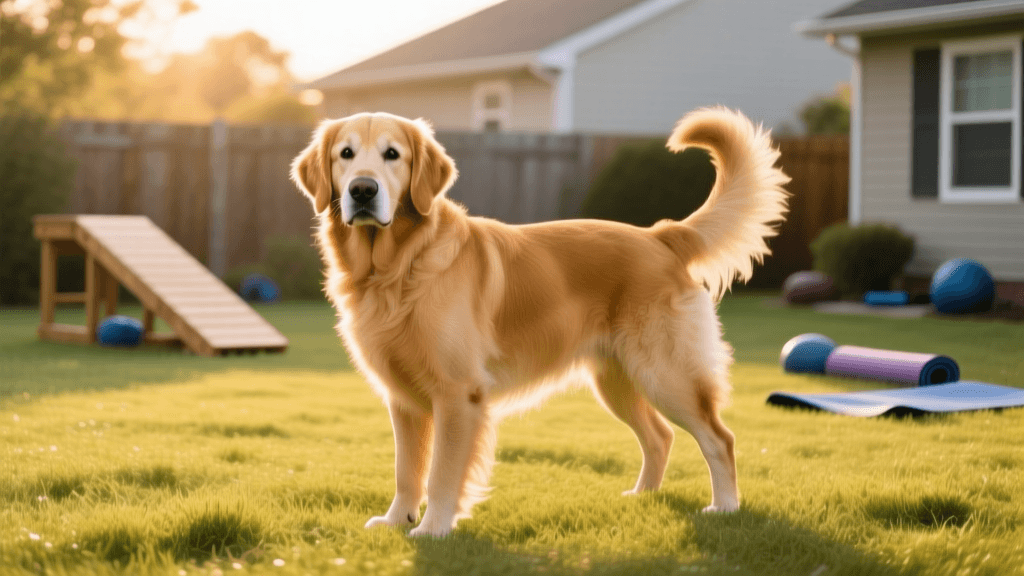
Depending on your dog's breed and age, the late afternoon is ideal for raising the heart rate. For high-drive breeds like Border Collies or Belgian Malinois, a 15-minute session with a flirt pole (a giant cat wand for dogs) satisfies their prey drive in a controlled manner. For retrievers, a structured game of fetch with a Chuckit! Launcher (approx. $20) saves your shoulder and maximizes the distance of the throw, ensuring the dog gets a full sprint. Always ensure a 10-minute cool-down walk after high-intensity play to prevent blood pooling and aid in lactic acid dissipation.
Evening: Digestion, Bonding, and Sleep Prep (6:30 PM - 10:00 PM)
Dinner and Digestion
Serve dinner at least two to three hours before bedtime to allow for proper digestion and a final potty break before sleep. If your dog eats too quickly, consider a puzzle feeder like the Outward Hound Nina Ottosson Dog Brick (approx. $20) to slow them down and prevent the risk of gastric dilatation-volvulus (bloat), particularly in deep-chested breeds.
The Nighttime Wind-Down
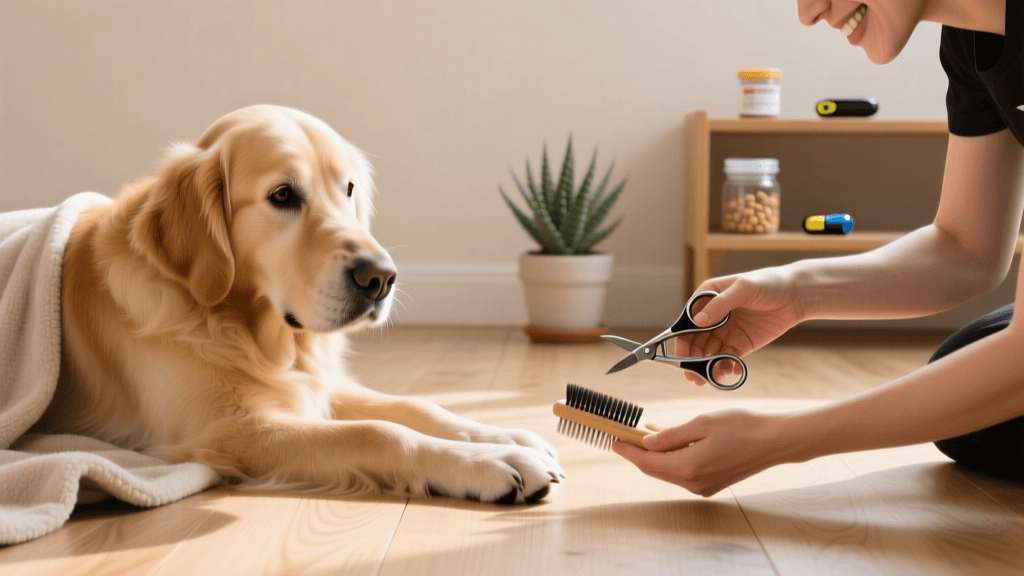
Just as humans benefit from a screen-free wind-down, dogs benefit from a low-stimulation evening. Dim the lights in the house around 8:30 PM to encourage natural melatonin production. This is the perfect time for a 10-minute grooming and massage session. Using a soft slicker brush or a silicone grooming mitt, gently stroke your dog in the direction of their coat growth. Incorporating gentle Tellington TTouch methods—slow, circular movements over their shoulders and chest—can significantly lower their heart rate and prepare their nervous system for deep sleep.
The Humane Society of the United States emphasizes that regular, gentle handling and grooming not only keeps the coat healthy but also acclimates dogs to being touched, making future veterinary visits far less stressful.
Comprehensive Daily Wellness Schedule Breakdown
Below is a structured summary of the ideal daily routine, including estimated costs for the recommended enrichment tools. Adjust the exact times to fit your personal work schedule, but try to keep the intervals between activities consistent.
| Time of Day | Activity Type | Specific Action | Wellness Benefit | Recommended Tools / Est. Cost |
|---|---|---|---|---|
| 6:30 AM | Morning Routine | Potty break & hydration | Bladder health & metabolism kickstart | Low-sodium bone broth ($5) |
| 7:00 AM | Breakfast | Foraging / Slow feeding | Digestion & bloat prevention | Outward Hound Fun Feeder ($15) |
| 7:30 AM | Exercise | 30-min Decompression Sniffari | Mental stimulation & stress relief | 15ft Biothane long line ($25) |
| 12:00 PM | Mid-Day Enrichment | Frozen lick mat / chew | Anxiety reduction & boredom relief | Hyper Pet IQ Treat Mat ($12) |
| 4:30 PM | Active Training | 15-min obedience or trick training | Cognitive health & human bonding | Zuke's Mini Naturals ($8) |
| 5:00 PM | Physical Exertion | Fetch, flirt pole, or agility | Cardiovascular health & muscle tone | Chuckit! Launcher ($20) |
| 6:30 PM | Dinner | Puzzle bowl feeding | Satiety & mental engagement | Nina Ottosson Dog Brick ($20) |
| 8:30 PM | Wind-Down | Brushing & TTouch massage | Coat health & cortisol reduction | Silicone grooming mitt ($10) |
Pro Tip: Consistency is more important than the exact clock time. If you wake up at 5:30 AM on weekdays but 8:00 AM on weekends, try to keep the intervals between meals, walks, and sleep the same. Your dog's internal clock tracks the duration between events, not the numbers on a clock.
Final Thoughts on Canine Wellness
Implementing a structured daily wellness and enrichment schedule requires an initial investment of time and a small financial outlay for puzzle toys and long lines. However, the return on investment is immense. By addressing your dog's physical, mental, and emotional needs at specific intervals throughout the day, you are proactively preventing behavioral issues, managing their weight, and fostering a deep, trusting bond. Remember that wellness is not just the absence of disease; it is the presence of daily joy, purpose, and security for your canine companion.
tom-renshaw
All our authors care for dogs every day — read more of their work on the authors page.