No-Pull Dog Harness Training: Stop Leash Pulling in 2026
Learn how to fit and train with a front-clip no-pull dog harness in 2026. Step-by-step loose-leash walking techniques for stubborn pullers.
The End of Leash Pulling: Why Front-Clip Harnesses Are the 2026 Gold Standard
Leash pulling remains one of the most common behavioral challenges reported by dog owners, but the way we address it has evolved significantly. As of 2026, veterinary behaviorists and certified professional dog trainers overwhelmingly recommend force-free methods paired with ergonomic front-clip no-pull harnesses. Unlike traditional back-clip harnesses that inadvertently encourage a dog to lean into their weight—much like a sled dog—front-clip harnesses utilize canine biomechanics to gently redirect the dog's forward momentum back toward the handler.
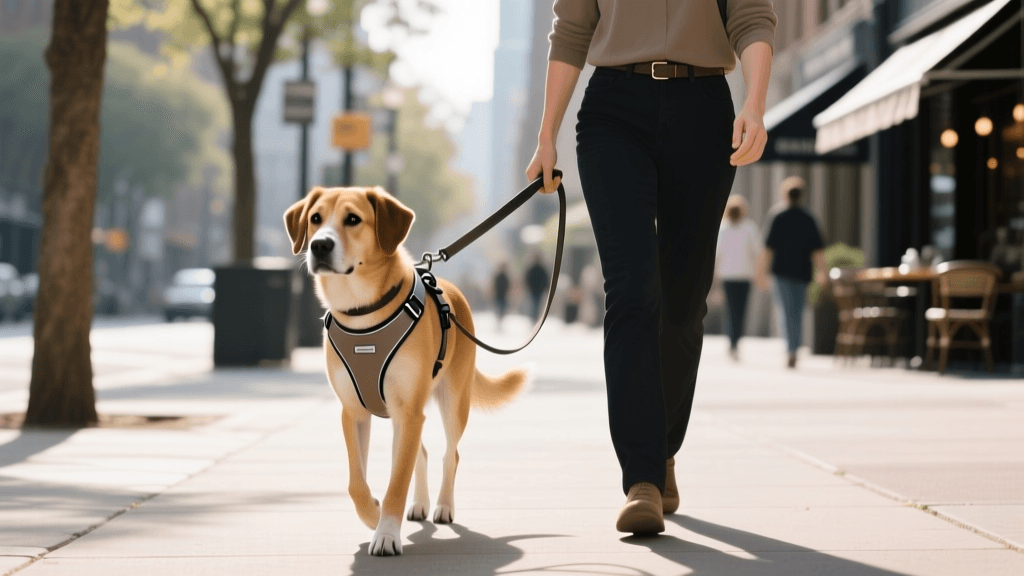
When a dog pulls on a front-clip harness, the leash attachment point on the chest gently turns the dog's shoulders toward you, naturally breaking their forward drive without causing pain or tracheal damage. However, a no-pull harness is a management tool, not a magic cure. To achieve true loose-leash walking, you must pair the right equipment with a structured, positive reinforcement training protocol. According to the American Kennel Club, consistency in rewarding the dog for staying in the 'heel' or 'loose-leash' position is the most critical factor in long-term success.
Top No-Pull Harnesses for 2026: A Comparison Guide
The pet gear market in 2026 features highly engineered harnesses designed for comfort, durability, and escape prevention. When selecting a harness, look for a Y-shaped chest plate that allows for full shoulder extension and avoids restricting the dog's gait. Below is a comparison of the top three front-clip harnesses recommended by trainers this year.
| Harness Model (2026) | Clip Locations | Best For | Approx. Price |
|---|---|---|---|
| Ruffwear Front Range | Front & Back | Everyday walking, mild to moderate pullers | $45.00 |
| 2 Hounds Freedom No-Pull | Front & Back | Escape artists, broad-chested breeds | $40.00 |
| Kurgo Tru-Fit Smart | Front & Back | Car safety, heavy pullers, deep-chested dogs | $35.00 |
The updated 2026 Ruffwear Front Range remains a favorite due to its use of fully recycled, highly breathable materials and improved reflective trim for night walks. For dogs that are notorious 'Houdinis', the 2 Hounds Freedom harness features a secondary martingale-style loop on the back that tightens slightly if the dog tries to back out of it, providing an extra layer of security without aversive pressure.
Proper Fitting: The Two-Finger Rule
A poorly fitted harness can cause chafing, restrict breathing, or allow the dog to slip out. Before beginning your training, ensure the harness is fitted correctly. Fear Free Pets emphasizes that a harness should never alter a dog's natural stride or cause friction behind the armpits.
- The Neck Opening: You should be able to slip two fingers comfortably between the harness and your dog's neck. Any tighter will restrict swallowing; any looser risks the dog slipping a paw out.
- The Girth Strap: The strap behind the front legs should sit about two to three inches behind the armpit to avoid rubbing the sensitive skin and lymph nodes in the axillary region.
- The Chest Plate: Ensure the Y-shape sits flat against the sternum and does not press against the dog's throat when they lean forward.
Step-by-Step Loose-Leash Walking Training Protocol
Now that your dog is properly fitted, it is time to train. This protocol is broken down into three distinct phases. Do not rush to the next phase until your dog is consistently succeeding in the current one.
Phase 1: Indoor Acclimation and Desensitization
Many dogs exhibit 'harness paralysis' or become overly excited the moment the gear comes out. Start indoors where distractions are minimal. Hold the harness in one hand and a high-value treat (like boiled chicken or freeze-dried liver) in the other. Lure your dog's head through the neck opening. Do not force it over their head; let them choose to put their head through to get the reward. Once the harness is on, immediately engage in a fun game of tug or scatter treats on the floor for them to sniff. This builds a positive emotional response to the equipment. Practice putting the harness on and taking it off multiple times a day for just two to three minutes, always ending on a positive note.
Phase 2: Engagement and the 'Find It' Game
Before stepping outside, teach your dog that paying attention to you is highly rewarding. With the leash attached to the front chest ring, stand in your living room. Say your dog's name. The moment they make eye contact, mark the behavior with a clicker or a verbal marker like 'Yes!' and deliver a treat directly at the seam of your pants on the side you want them to walk. Delivering the treat low and close to your leg teaches the dog that the 'reward zone' is right next to you, not out at the end of the leash. Next, play the 'Find It' game: toss a treat a few feet away, let them eat it, and wait. When they turn back and look at you, mark and reward them back at your leg. This builds the habit of checking in with you voluntarily.
Phase 3: The 'Change Direction' Method Outdoors
Move to a low-distraction outdoor environment, like a quiet driveway or an empty tennis court. Begin walking forward. The exact second your dog reaches the end of the leash and applies tension to the front clip, stop walking. Do not yank the leash; simply become a tree. Wait for the dog to turn their head back toward you or take a single step back that creates slack in the leash. The moment the leash forms a 'J' shape (indicating slack), mark with 'Yes!' and place a high-value treat right at your leg.
If your dog is highly persistent and continues to pull like a tractor, implement the 'Change Direction' method. The moment you feel tension, cheerfully say 'Let's go!', turn 180 degrees, and walk the opposite way. When the dog catches up to you and is walking by your side, mark and reward. This teaches the dog that pulling forward actually results in moving further away from their desired destination, while staying near your leg keeps the walk moving forward.
Troubleshooting Common Mistakes in 2026
Even with the best front-clip harness, handlers often make subtle errors that prolong the training process. Avoid these common pitfalls:
- Inconsistent Leash Length: Avoid using retractable leashes during training. A retractable leash teaches the dog that pulling is required to gain more distance. Use a standard 4-to-6-foot biothane or leather leash to provide consistent boundaries.
- Treating Above the Dog's Head: If you hold the treat high and toss it to the dog, you encourage jumping and forward lunging. Always deliver treats low, keeping all four of the dog's paws on the ground.
- Moving Too Fast to High Distractions: Do not expect your dog to perform perfectly on a busy sidewalk if they have only practiced in your living room. Gradually increase distractions using the '3 Ds' of dog training: Distance, Duration, and Distraction. Only increase one 'D' at a time.
Final Thoughts on Force-Free Walking
Transitioning to a front-clip no-pull harness and utilizing positive reinforcement is an investment in your dog's physical health and your mutual bond. In 2026, the data is clear: dogs trained with reward-based methods show lower cortisol levels and higher retention of obedience cues compared to those trained with aversive corrections. By managing the environment with a properly fitted front-clip harness and consistently rewarding the behavior you want, you will transform your daily walks from a frustrating tug-of-war into a relaxing, enjoyable experience for both you and your canine companion.
aaron-whyte
All our authors care for dogs every day — read more of their work on the authors page.