2026 AKC Agility Guide: Backyard Weave Pole Training Methods
Master AKC novice agility weave poles in 2026 with our expert backyard training guide. Learn the 2x2 method, channel weaves, and injury prevention tips.
Mastering the Weave Poles: The Ultimate 2026 AKC Agility Guide
As we navigate the 2026 competitive dog sports season, agility remains one of the most thrilling and demanding disciplines for canine athletes. According to the American Kennel Club (AKC), agility trials continue to see record entries this year, with the Novice class serving as the primary entry point for dedicated teams. Among all the obstacles on the course, the weave poles universally present the steepest learning curve. Unlike a jump or a tunnel, weaving is not a natural canine behavior. It requires precise biomechanical conditioning, independent obstacle performance, and a structured training methodology. This comprehensive guide will walk you through the most effective backyard weave pole training methods for 2026, ensuring your dog builds speed, accuracy, and confidence without risking injury.
The Biomechanics and Conditioning of Weaving
Before introducing your dog to the poles, it is critical to understand the physical demands of the obstacle. Weaving requires intense lateral spinal flexion, core stabilization, and shoulder mobility. In 2026, veterinary sports medicine specialists heavily emphasize pre-conditioning before starting weave training. Dogs should have a solid foundation of core exercises, such as using balance discs and cavaletti rails, to prepare their muscles for the repetitive side-to-side motion. Rushing into weave training with a physically unprepared dog can lead to long-term spinal or shoulder issues. Always consult with a certified canine rehabilitation therapist to ensure your dog is physically mature and conditioned enough for the lateral stresses of the weave poles.
Choosing Your Methodology: 2x2 vs. Channel Weaves
Modern agility handlers primarily rely on two distinct training methodologies to teach weave poles: the 2x2 method and the channel weave method. Both are highly effective, but they suit different learning styles and backyard setups. Below is a detailed comparison to help you choose the best approach for your 2026 training plan.
| Training Method | Core Concept | Pros | Cons | Best Suited For |
|---|---|---|---|---|
| 2x2 Method | Training poles in pairs, gradually adding more pairs in a straight line. | Builds strong independent entries; excellent for dogs that rely heavily on handler motion. | Requires frequent equipment adjustment; can be slow for highly food-motivated dogs who lose focus. | Independent dogs, handlers with limited space to set up full channels. |
| Channel Weaves | Poles are offset in a V-shape, allowing the dog to run straight through while gradually closing the gap. | Builds incredible speed early on; highly rewarding and fast-paced for the dog. | Requires specialized adjustable channel equipment; dogs may struggle when the channel finally closes. | Fast, high-drive dogs; handlers with large, flat backyard turf setups. |
Essential Equipment for Your 2026 Backyard Setup
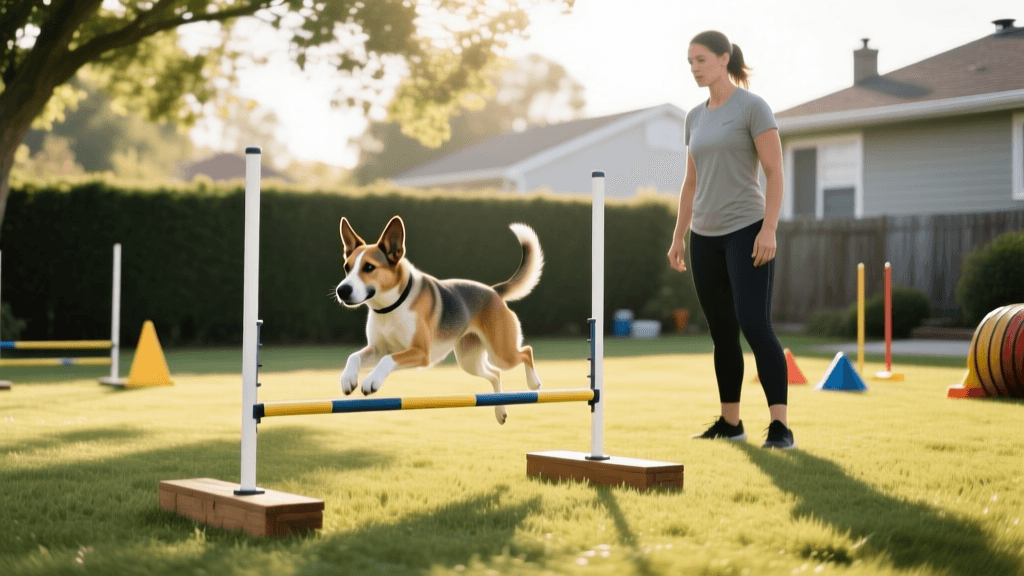
To train effectively at home, you need equipment that mimics the trial environment. The standard for AKC Novice and Open classes is 12 poles, spaced 24 inches apart. For backyard training, investing in a high-quality, adjustable base system is non-negotiable. Look for bases with heavy rubber feet or the ability to stake into the ground, ensuring the poles do not tip over when your dog hits them at speed. Additionally, consider your ground surface. Training on natural grass can lead to slipping and torn dewclaws, especially during wet spring months. Many competitors in 2026 are opting for modular agility turf tiles or specialized K9 synthetic grass with a non-infill drainage system to provide consistent traction and shock absorption.
Step-by-Step 2x2 Weave Pole Training Protocol
The 2x2 method, popularized by agility legend Susan Garrett, remains a gold standard for teaching independent weave entries. Here is how to implement it in your backyard.
Phase 1: The Entry and the Reward Zone
Start with just one pair of poles (two poles spaced 24 inches apart). Stand directly in front of the poles, holding your dog by the collar or harness. Toss a high-value reward (like freeze-dried liver or a favorite tug toy) through the poles. Release your dog to chase the reward. The goal is to teach the dog that the "reward zone" is always on the other side of the poles. Once your dog is confidently running through the single pair, begin to angle your approach. You want the dog to learn to seek out the entry point from various angles, not just straight on.
Phase 2: Adding Pairs and Building Rhythm
Once your dog is driving through the first pair independently, add a second pair of poles exactly 24 inches behind the first. Initially, your dog may not understand how to transition from the first pair to the second. Use a guide wire or physically reward between the pairs to show them the path. As the dog understands the rhythm, fade the intermediate rewards. The dog must learn that the ultimate reward comes only after completing the entire sequence of available poles.
Phase 3: Proofing the Entry
The most common cause of eliminated runs in the 2026 AKC Novice ring is a missed weave entry. Dogs must enter the poles with the first pole on their left shoulder. To proof this, place a jump or a tunnel before the weave poles in your backyard. Send your dog over the jump and toward the weaves from an angled approach. If your dog bypasses the first pole or enters on the wrong side, immediately stop the exercise, reset the dog, and try again. Never allow the dog to continue weaving if the entry was incorrect, as this reinforces the mistake.
Handler Positioning and Motion
Your body language speaks louder than your verbal commands. When training weaves, handler motion is critical. If you run past the end of the weave poles while your dog is still weaving, you will inadvertently pull your dog out of the final poles. You must learn to decelerate and maintain your position near the last pole until your dog has exited. Conversely, if you lag too far behind, your dog may slow down or pop out of the poles, searching for your location. Practice your front crosses and blind crosses away from the equipment first, using a cone or a bucket to simulate the end of the weave poles.
4-Week Backyard Weave Training Schedule
Consistency is more important than duration. Keep your backyard sessions short, positive, and highly focused. Below is a structured 4-week schedule designed for a dog learning the 2x2 method, assuming three 10-minute sessions per week.
| Week | Focus Area | Session Structure | Success Criteria |
|---|---|---|---|
| Week 1 | Single Pair Entries | 5 reps from straight on, 5 reps from 45-degree left angle, 5 reps from 45-degree right angle. | Dog drives through single pair with high enthusiasm and focuses on the reward zone ahead. |
| Week 2 | Adding the Second Pair | Introduce second pair. Reward heavily for completing both pairs. Practice entry angles into the first pair. | Dog successfully links the first and second pairs without hesitation or skipping. |
| Week 3 | Adding Pairs 3 and 4 | Expand to 8 poles. Begin to fade intermediate rewards. Introduce mild handler lateral motion. | Dog completes 8 poles with a correct left-shoulder entry from a preceding tunnel or jump. |
| Week 4 | Full 12 Poles and Proofing | Set up all 12 poles. Add distraction proofing (toys on the ground). Practice deceleration at the exit. | Dog completes 12 poles independently while the handler performs a blind cross at the exit. |
Common Mistakes and Troubleshooting
Even with a meticulous training plan, you will encounter hurdles. Here are the most frequent issues seen in Novice agility classes and how to address them in your backyard.
- Skipping Poles: This usually happens when the dog is moving faster than their footwork can handle, or when the handler moves too far ahead. Slow the dog down using a verbal cue like "easy" and ensure your shoulders remain oriented toward the poles until the dog exits.
- Popping Out at Pole 10: Dogs often anticipate the end of the poles and exit early to grab their toy. To fix this, place the reward container directly at the base of the final pole, and heavily reward the dog for staying in the channel until the very last pole.
- Refusing the Entry: If your dog sniffs the ground or avoids the poles, the criteria may be too high, or the dog is fatigued. End the session on a positive note with a simple trick, and evaluate if your reward history for the weave poles is high enough.
Aligning with International and National Standards
While this guide focuses on AKC rules, many handlers also compete internationally or in other venues. The Fédération Cynologique Internationale (FCI) maintains strict regulations regarding pole spacing and entry angles, which are virtually identical to AKC standards for the 12-pole configuration. Training your dog to be independent and respectful of the left-shoulder entry rule will ensure you are compliant across almost all major agility organizations in 2026.
Conclusion
Training weave poles in your backyard requires patience, high-value motivation, and an understanding of canine biomechanics. By utilizing the 2x2 method, maintaining a consistent weekly schedule, and prioritizing your dog's physical conditioning, you will build a confident, fast, and accurate weave pole performer. Remember that agility is a team sport; celebrate the small victories, keep your sessions joyful, and look forward to conquering the Novice ring together in the 2026 season.
anouk-beaumont
All our authors care for dogs every day — read more of their work on the authors page.