Fresh Dog Food Delivery: Is the Viral Trend Worth the Cost?
Discover if viral fresh dog food delivery services like The Farmer's Dog and Nom Nom are worth the cost. Compare prices, nutrition, and convenience.
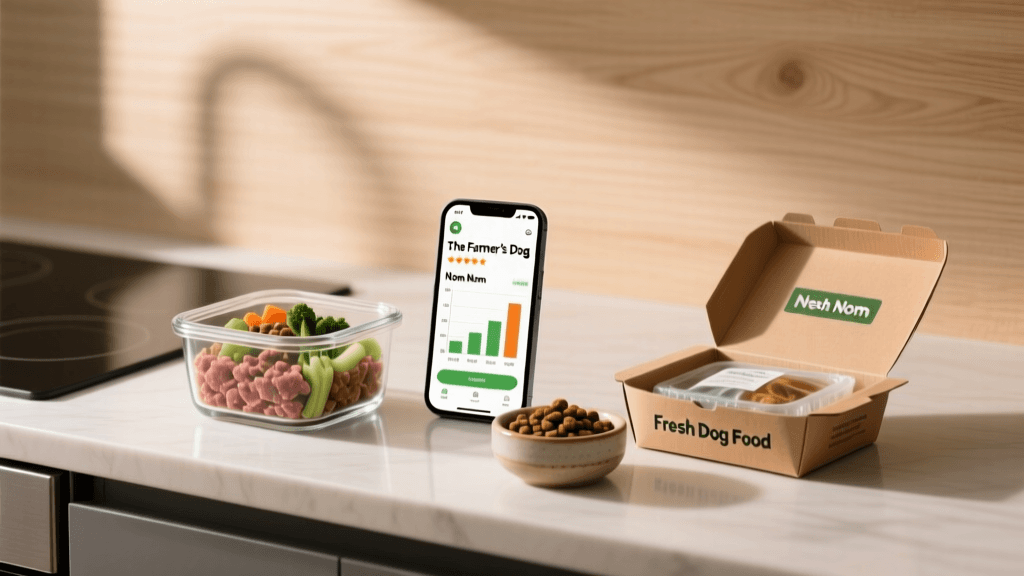
The TikTok Phenomenon: Why Fresh Dog Food is Taking Over
If you have spent any time on DogTok or Instagram Reels lately, you have likely seen the viral unboxing videos. Pet parents are slicing open sleek, branded packages of gently cooked, human-grade meats and vegetables, plating them in ceramic bowls, and serving them to their eagerly waiting dogs. The fresh dog food delivery market has exploded over the last five years, transforming from a niche luxury into a mainstream obsession. Brands like The Farmer's Dog, Nom Nom, Ollie, and JustFoodForDogs have dominated social media feeds, promising longer lifespans, shinier coats, and boundless energy.
But as a practical dog owner, you have to ask: Is this just a clever marketing trend driven by the humanization of pets, or is there genuine, science-backed value in swapping out traditional kibble for a subscription-based fresh diet? In this comprehensive guide, we break down the costs, the nutritional science, and the daily logistics of feeding your dog a viral fresh food diet.
What Exactly is 'Fresh' Dog Food?
Unlike traditional extruded kibble, which is cooked at extremely high temperatures to achieve a long shelf life, fresh dog food is typically prepared in commercial kitchens using whole, human-grade ingredients. The meals are gently cooked at lower temperatures to preserve nutrients and then flash-frozen or refrigerated to maintain freshness without the need for artificial preservatives.
According to the American Kennel Club (AKC), fresh diets are formulated to meet the same AAFCO (Association of American Feed Control Officials) nutritional standards as kibble, but they often boast higher moisture content and greater bioavailability of nutrients. Because the ingredients are not subjected to the extreme heat and pressure of the extrusion process, the amino acids and vitamins remain more intact, making them easier for your dog's digestive system to absorb.
The Heavyweights: A Cost and Feature Comparison
One of the biggest hurdles for pet parents is the cost. Feeding a fresh diet is undeniably more expensive than buying a 30-pound bag of premium kibble. Below is a comparison of the top viral fresh dog food brands, estimating the cost for an average, moderately active 30-pound adult dog.
| Brand | Est. Daily Cost (30lb Dog) | Protein Options | Customization | Storage Type |
|---|---|---|---|---|
| The Farmer's Dog | $4.50 - $5.50 | Beef, Turkey, Chicken, Pork | High (Calorie-specific packs) | Frozen |
| Nom Nom (by Mars) | $4.00 - $5.00 | Beef, Turkey, Chicken, Pork | High (Pre-portioned pouches) | Refrigerated/Frozen |
| Ollie | $3.50 - $4.50 | Beef, Turkey, Chicken, Lamb | Medium (Scoop-based) | Frozen |
| JustFoodForDogs | $4.00 - $6.00 | Beef, Turkey, Chicken, Venison, Fish | High (PantryFresh & Frozen options) | Frozen / Shelf-Stable |
Note: Prices fluctuate based on promotions, exact caloric needs, and shipping zones. For a larger 70-pound dog, expect to pay between $8.00 and $12.00 per day, which can exceed $300 a month.
The Science: Is it Actually Better Than Kibble?
The viral claims of 'miracle cures' for allergies and joint issues should always be viewed with a healthy dose of skepticism. However, veterinary nutritionists acknowledge distinct physiological benefits to fresh diets. The most significant advantage is digestibility.
A pivotal study conducted by the University of Illinois College of Agricultural, Consumer and Environmental Sciences found that fresh, human-grade dog foods are significantly more digestible than traditional kibble. The researchers discovered that dogs fed fresh diets had a higher nutrient absorption rate and produced less waste, meaning their bodies were utilizing more of the food for energy and cellular repair rather than passing it through as stool.
However, experts warn against the 'homemade' route often romanticized on social media. The Tufts Cummings School of Veterinary Medicine Clinical Nutrition Service emphasizes that while commercial fresh foods are rigorously tested and AAFCO-compliant, DIY recipes found on viral blogs frequently lack essential micronutrients like calcium, taurine, and specific trace minerals, leading to severe metabolic bone disease or cardiac issues over time. If you are going fresh, stick to the vet-formulated subscription services.
'The primary benefit of commercial fresh diets is the high moisture content and the use of whole-food ingredients, which can be particularly beneficial for dogs with urinary tract issues, picky eaters, or those with specific food intolerances to the artificial flavorings found in some lower-tier kibbles.' — World Small Animal Veterinary Association (WSAVA) Global Nutrition Guidelines.
The Logistics: Storage, Thawing, and Daily Routines
The viral videos rarely show the logistical reality of managing a fresh food diet. Here is what your daily and weekly routine will actually look like:
1. Freezer Space Requirements
Because the food arrives frozen in insulated boxes with dry ice, you need dedicated freezer space. A two-week supply for a 30-pound dog will take up roughly 1.5 cubic feet of freezer space. If you have a large dog or buy in bulk, a standalone chest freezer is almost mandatory.
2. The 24-Hour Thaw Rule
You cannot serve this food straight from the freezer. You must establish a daily routine of moving the next day's portions from the freezer to the refrigerator 24 hours in advance. Serving it ice-cold can cause gastrointestinal upset and bloat, particularly in deep-chested breeds.
3. Shelf Life
Once thawed, the food remains safe in the refrigerator for 4 to 5 days. If you forget to thaw a pack, you can use a cold-water bath to speed up the process, but never microwave the food, as this creates dangerous hot spots and destroys heat-sensitive vitamins.
How to Transition Your Dog (Without Upsetting Their Stomach)
A sudden switch from dry kibble to a high-moisture, fresh diet is a recipe for diarrhea. You must transition your dog slowly over a 10-day period to allow their gut microbiome to adapt.
- Days 1-3: 25% Fresh Food / 75% Old Kibble
- Days 4-6: 50% Fresh Food / 50% Old Kibble
- Days 7-9: 75% Fresh Food / 25% Old Kibble
- Day 10: 100% Fresh Food
Pro Tip: During the transition, add a teaspoon of plain, unsweetened pumpkin puree to their meals. The extra soluble fiber helps firm up stools as their digestive system adjusts to the new macronutrient profile.
The 'Topper' Hack: Getting Viral Benefits on a Budget
If spending $150 to $300 a month on dog food is outside your budget, you can still harness the benefits of fresh food by using it as a 'meal topper.' Instead of replacing your dog's entire diet, purchase a fresh food subscription but set your dog's profile to a 'small' or 'toy' breed weight. This will drastically reduce the portion size and the cost (often dropping it to $1.50 - $2.00 a day).
Mix two to three tablespoons of the fresh food over a high-quality, WSAVA-compliant dry kibble. You get the benefits of added moisture, whole-food micronutrients, and enhanced palatability, while keeping your monthly budget under $60.
Pros and Cons of Fresh Food Subscriptions
The Pros
- Hydration: Fresh food contains roughly 70-80% moisture, which is excellent for kidney and urinary tract health.
- Palatability: Extremely appealing to picky eaters or senior dogs with diminished sense of smell.
- Stool Quality: High digestibility results in smaller, firmer, and less odorous bowel movements.
- Transparency: You can literally see the peas, carrots, and ground meat in the bowl.
The Cons
- Cost: Significantly more expensive than premium kibble or canned food.
- Convenience: Requires freezer space, daily thawing planning, and managing a subscription schedule.
- Travel: Difficult to transport when traveling with your dog or boarding them at a kennel.
- Dental Health: Lacks the mechanical scraping action of kibble, meaning you must be diligent about daily tooth brushing or using veterinary dental chews.
Final Verdict: Should You Subscribe?
The viral hype surrounding fresh dog food is not entirely smoke and mirrors; there is genuine nutritional merit to feeding your dog whole, gently cooked, human-grade ingredients. The improved digestibility, high moisture content, and absence of artificial preservatives make it a superior choice for many dogs, particularly those with sensitive stomachs, food allergies, or hydration issues.
However, it is not a mandatory requirement for raising a healthy, happy dog. High-quality, AAFCO-approved kibbles are still perfectly capable of supporting a long canine lifespan. If your budget and freezer space allow, a full fresh-food diet is a fantastic investment in your dog's daily vitality. If not, the 'topper method' offers a brilliant, budget-friendly compromise that brings a taste of the viral trend right to your dog's bowl.
beth-carrasco
All our authors care for dogs every day — read more of their work on the authors page.