DIY Dog Enrichment Puzzles: Homemade Snuffle Mats & Toys
Discover budget-friendly DIY dog enrichment puzzles and snuffle mats. Learn how to make homemade brain games to keep your pup mentally stimulated.
The Hidden Power of Canine Mental Stimulation
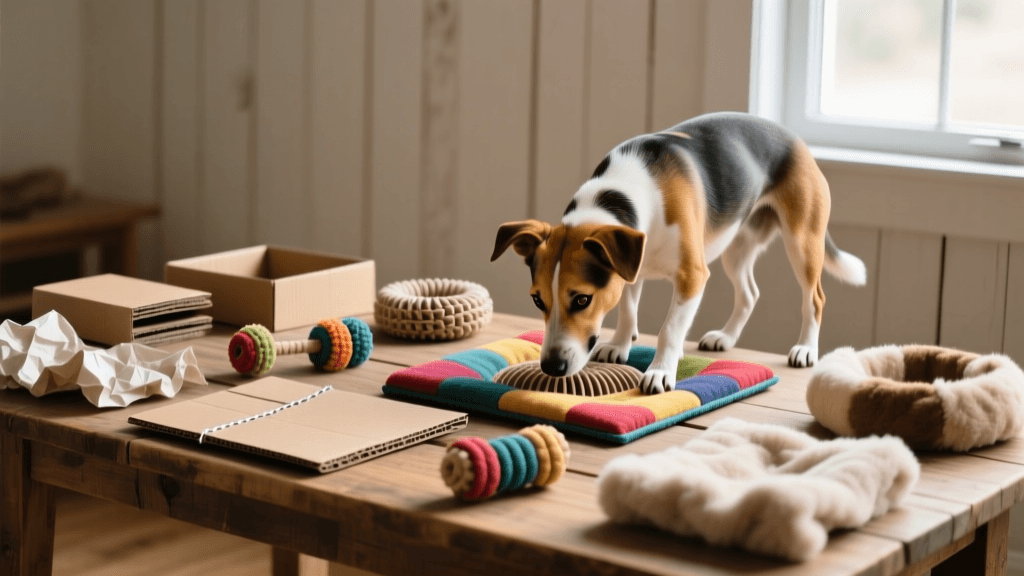
When we think of tiring out a high-energy dog, our minds often jump to physical exercise like long runs, games of fetch, or trips to the dog park. However, physical exercise is only half the equation for a well-balanced, happy pup. Mental stimulation is equally critical, and according to the American Kennel Club (AKC), engaging your dog's brain can actually be more exhausting than a mile-long walk. Just 15 to 20 minutes of focused mental enrichment can leave your dog feeling satisfied, calm, and ready for a nap.
Commercial puzzle toys and snuffle mats are fantastic, but they can also be surprisingly expensive, often ranging from $25 to over $60 per item. Fortunately, you can create highly effective, engaging, and safe enrichment toys right at home using inexpensive household items and basic craft supplies. In this guide, we will explore three highly effective DIY dog enrichment puzzles, complete with exact measurements, cost breakdowns, and step-by-step instructions.
The Science of Foraging: Why Dogs Love Puzzles
Before we start building, it is important to understand why these DIY projects work so well. Dogs are natural foragers. In the wild, canines spend up to 80% of their waking hours searching for, scavenging, and hunting for food. When we serve our domestic dogs their kibble in a stainless steel bowl, they finish their meal in seconds, completely bypassing their natural foraging instincts.
Enrichment activities that mimic natural foraging behaviors reduce anxiety, decrease destructive chewing, and build confidence in shy or reactive dogs. It transforms mealtime from a mundane chore into an engaging cognitive challenge.
By utilizing DIY puzzle feeders and snuffle mats, you tap directly into your dog's evolutionary drive to work for their food, promoting better behavioral health and overall well-being.
Project 1: The Classic Fleece Snuffle Mat
A snuffle mat is essentially a fabric rug designed to hide dry treats or kibble within its fibers, forcing your dog to use their powerful sense of smell to track down their reward. Commercial snuffle mats can cost upwards of $40, but you can make a custom, heavy-duty version at home for about $15.
Materials and Cost Breakdown
- Base: 1 rubber sink mat or non-slip rug pad with plenty of holes (approx. 11 x 14 inches). Cost: $4 to $6.
- Fabric: 2 yards of anti-pill fleece fabric. Anti-pill is crucial because it won't fray or create loose threads that could pose a choking hazard. Cost: $8 to $12.
- Tools: Sharp fabric scissors or a rotary cutter.
Step-by-Step Instructions
- Cut the Fleece: Cut your fleece into strips that are exactly 1 inch wide and 7 inches long. For an 11x14 inch mat with standard spacing, you will need approximately 350 to 400 strips. This process takes about 45 minutes while watching a movie.
- Start Tying: Take one strip of fleece and push one end through a hole in the rubber mat from the top down.
- Knotting: Pull both ends of the strip up through the same hole so they are even, and tie a simple, tight overhand knot at the base of the rubber mat.
- Fill the Grid: Repeat this process for every single hole in the mat. For a denser, more challenging mat, you can tie two strips into a single hole.
- Fluff and Hide: Once all strips are tied, fluff the fleece strands upward. Sprinkle your dog's kibble or high-value freeze-dried treats deep into the base of the mat.
Project 2: The Upcycled Muffin Tin Puzzle
If you need an immediate enrichment solution and have zero budget, look no further than your kitchen cabinets. The muffin tin puzzle is a brilliant introductory foraging game that costs absolutely nothing if you already own the basic components.
Materials Needed
- 1 standard 12-hole metal or silicone muffin tin.
- 12 tennis balls or similarly sized dog-safe balls.
- Dry treats or kibble.
How to Set It Up and Scale the Difficulty
Place a few pieces of kibble into several of the muffin tin holes. Then, place a tennis ball over each hole to act as a 'lid'. Your dog must figure out how to nudge, paw, or pick up the tennis balls with their mouth to access the food below.
Scaling for Beginners: Start by only covering 3 or 4 holes with balls, leaving a few holes completely open. This teaches your dog the concept of the game and provides immediate positive reinforcement.
Scaling for Experts: Once your dog masters the basics, cover all 12 holes. For an even greater challenge, use slightly larger balls that require two paws to move, or hide treats only in 4 of the 12 covered holes so your dog must use their nose to determine which balls are actually worth moving.
Project 3: The PVC Pipe Treat Dispenser
For dogs who love to bat things around with their paws and nose, a homemade PVC treat dispenser is an excellent, durable alternative to expensive commercial wobble toys. This project requires basic tools but results in a heavy-duty toy that can withstand aggressive play.
Materials and Cost Breakdown
- Pipe: 10-inch length of PVC pipe (1.5 or 2-inch diameter, depending on your dog's size). Cost: ~$4.
- Caps: 2 PVC end caps that match the pipe diameter. Cost: ~$3.
- Tools: Power drill with a 3/4-inch or 1-inch spade bit, sandpaper, and a marker.
Step-by-Step Instructions
- Mark the Holes: Use a marker to draw 5 to 6 circles along the length of the PVC pipe. Space them about 1.5 inches apart. Ensure the holes are slightly larger than your dog's kibble so the food doesn't get permanently stuck.
- Drill: Secure the pipe and carefully drill through the marked circles.
- Sand the Edges (Crucial Step): Use coarse sandpaper to smooth out the inside and outside edges of every drilled hole. Do not skip this step. Sharp plastic burrs can severely cut your dog's gums or paws.
- Assemble: Pop the end caps onto both sides of the pipe. For safety, do not use PVC glue. Friction-fitting the caps allows you to easily remove them for cleaning and refilling.
- Play: Fill the tube with kibble, snap the caps on, and let your dog roll it across the floor to dispense the rewards.
Comparison Chart: Commercial vs. DIY Enrichment Toys
How do these homemade solutions stack up against store-bought alternatives? Here is a structured comparison to help you decide which route to take for your daily enrichment routine.
| Feature | Commercial Puzzles (e.g., Outward Hound, Kong) | DIY Homemade Puzzles |
|---|---|---|
| Average Cost | $20 - $60+ per item | $0 - $15 per item |
| Customization | Fixed difficulty levels and sizes | Highly customizable to your dog's size and skill |
| Durability | High (especially heavy-duty rubber options) | Moderate (fleece mats require eventual replacement) |
| Setup Time | Immediate (ready out of the box) | Requires 1 to 3 hours of initial crafting |
| Hygiene | Easy to wipe down; some are dishwasher safe | Fleece mats are machine washable; PVC requires manual scrubbing |
Introducing Puzzle Toys to Novice Dogs
If your dog has only ever eaten out of a standard bowl, presenting them with a complex snuffle mat or a PVC dispenser might lead to frustration rather than enrichment. The Humane Society of the United States recommends introducing cognitive challenges gradually. Start by making the puzzle incredibly easy. For the snuffle mat, place treats right on top of the fleece strands. For the muffin tin, only use one ball. Praise your dog enthusiastically when they solve the puzzle. Slowly increase the difficulty over a period of weeks as their confidence and problem-solving skills grow.
Safety First: Rules for DIY Dog Toys
While DIY toys are fantastic, they do not come with the safety testing of commercial products. As noted by VCA Animal Hospitals, supervision is paramount when introducing any new toy or enrichment activity to your pet. Always observe your dog the first few times they use a homemade puzzle.
- Avoid Toxic Adhesives: Never use superglue, hot glue, or toxic epoxies on toys that will touch your dog's mouth or food. Rely on knots and friction fittings.
- Check for Wear and Tear: Inspect fleece snuffle mats weekly. If your dog is chewing and swallowing the fleece strips rather than just sniffing them, remove the mat immediately to prevent intestinal blockages.
- Size Appropriateness: Ensure that any balls used in the muffin tin puzzle are large enough that they cannot be accidentally swallowed or lodged in your dog's throat.
- Sanitize Regularly: Wash your snuffle mat in the washing machine on a cold, gentle cycle once a week. Wash the PVC pipe with warm, soapy water to prevent mold and bacteria buildup from leftover treat residue.
Conclusion
Integrating DIY enrichment puzzles into your dog's daily routine is one of the most rewarding, budget-friendly ways to improve their quality of life. Whether you are spending a rainy afternoon cutting fleece for a snuffle mat or upcycling an old muffin tin for a quick breakfast game, you are providing your dog with vital mental stimulation. By tapping into their natural foraging instincts, you will not only save money on expensive commercial toys, but you will also cultivate a calmer, happier, and more fulfilled canine companion.
jonas-cole
All our authors care for dogs every day — read more of their work on the authors page.