Canine Gut-Brain Axis: How Fresh Diets Reduce Anxiety in 2026
Discover how fresh and raw diets influence the canine gut-brain axis to reduce anxiety and reactivity. Explore 2026 behavioral nutrition science.
The Hidden Link Between Your Dog's Bowl and Their Behavior
When we think of canine anxiety, reactivity, or stubbornness, our first instinct as dog owners is often to look toward training methods, environmental stressors, or breed-specific quirks. However, as we move deeper into 2026, veterinary nutritional psychiatry has illuminated a profound and often overlooked root cause of behavioral issues: the gut-brain axis. The food you place in your dog's bowl doesn't just fuel their muscles; it directly dictates their neurochemistry, mood regulation, and stress responses.
For decades, the pet food industry relied heavily on ultra-processed kibble. Today, a massive shift toward raw, fresh, and alternative diets has revealed something extraordinary. By feeding biologically appropriate, whole foods, we can actively modulate our dog's nervous system. Understanding your dog's psychology requires understanding their microbiome. Let's explore how transitioning to a fresh or raw diet can be one of the most effective behavioral interventions you can offer your anxious or reactive dog.
The Canine Gut-Brain Axis Explained
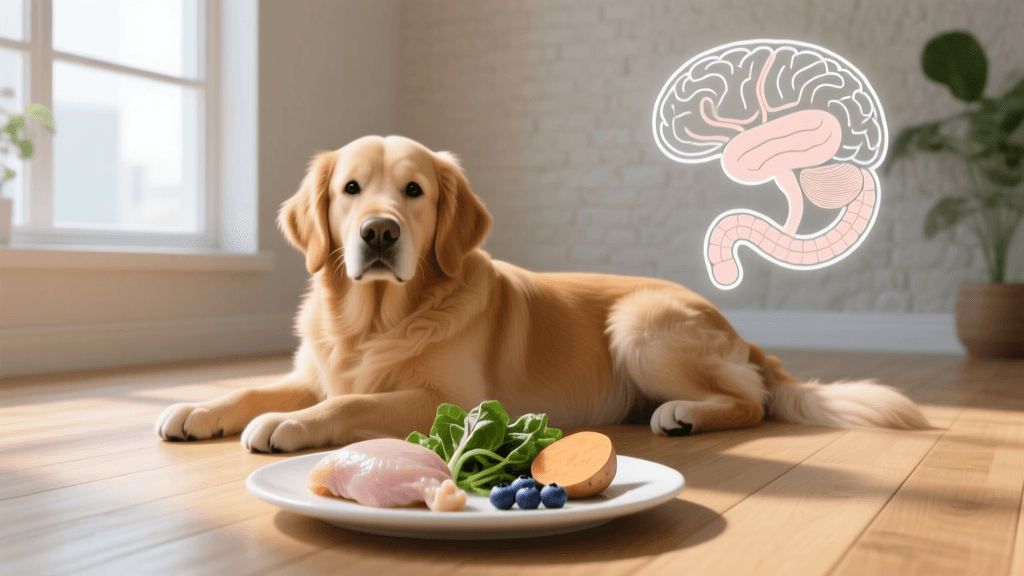
The gut-brain axis is a bidirectional communication network linking the enteric nervous system (the gut) with the central nervous system (the brain). In dogs, this connection is primarily mediated by the vagus nerve, the immune system, and microbial metabolites. Remarkably, approximately 90% of a dog's serotonin—the primary neurotransmitter responsible for feelings of well-being and happiness—is produced in the gastrointestinal tract, not the brain.
When a dog consumes a diet rich in diverse, living nutrients, their gut microbiome thrives. Beneficial bacteria ferment dietary fibers and proteins into short-chain fatty acids (SCFAs) like butyrate. These SCFAs cross the blood-brain barrier and reduce neuroinflammation. Conversely, a dysbiotic gut—often caused by highly processed diets, artificial preservatives, and a lack of dietary variety—sends distress signals to the brain via the vagus nerve, manifesting as hyper-vigilance, separation anxiety, or leash reactivity. According to experts at the Tufts Cummings School of Veterinary Medicine, dietary composition plays a critical role in behavioral outcomes, and altering the microbiome can yield noticeable shifts in a dog's temperament and stress resilience.
Ultra-Processed Kibble vs. Fresh Food: The Behavioral Impact
To understand why fresh diets are revolutionizing canine behavioral health in 2026, we must examine the psychological and physiological toll of ultra-processed foods. Kibble is extruded at extremely high temperatures, a process that destroys natural enzymes, degrades heat-sensitive B-vitamins (crucial for nervous system function), and creates advanced glycation end-products (AGEs). AGEs are known to trigger systemic inflammation, which can easily cross into the brain and cause neuro-inflammation, leading to cognitive fog and irritability in dogs.
Fresh and raw diets, on the other hand, retain their natural moisture, bioavailable nutrients, and living enzymes. The hydration alone is critical; chronic mild dehydration from eating dry kibble elevates cortisol (the stress hormone). When a dog transitions to a moisture-rich raw or gently cooked diet, their baseline physiological stress drops, making them more receptive to training and less prone to reactive outbursts.
Behavioral Outcomes: 2026 Comparative Data
The following table illustrates the behavioral and physiological differences observed in dogs fed ultra-processed diets versus those fed balanced fresh/raw diets, based on current veterinary nutrition consensus.
| Behavioral Marker | Ultra-Processed Kibble Diet | Balanced Fresh / Raw Diet |
|---|---|---|
| Baseline Anxiety | Higher; linked to neuro-inflammation and blood sugar spikes/crashes. | Lower; stabilized by slow-burning whole proteins and healthy fats. |
| Focus & Trainability | Inconsistent; often hindered by gut-derived brain fog. | High; enhanced by bioavailable Omega-3s supporting cognitive function. |
| Reactivity to Stimuli | Prone to overreaction; elevated cortisol from systemic inflammation. | Improved threshold; vagus nerve stimulated by diverse microbiome. |
| Post-Exercise Recovery | Slower mental and physical wind-down; restlessness. | Rapid return to homeostasis; natural endorphin release from chewing. |
Nutritional Psychiatry: Key Nutrients for a Calm Canine Mind
If you are looking to use food to help an anxious dog, specific ingredients found in fresh and alternative diets act as natural anxiolytics (anti-anxiety agents). Here is what you should be incorporating into your dog's bowl in 2026:
- Tryptophan-Rich Proteins: Tryptophan is the amino acid precursor to serotonin. Raw turkey, free-range eggs, and wild-caught salmon are incredibly rich in tryptophan. Feeding these proteins raw or gently cooked ensures the amino acids are not denatured, allowing them to cross the blood-brain barrier effectively.
- Marine Omega-3 Fatty Acids (EPA & DHA): The brains of anxious dogs are often starved of DHA. Adding fresh sardines, raw green-lipped mussels, or high-quality, cold-pressed krill oil to a fresh diet drastically reduces neuro-inflammation and improves impulse control in reactive dogs.
- Fermented Foods & Prebiotics: Raw goat milk, kefir, and fermented vegetables (like dog-safe sauerkraut) provide natural probiotics. Furthermore, feeding prebiotic fibers like dandelion greens and pumpkin feeds the good bacteria, enabling them to produce the SCFAs that calm the nervous system.
- Antioxidant-Rich Berries: Blueberries and blackberries combat oxidative stress in the brain. Studies highlighted by the American Kennel Club emphasize that maintaining gut flora with proper probiotics and antioxidants is essential for long-term canine vitality and mood stabilization.
The Psychology of Chewing and Foraging
Understanding your dog also means respecting their evolutionary instincts. Dogs are natural foragers and scavengers. When you feed a dog from a stainless steel bowl, they consume their meal in seconds, missing out on vital psychological enrichment. Alternative diets, specifically raw feeding, incorporate Raw Meaty Bones (RMBs) like raw duck necks, chicken feet, or beef marrow bones.
The physical act of chewing and tearing raw meat off the bone is a profound behavioral modifier. Chewing releases endorphins and dopamine in the canine brain. It is a self-soothing mechanism. A dog that spends 30 minutes dismantling a raw, meaty bone is a dog whose nervous system is actively down-regulating from stress. Furthermore, the pungent, natural odors of raw tripe, fresh organs, and bone broth stimulate the olfactory bulb, satisfying the brain's innate desire to sniff, track, and 'hunt' for food. This olfactory enrichment tires a dog out mentally just as much as a long physical walk, significantly reducing destructive behaviors born from boredom and anxiety.
The 2026 Protocol: Transitioning for Behavioral Health
If you are convinced that a fresh or raw diet could help your dog's behavioral issues, a strategic transition is vital. A sudden dietary shift can cause gastrointestinal upset, which will temporarily spike stress and worsen anxiety. Follow this 2026-approved transition protocol:
- Weeks 1-2 (The Introduction): Keep your dog's current food but introduce a fresh food topper. Start with 10% of the meal as fresh ingredients (e.g., a raw egg, a sardine, or a spoonful of raw goat milk). Observe their stool and their mood.
- Weeks 3-4 (The Microbiome Shift): Increase fresh foods to 25% of the diet. Introduce a high-quality, canine-specific soil-based probiotic to help the gut adapt to the new, diverse bacterial load.
- Weeks 5-6 (The Behavioral Observation): As you move toward 50% or 100% fresh/raw food, begin tracking behavioral metrics. Note their reaction to the doorbell, their threshold on leash walks, and their ability to settle in the evening.
- Ongoing Enrichment: Ditch the bowl. Use snuffle mats, lick mats, and frozen raw bone broth blocks to extend feeding times and promote the calming, rhythmic licking behavior that soothes the canine vagus nerve.
Conclusion: Food as the Foundation of Behavior
As our understanding of canine psychology deepens in 2026, it is undeniable that behavior cannot be entirely separated from biology. Training is essential, but you cannot out-train a biologically compromised nervous system. By embracing raw, fresh, and alternative diets, you are doing more than just improving your dog's physical health; you are providing the neurological building blocks required for a calm, focused, and happy mind. The next time your dog struggles with anxiety or reactivity, look beyond the training manual and look into their bowl. The path to a better-behaved, more emotionally balanced dog often begins with the living, nourishing power of whole foods.
For more information on how the microbiome affects overall pet health and the latest in nutritional science, the Purina Institute offers extensive resources on the microbiome's role in systemic and cognitive wellness.
aaron-whyte
All our authors care for dogs every day — read more of their work on the authors page.