Why Dogs Get Zoomies: The Science Behind Canine FRAPs
Discover why dogs get the zoomies, the science behind FRAPs, and how to safely manage these viral bursts of frenetic canine energy.
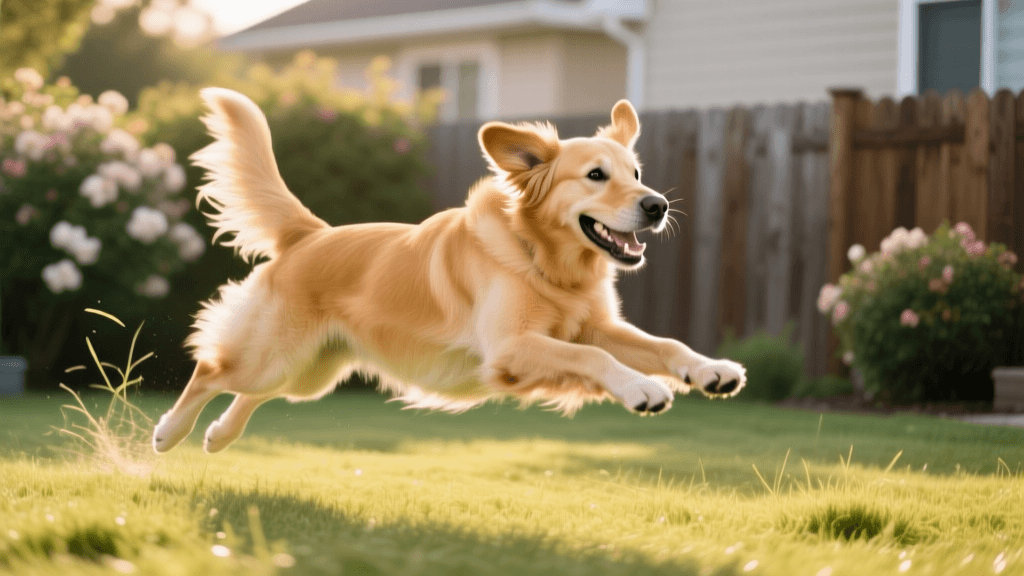
If you spend any time on TikTok, Instagram Reels, or YouTube Shorts, you have undoubtedly witnessed the viral phenomenon known as the 'dog zoomies.' Millions of views are racked up daily by videos of dogs tucking their hindquarters and sprinting in frantic, joyful circles around the living room or yard. While these viral clips are undeniably entertaining and highly shareable, many dog owners are left wondering what exactly is happening inside their pet's mind during these chaotic episodes.
As a core concept in canine psychology and behavior, the zoomies are far more than just a funny internet trend. They are a documented biological and psychological release mechanism. Understanding the 'why' and 'how' behind this behavior is crucial for modern dog owners who want to ensure their viral-worthy pup remains safe, happy, and physically sound.
The Science of Frenetic Random Activity Periods (FRAPs)
In the veterinary and animal behavior communities, the zoomies are officially referred to as Frenetic Random Activity Periods, or FRAPs. According to the American Kennel Club, FRAPs are repetitive behaviors performed at a high speed, often characterized by a dog running in circles, spinning, or darting back and forth with a tucked rear end.
From an evolutionary standpoint, FRAPs are believed to be a remnant of survival instincts. Wild canids needed to be capable of explosive, unpredictable bursts of speed to escape predators or catch elusive prey. Domestic dogs have retained this neurological wiring. When a dog experiences a sudden spike in adrenaline or a buildup of kinetic energy, the brain triggers a FRAP to safely discharge that physical tension.
The Psychology Behind the Zoomies: Why Do They Happen?
To truly understand your dog, you must look at the emotional and environmental triggers that precede a FRAP. The psychology of the zoomies generally falls into three distinct categories:
1. Relief and Decompression
Have you ever noticed your dog getting the zoomies immediately after a bath or after doing their business outside? This is a psychological release of tension. Bathing is a highly stressful, restrictive experience for many dogs. Once the restraint is removed, the FRAP serves as a physical manifestation of relief. Similarly, the post-poop zoomies are thought to be a celebratory release of physical discomfort and a vulnerability response, as dogs are instinctively aware they are exposed while eliminating.
2. Pent-Up Physical and Mental Energy
Dogs that do not receive adequate physical exercise or mental stimulation will naturally accumulate excess energy. The PetMD veterinary team notes that dogs kept in crates for long workdays or those living in apartments without yard access often experience evening FRAPs. The brain essentially forces the body to move to burn off unspent caloric and mental energy before sleep.
3. Emotional Overstimulation
Joy, excitement, and even mild anxiety can trigger a FRAP. When a dog's favorite person walks through the door, or when they arrive at the dog park, the influx of dopamine and adrenaline can overwhelm their nervous system. The zoomies act as a pressure valve, preventing the dog from becoming completely overwhelmed by their own positive emotions.
Viral Trends vs. Reality: The Hardwood Floor Danger
While social media celebrates the comedic value of dogs drifting around corners on slick surfaces, veterinary orthopedic specialists warn against the hidden dangers of hardwood, tile, and laminate flooring during a FRAP. When a 60-pound Labrador hits top speed and attempts a sharp turn on polished oak, the lack of traction puts immense, unnatural torque on the cranial cruciate ligaments (CCL) and hip joints. This can lead to devastating tears, requiring surgical repairs that typically cost between $2,500 and $4,500 per knee.
Actionable Advice: Dog-Proofing Your Floors
If your dog is prone to indoor zoomies, you must modify their environment.
- Interlocking EVA Foam Mats: Often used in home gyms, these mats provide excellent grip and shock absorption. A standard 36-square-foot pack costs around $35 to $50 and can be placed in your dog's primary 'zoomie pathway' (usually the living room or hallway).
- Washable Area Rugs: Brands like Ruggable offer non-slip, machine-washable rugs. While an investment (typically $150 to $250 for a 5x7 rug), they provide the necessary traction to prevent slipping during high-speed maneuvers.
- Paw Grip Pads: For older dogs or those with existing joint issues, apply reusable silicone paw grips (like ToeGrips, approx. $30) to their nails to provide mechanical traction on smooth floors.
Normal FRAPs vs. Abnormal Compulsive Behaviors
It is vital for dog owners to distinguish between a healthy, viral-worthy FRAP and a canine compulsive disorder (CCD). CCDs are the canine equivalent of human OCD and require veterinary behavioral intervention.
| Feature | Normal Zoomies (FRAPs) | Compulsive Behaviors (CCD) |
|---|---|---|
| Duration | 1 to 5 minutes | Can last for hours; difficult to interrupt |
| Trigger | Post-bath, playtime, evening energy bursts | Stress, anxiety, confinement, boredom |
| Facial Expression | Relaxed mouth, 'smiling', bright eyes | Tense jaw, panting, whale eye, fixed stare |
| Post-Episode | Dog settles down, rests, or drinks water | Dog remains restless, immediately resumes if stopped |
| Response to Cues | Will respond to a high-value treat or recall cue | Ignores commands, treats, and environmental changes |
Step-by-Step Guide to Safely Managing the Zoomies
You should never physically grab or tackle a dog experiencing a FRAP, as this can result in severe bite injuries or physical trauma to the dog's spine. Instead, follow this actionable management protocol:
Step 1: Clear the Runway (Timing: Immediate)
As soon as you notice the precursors to a zoomie (the play bow, the tucked rear, the sudden intense staring), quickly remove fragile items, hot beverages, and small children from the immediate vicinity. Open a door to a fenced yard if possible, allowing the dog to take the FRAP outside where the grass provides natural traction.
Step 2: The 15-Minute Cool-Down Routine (Timing: Post-Zoomie)
Once the physical sprinting stops, the dog's heart rate and core temperature will be elevated. Do not immediately put them in a crate or feed them a large meal, which increases the risk of gastric dilatation-volvulus (bloat). Instead, engage in a 15-minute cool-down.
- Offer ice cubes or a frozen lick mat (cost: $10-$15) to lower their core temperature and encourage slow, rhythmic licking, which releases endorphins and calms the nervous system.
- Practice gentle, slow-paced leash walking inside the house on a 6-foot biothane leash to bring their heart rate back to a resting baseline.
Step 3: Proactive Mental Enrichment (Cost: $15 - $30)
If your dog's zoomies are driven by mental under-stimulation rather than physical needs, swap physical exercise for cognitive work. Utilize puzzle toys like the Outward Hound Nina Ottosson Dog Brick Puzzle (approx. $15). By forcing the dog to use their nose and paws to uncover treats, you burn mental energy, significantly reducing the frequency and intensity of evening FRAPs.
Breed-Specific Zoomie Tendencies
While any dog can experience FRAPs, breed genetics play a massive role in how they manifest. Sighthounds (like Greyhounds and Whippets) are built for explosive speed and will often exhibit 'straight-line' zoomies, requiring long, secure fencing. Herding breeds (like Border Collies and Australian Shepherds) tend to exhibit 'orbiting' zoomies, tightly circling their owners or other pets due to their innate instinct to control movement. Terriers may exhibit 'vertical' zoomies, incorporating sudden leaps and spins. Understanding your dog's breed-specific instincts allows you to anticipate their FRAP style and prepare your environment accordingly.
Conclusion
The viral 'dog zoomies' trend on social media highlights a beautiful, joyful aspect of canine behavior. However, as responsible owners, we must look past the entertainment value and understand the underlying biological and psychological drivers of Frenetic Random Activity Periods. By providing safe traction, recognizing the difference between joy and compulsion, and offering proactive mental enrichment, you can ensure your dog's zoomies remain a safe, healthy, and joyful expression of their vibrant spirit.
hannah-wickes
All our authors care for dogs every day — read more of their work on the authors page.