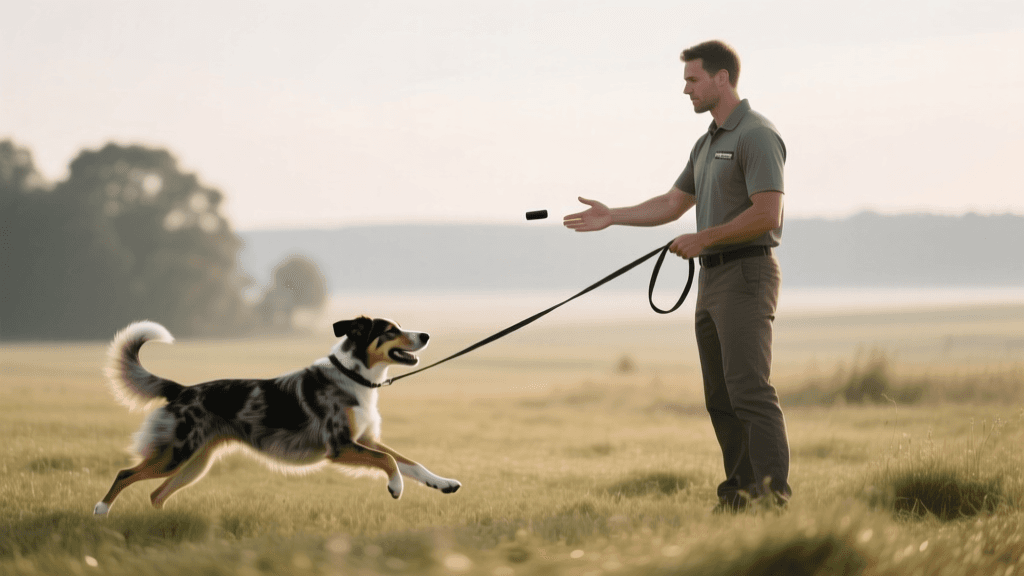
The Force-Free Emergency Recall Training For Dogs 2026
Master the force-free emergency recall for dogs in 2026. Learn positive reinforcement techniques, long-line setups, and high-value reward strategies.
The Science Behind Force-Free Recall Training
In the modern dog training landscape of 2026, the shift toward positive reinforcement and force-free methods is no longer just a trend; it is the gold standard supported by veterinary behaviorists worldwide. An emergency recall—teaching your dog to immediately abandon a high-level distraction and sprint back to you—is arguably the most critical safety cue your dog will ever learn. However, achieving a reliable recall without the use of aversive tools like electronic shock collars or leash corrections requires a deep understanding of canine psychology, operant conditioning, and reward-based motivation.
Force-free training relies on building a Conditioned Emotional Response (CER). When you use positive reinforcement (R+), your dog's brain releases dopamine, creating a neurological loop that associates your recall cue with immense joy and anticipation. Conversely, aversive methods suppress behavior through fear. While a dog may return to avoid a shock, the underlying emotional state is one of anxiety, which can lead to fallout such as redirected aggression or a breakdown of trust. According to the American Veterinary Society of Animal Behavior (AVSAB), positive reinforcement is the most effective and humane method for addressing canine behavior, minimizing stress and maximizing the human-animal bond.
Essential 2026 Gear for Force-Free Recall
Before beginning your training protocol, you need the right equipment. Force-free recall training requires managing the environment so your dog cannot self-reward by running off. Here is the essential gear for 2026:
- Biothane Long Line (30-foot): Biothane is a waterproof, durable, and tangle-free material that has largely replaced heavy nylon or cotton lines. For dogs under 25 lbs, a 3/8-inch width is ideal. For dogs over 25 lbs, opt for a 1/2-inch width to prevent line burn on your hands. Expect to invest around $45 to $60 for a high-quality, custom-made line in 2026.
- Magnetic-Closure Treat Pouch: Speed is everything in recall training. You need to deliver a reward within 0.5 seconds of your dog reaching you. A pouch with a magnetic clasp (like the Ruffwear Treat Trader or Doggone Good pouch) allows for instant access without fumbling with zippers or drawstrings.
- GPS Tracker (Safety Backup): While not a training tool, a GPS collar is a vital safety net when transitioning to off-leash environments. The latest 2026 models, such as the Fi Series 4 or Whistle Go, offer real-time tracking and escape alerts without emitting any corrective stimuli, aligning perfectly with force-free philosophies.
- High-Value Reward Matrix: Kibble will not work for an emergency recall. You need ultra-high-value, novel proteins that your dog only receives during recall practice.
The 2026 High-Value Reward Matrix
Understanding reward value is crucial. The American Kennel Club (AKC) emphasizes that the reward must be worth more than the distraction your dog is leaving behind. Below is a structured guide to selecting the right rewards for your 2026 training sessions.
| Reward Type | Value Tier | 2026 Avg Cost (per oz) | Best Scenario | Prep & Shelf Life |
|---|---|---|---|---|
| Daily Kibble | Low | $0.15 | Indoor, zero-distraction baseline training | Ready to use; long shelf life |
| Commercial Training Treats | Medium | $0.85 | Backyard practice, mild distractions | Ready to use; store in cool place |
| Boiled Chicken Breast | High | $0.45 | Outdoor walks, moderate distractions | Requires boiling; refrigerate up to 3 days |
| Freeze-Dried Beef Liver | Ultra-High | $1.60 | Emergency recall proofing, high distraction | Ready to use; excellent shelf life |
| Real Cheese / Hot Dogs | Ultra-High | $0.75 | Emergency recall 'Jackpot' rewards | Requires chopping; keep refrigerated |
Step-by-Step Force-Free Recall Protocol
Building a bombproof emergency recall takes time, patience, and a structured approach. Never rush the steps. This protocol utilizes a unique cue (such as a specific whistle or the word 'Touch!') reserved exclusively for emergencies.
Phase 1: Charging the Cue (Weeks 1-2)
Start indoors with zero distractions. The goal is to create a strong neurological association between your unique cue and an ultra-high-value reward. Say your cue word or blow your whistle exactly once, then immediately feed a piece of freeze-dried liver or real cheese. Repeat this 10 times per session, twice a day. Do not ask your dog to move or come to you yet; you are simply 'charging' the cue so that the sound predicts a massive payout. By the end of week two, your dog should exhibit a visible 'perking up' or head snap when they hear the cue.
Phase 2: Adding Distance and the Long Line (Weeks 3-4)
Move to a quiet outdoor space and attach your 30-foot Biothane long line to your dog's harness (never attach a long line to a neck collar to prevent tracheal injury). Allow your dog to wander and sniff. When they are mildly distracted, give your emergency recall cue. If they turn toward you, encourage them with a happy voice and run backward to trigger their prey-drive instinct to chase. When they reach you, grab their collar gently with one hand (the 'collar grab' desensitization) and deliver a 'jackpot' reward—three to five pieces of high-value treats fed one by one. The collar grab ensures your dog doesn't associate the recall with being immediately leashed and having their fun ended.
Phase 3: Proofing with the Premack Principle (Weeks 5-8)
The Premack Principle states that a more probable behavior can be used to reinforce a less probable behavior. In 2026, force-free trainers heavily utilize this for recall proofing. If your dog wants to sniff a bush (high probability behavior), use your recall cue (low probability behavior). When your dog returns to you, reward them with food, and then use a release cue like 'Go Sniff!' to allow them to return to the bush. This teaches the dog that coming to you does not mean the end of their freedom; it is merely a pit stop for a reward before they get to resume their fun.
Troubleshooting Common Force-Free Mistakes
Even with the best positive reinforcement strategies, handlers can accidentally sabotage their dog's recall. Avoid these common pitfalls:
- Poisoning the Cue: Never use your emergency recall cue to call your dog for something they perceive as negative, such as a bath, a nail trim, or leaving the dog park to go home. If you need your dog for an unpleasant activity, simply walk over to them, leash them, and guide them away without using the recall cue.
- Repeating the Cue: If you say 'Touch! Touch! Touch!' while your dog ignores you, you are teaching them that the cue is optional background noise. If they do not respond, gently use the long line to guide them toward you, then reward. This preserves the integrity of the cue.
- Low-Value Rewards in High-Distraction Environments: Expecting a dog to leave a chasing squirrel for a piece of dry kibble is setting them up for failure. The Humane Society of the United States notes that rewards must be commensurate with the difficulty of the task. As distractions increase, your reward value must increase exponentially.
Conclusion
Mastering the force-free emergency recall in 2026 is entirely achievable when you respect your dog's emotional state and leverage the power of positive reinforcement. By utilizing modern gear like Biothane long lines, understanding the science of reward value, and applying structured protocols like the Premack Principle, you can build a reliable, joyful recall that keeps your dog safe without ever compromising their trust or well-being. Remember, a force-free recall is not just a command; it is a promise to your dog that returning to you is always the best decision they can make.
beth-carrasco
All our authors care for dogs every day — read more of their work on the authors page.