Mastering Force-Free Recall Training With Biothane Long Lines in 2026
Discover how to build a bulletproof, force-free recall using Biothane long lines and positive reinforcement techniques for reliable off-leash freedom.
The Evolution of Force-Free Recall Training in 2026
Teaching a reliable recall—getting your dog to come back to you every single time you call them—is widely considered the holy grail of dog training. It is the key to off-leash freedom, safety in unpredictable environments, and a deep, trusting bond between you and your canine companion. As we move further into 2026, the dog training industry has decisively pivoted away from outdated, aversive methods like electronic shock collars. Leading veterinary behaviorists and certified professional dog trainers now universally champion positive reinforcement and force-free methods as the most effective, humane, and scientifically backed approach to behavioral conditioning.
Aversive tools rely on fear and pain to enforce compliance, which can lead to fallout such as increased anxiety, fear-based aggression, and a poisoned relationship with the handler. In contrast, force-free recall training builds a joyful, enthusiastic response. Your dog learns that returning to you is the most rewarding event in their environment. According to the American Veterinary Society of Animal Behavior (AVSAB), positive reinforcement should be the primary focus of all animal training, as it minimizes stress and maximizes learning retention.
However, transitioning from a controlled indoor environment to the great outdoors requires a safety net. This is where the modern Biothane long line becomes an indispensable tool for positive reinforcement trainers. In this comprehensive guide, we will explore how to use a Biothane long line to build a bulletproof, force-free recall in 2026 without ever resorting to corrections or physical force.
Why Biothane is the Superior Long Line Material
When practicing recall training outdoors, you need a long line that allows your dog to explore while giving you the ability to prevent them from rehearsing bad habits (like running off to chase a squirrel). Historically, trainers used nylon or leather long lines. While these materials have their uses, they pale in comparison to Biothane, a synthetic, coated webbing material that has completely revolutionized force-free outdoor training.
Biothane is essentially a polyester core encased in a waterproof, durable TPU or PVC coating. It feels somewhat like leather but requires zero maintenance. In 2026, premium Biothane lines from makers like Mud River or Bold Lead Designs typically range from $45 to $85, a worthwhile investment for the safety and comfort they provide.
Long Line Material Comparison Chart
| Material | Weight & Bulk | Durability in Mud/Water | Grip When Wet | Average 2026 Cost |
|---|---|---|---|---|
| Biothane | Lightweight, lays flat | Exceptional (100% waterproof) | Excellent (non-slip coating) | $45 - $85 |
| Nylon | Lightweight but bulky | Poor (absorbs water, rots, smells) | Poor (causes severe rope burn) | $15 - $25 |
| Leather | Heavy, stiff in cold | Moderate (requires oiling/conditioning) | Good | $70 - $120 |
As the table illustrates, Biothane offers the perfect balance of safety, durability, and handler comfort. When a dog suddenly bolts after a deer, a nylon line can easily cause severe rope burn. Biothane’s slightly textured, non-porous surface provides a secure grip without slicing through your palms, allowing you to gently step on the line or guide your dog back without applying harsh physical force.
Essential Gear for Positive Recall Training
Before heading out to the field, ensure you have the following force-free training gear:
- A 15 to 30-Foot Biothane Long Line: For most dogs, a 3/8-inch or 1/2-inch width is ideal. It provides enough strength for dogs up to 80 pounds without unnecessary weight.
- A Back-Clip or Front-Clip Harness: Never attach a long line to a flat collar or a slip lead. If your dog hits the end of the line at a full sprint, a collar could cause severe tracheal or cervical damage. A well-fitted harness like the Ruffwear Front Range distributes the pressure safely across the chest.
- High-Value Treat Pouch: You need treats that are more exciting than the environment. Think boiled chicken, freeze-dried liver, or string cheese. In 2026, treat delivery systems like the Dog Treat Tossers can also add an element of play to the reward.
- A Marker (Clicker or Verbal): A mechanical clicker or a consistent verbal marker like Yes! to pinpoint the exact moment your dog makes the correct choice.
The 4-Step Force-Free Recall Protocol
Building a reliable recall is not about dominating your dog; it is about making yourself the most rewarding element in their environment. Follow this progressive, force-free protocol to build enthusiasm and reliability.
Step 1: Charging the Marker and the Cue
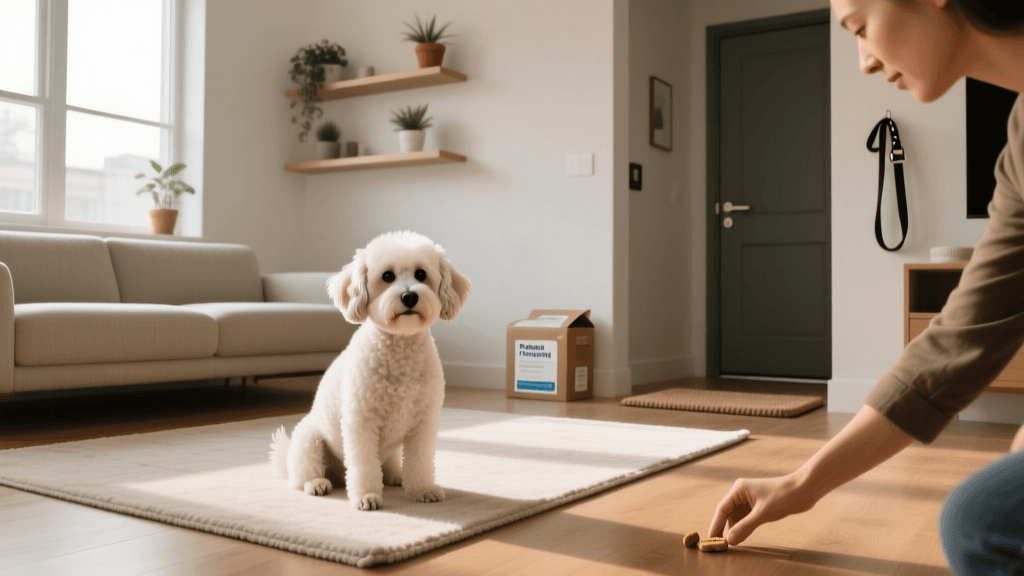
Before adding distance, your dog must understand what the recall cue (Come! or Here!) means. Start indoors in a low-distraction environment. Say your chosen cue word once, in a bright, happy tone. The moment your dog turns toward you, use your marker (Yes! or click) and immediately deliver a high-value treat. Repeat this 10 to 15 times in short, two-minute sessions. You are building a Pavlovian response: the word Come predicts a fantastic reward. Never repeat the cue if your dog ignores it; repeating the word teaches them that the cue is optional background noise.
Step 2: The Ping-Pong Recall Game
Once your dog understands the cue, add a little movement. This game requires two people (or you can use a hallway). Stand a few feet apart. Person A calls the dog cheerfully. When the dog arrives, Person A marks, rewards, and gently holds the dog's harness. Person B then calls the dog. The dog gets to ping-pong back and forth, earning a jackpot reward at each destination. This builds speed and enthusiasm, teaching the dog that running to a human is a highly lucrative activity.
Step 3: Adding Distance with the Biothane Long Line
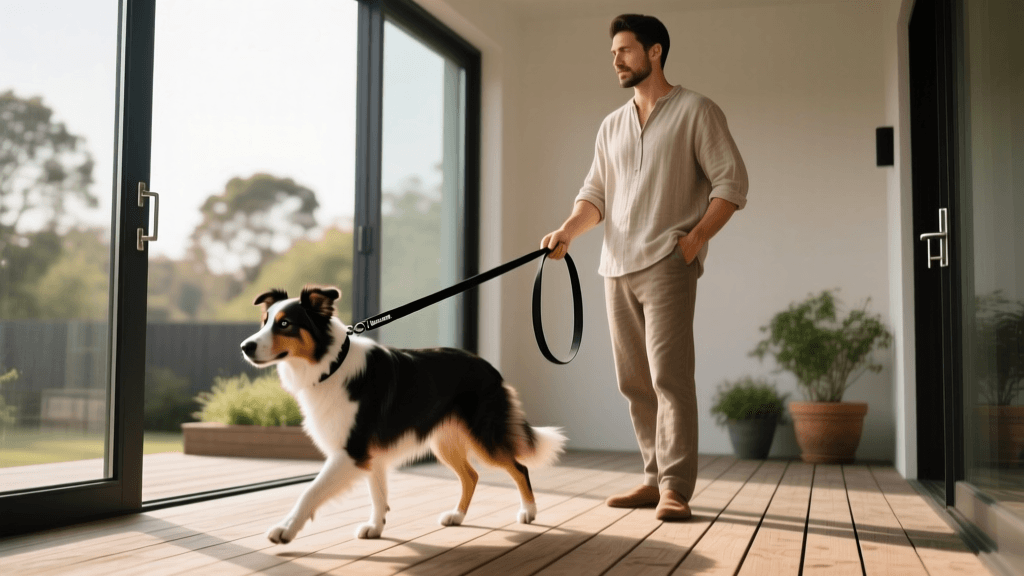
Move to a quiet, fenced outdoor area or an empty park. Attach the Biothane long line to your dog’s harness. Let the line drag on the ground while you walk alongside your dog, allowing them to sniff and explore. This is crucial: the long line is not a leash for steering; it is a safety net.
When your dog is mildly distracted (e.g., sniffing a bush, but not hyper-fixated on a squirrel), say your recall cue once. If they turn and run to you, mark, reward heavily, and release them back to play. If they do not respond, do not yank the line. Instead, gently step on the long line to prevent them from wandering further, make a silly noise to get their attention, and encourage them toward you. When they arrive, reward them. You are managing the environment so they cannot fail, rather than punishing them for ignoring you.
Step 4: Proofing Against Distractions
The American Kennel Club emphasizes that a recall is only as strong as the distractions you have proofed it against. Gradually increase the difficulty of your training environments. Move from your quiet backyard to a busier park, then to a hiking trail.
Use the Premack Principle as a reward. The Premack Principle states that a high-probability behavior (like sniffing a tree) can be used to reinforce a low-probability behavior (like coming when called). Call your dog away from a mild distraction, reward them with a treat, and then give a release cue (Go play!) allowing them to return to the distraction. This teaches the dog that coming to you does not mean the fun is over; it just means a brief intermission for a snack.
Troubleshooting the Poisoned Recall Cue
One of the most common hurdles in recall training is the poisoned cue. This happens when a dog learns that the word Come is actually a trap. For example, if you call your dog to come inside, and then immediately give them a bath or put them in a crate, they will quickly learn to avoid you when they hear the word. Similarly, if you call your dog and then scold them for something they did five minutes ago, the recall cue becomes associated with punishment.
If you suspect your recall cue is poisoned, the Humane Society of the United States recommends simply choosing a brand-new cue word, such as Here, Return, or a whistle. Start the charging process over from Step 1 with the new word, and ensure that 95% of the time, the new cue results in a massive reward and immediate release back to fun. Reserve the new recall cue strictly for emergency situations or when you can guarantee a phenomenal reward.
Managing the Long Line Safely
While the Biothane long line is a phenomenal force-free tool, it requires proper handling to ensure safety. Never wrap the long line around your hand or wrist; if a large dog bolts, this could result in severe friction burns or even a broken finger. Instead, hold the looped end of the line in your palm and gather the excess line in loose folds in your other hand. If your dog makes a sudden dash, simply drop the excess folds and let the line slide through your loosely closed fist, stepping on the line near the ground to apply gentle, distributed pressure to the harness.
Additionally, be hyper-aware of your surroundings. Long lines can easily wrap around trees, park benches, or the legs of other dogs and humans. Always maintain visual contact with the line and reel your dog in closer when navigating tight spaces or passing strangers.
Conclusion: Patience and Positivity Yield the Best Results
Training a reliable, force-free recall is a marathon, not a sprint. In 2026, we have a deeper understanding of canine cognition and learning theory than ever before, and the science is clear: dogs learn fastest and retain behaviors longest when they are trained without fear, pain, or intimidation. By utilizing a high-quality Biothane long line, managing your dog's environment, and making yourself the ultimate source of joy and high-value rewards, you can achieve off-leash reliability while strengthening the bond you share with your dog. Remember to celebrate the small victories, keep your training sessions short and upbeat, and always set your dog up for success.
aaron-whyte
All our authors care for dogs every day — read more of their work on the authors page.