Force-Free Puppy Home Setup & Positive Training Guide 2026
Discover the ultimate 2026 force-free puppy home setup guide. Learn positive reinforcement crate training, capturing calmness, and R+ socialization.
Welcome to Force-Free Dog Ownership in 2026
Bringing a new puppy or rescue dog into your home is one of life's most rewarding experiences, but the landscape of dog training has evolved dramatically. As we navigate 2026, the global veterinary and behavioral communities have firmly moved away from outdated, dominance-based myths. Today, the gold standard for getting a dog is rooted in Positive Reinforcement (R+) and Force-Free methodologies. This approach focuses on teaching your dog what you want them to do, rather than punishing them for natural canine behaviors. By setting up your home for success and utilizing proactive management, you can build a foundation of deep trust and mutual respect from day one. In this comprehensive guide, we will explore how to puppy-proof your environment, execute force-free crate training, and implement a 'capturing calmness' routine that sets your new companion up for a lifetime of emotional stability.
The Science of Positive Reinforcement (R+) and LIMA
The modern approach to dog training is guided by the LIMA principle: Least Intrusive, Minimally Aversive. This means we use the most humane, effective, and scientifically backed methods to shape behavior. According to the American Veterinary Society of Animal Behavior (AVSAB), positive reinforcement should be the first line of treatment and training for all animals. The AVSAB explicitly warns against the use of aversive tools like prong collars, shock collars, and alpha-rolling, noting that these methods increase fear, anxiety, and aggression while damaging the human-animal bond. In 2026, certified force-free behaviorists emphasize that 'bad' behavior is simply a dog's natural response to an unmet need or an unmanaged environment. By shifting our perspective from 'how do I stop this behavior' to 'what is my dog communicating,' we can address the root cause of the issue using reward-based strategies.
Proactive Management: Puppy-Proofing Without Punishment
In a force-free home, management is your best friend. Management means altering the environment so that your dog cannot practice unwanted behaviors. If a puppy cannot reach your favorite shoes, they cannot chew them, meaning you never have to scold them. Before bringing your dog home, set up exercise pens (x-pens) and baby gates to create designated 'yes' spaces. These are areas where everything is safe for the dog to interact with. Fill these spaces with appropriate chew toys, snuffle mats, and water bowls. When you cannot actively supervise your new dog, they should be in a 'yes' space or a force-free crate. This prevents the rehearsal of destructive habits and eliminates the need for corrective punishments, which only teach a dog to be sneaky rather than teaching them what is actually appropriate to chew.
Force-Free Crate Training: A Step-by-Step Shaping Guide
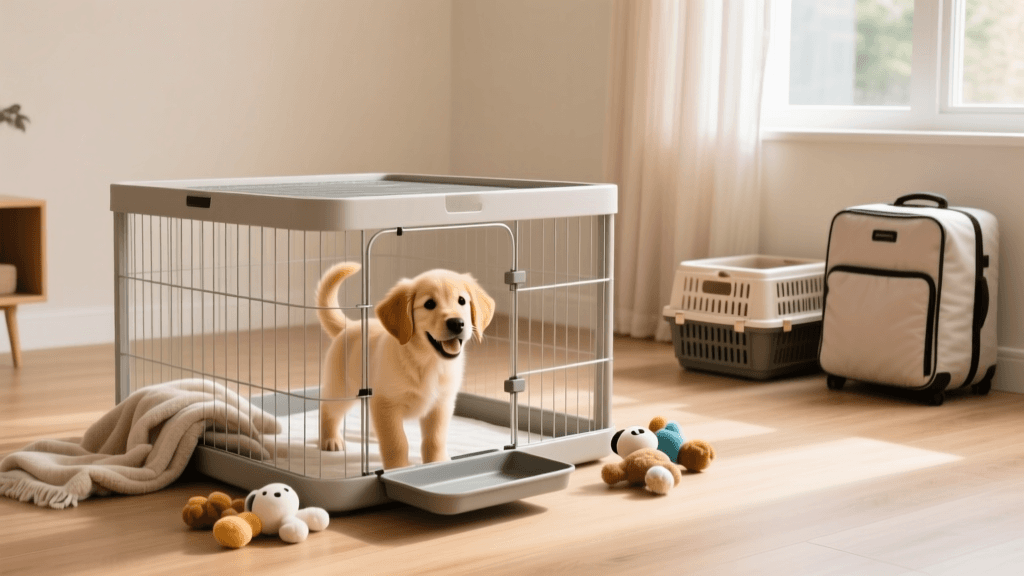
The crate should be a sanctuary, not a prison. Force-free crate training relies on classical conditioning and operant shaping to build a positive emotional response to the crate. Never force your dog inside, and never use the crate as a time-out for misbehavior. Instead, follow this shaping protocol during your first week:
Step 1: Targeting and Entering. Toss high-value treats (like boiled chicken or freeze-dried liver) into the back of the crate with the door removed or tied open. Let the dog enter, eat, and exit freely. Repeat this until the dog eagerly runs in when you point to the crate.
Step 2: Duration and Relaxation. Begin feeding all of your dog's meals inside the crate. Introduce long-lasting enrichment items, such as a frozen lick mat or a hollow chew toy stuffed with dog-safe peanut butter, exclusively when they are in the crate. This builds a positive association with staying inside for longer periods.
Step 3: Closing the Door. Once your dog is comfortably eating or chewing inside, gently close the door for just two seconds, then open it before they finish. Gradually increase the time the door is closed by one-second increments over several days. If your dog shows signs of stress, you have moved too fast; return to the previous successful step.
Step 4: Absence. Begin stepping away from the crate while the dog is engaged with a high-value chew. Start with one step away, then return and reward. Slowly build up to leaving the room for a few seconds, always returning before the dog becomes anxious. This prevents separation anxiety and teaches the dog that your departure is a predictor of good things, not abandonment.
Essential R+ Gear for Your 2026 Puppy Setup
The pet industry in 2026 offers incredible innovations designed specifically for force-free training and canine enrichment. Ditch the slip leads and choke chains, and invest in gear that supports your dog's physical and emotional well-being.
| Gear Category | Outdated / Aversive Tools (Avoid) | 2026 Force-Free Alternatives (Recommended) | Why It Matters |
|---|---|---|---|
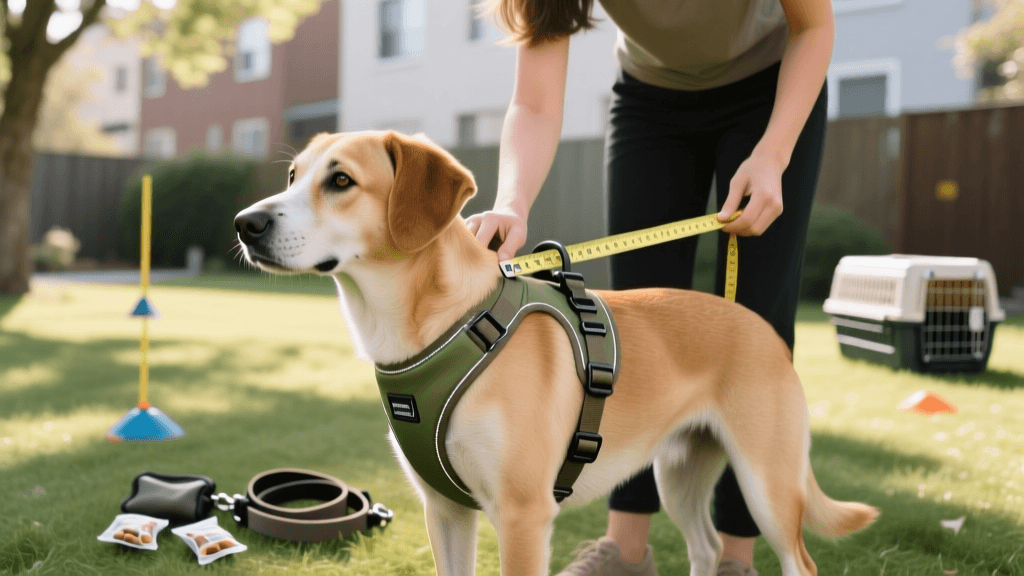
| Walking Harness | Martingale collars, prong collars, slip leads | Y-Front Biomechanical Harness (e.g., Perfect Fit or Rabbitgoo) | Protects the trachea and thyroid, allows full shoulder extension, and prevents restrictive gait alteration. |
| Enrichment | Standard static plastic food bowls | Biodegradable Snuffle Mats & Silicone Lick Mats | Encourages natural foraging instincts, lowers heart rate, and provides mental exhaustion equivalent to a long walk. |
| Chewing | Rawhide, hard nylon bones | Single-ingredient air-dried chews, rubber food-dispensing toys | Safe for teeth and digestion, promotes healthy endorphin release through natural chewing behaviors. |
| Remote Training | Shock collars, ultrasonic bark deterrents | Smart Treat Cameras with Two-Way Audio | Allows you to reward calm behavior remotely without inducing fear or confusion through aversive noise/shock. |
The First Week: Capturing Calmness and Decompression
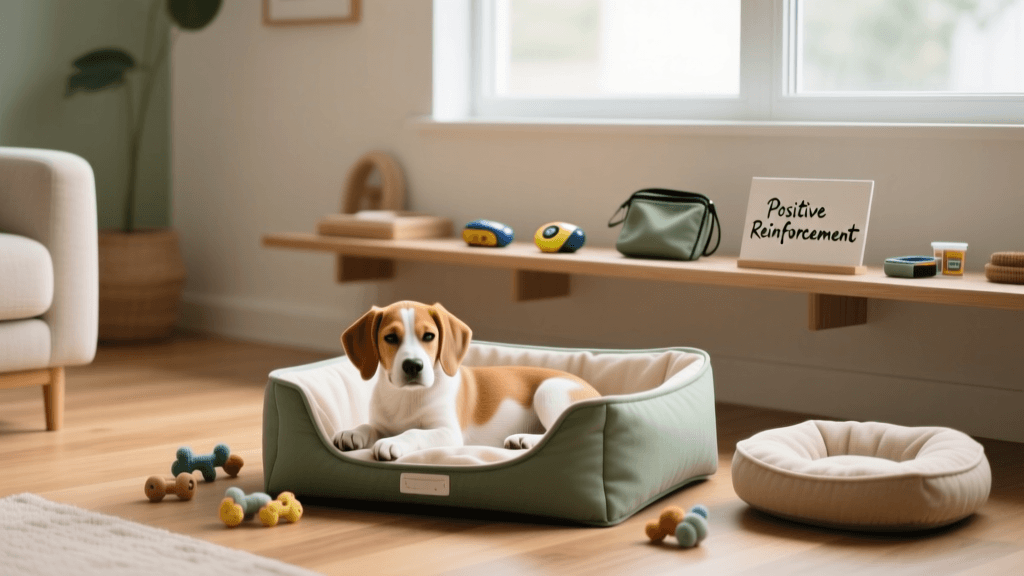
When you first bring a dog home, they are often overwhelmed by new sights, sounds, and smells. The '3-3-3 Rule' suggests it takes 3 days to decompress, 3 weeks to learn your routine, and 3 months to truly feel at home. During those critical first few days, your primary training goal is simply 'capturing calmness.' Keep a pouch of high-value treats on you at all times. Whenever your dog voluntarily chooses to lie down, settle on their mat, or relax quietly, silently drop a treat between their front paws. Do not use a clicker or verbal praise that might excite them; just let the treat appear as if by magic. This teaches the dog that doing nothing and relaxing is a highly rewarding behavior. Pair this with daily decompression walks in quiet, low-traffic areas using a long line (15-30 feet) to allow them to sniff and explore at their own pace, which is incredibly soothing for a dog's nervous system.
Force-Free Socialization vs. Flooding
Socialization is widely misunderstood as forcing a puppy to interact with every dog and person they see. In reality, true socialization is about providing positive, neutral exposure to the world without forcing interaction. The Humane Society of the United States emphasizes that socialization should be a positive experience, warning against 'flooding'—a technique where a dog is forced to endure a scary stimulus until they stop reacting. Flooding leads to learned helplessness and deep-seated fear. Instead, practice 'observe and reward.' Sit on a park bench at a distance where your dog notices a trigger (like a loud truck or a strange dog) but remains under their fear threshold. Feed them high-value treats for simply looking at the trigger and then looking back at you. This builds a positive emotional response to novel stimuli and teaches your dog to check in with you when they feel uncertain. Organizations like Fear Free Pets advocate heavily for this choice-based approach, ensuring that veterinary visits, grooming, and daily outings are built on consent and positive associations rather than restraint and force.
Conclusion: Building a Lifelong Bond
Getting a dog in 2026 means embracing a relationship built on empathy, science, and mutual respect. By utilizing force-free home setups, proactive management, and positive reinforcement, you are not just training a dog; you are cultivating a confident, emotionally balanced companion. Patience and consistency are your greatest tools. Celebrate the small victories, manage the environment to prevent errors, and always strive to understand the world from your dog's perspective. Your journey into force-free dog ownership will yield a bond that is as resilient as it is deeply affectionate.
beth-carrasco
All our authors care for dogs every day — read more of their work on the authors page.