Best Dog Crates & Playpens for New Puppies: Buyer's Guide
Discover the best dog crates and playpens for new puppies. Compare top-rated wire, plastic, and soft-sided crates with our expert buyer's guide.
Bringing a new puppy home is one of the most exciting milestones in a dog owner's life. However, the first few days can be overwhelming for both you and your new furry friend. As you prepare your home for your new arrival, investing in the right confinement equipment is non-negotiable. A proper crate and playpen setup provides a safe haven for your puppy, accelerates potty training, and prevents destructive chewing when you cannot supervise them directly. In this comprehensive buyer's guide, we will break down the best dog crates and playpens for new puppies, helping you navigate the myriad of options on the market. Whether you are adopting a tiny Chihuahua mix or bringing home a rambunctious Golden Retriever, understanding the nuances of crate materials, sizing, and accessories will ensure your puppy's transition into your home is as smooth and stress-free as possible.
Why Your New Puppy Needs a Crate and Playpen
Many first-time owners mistakenly view crates as canine jails. In reality, dogs are den animals by nature. When introduced correctly, a crate becomes your puppy's personal sanctuary—a quiet place to retreat when the household gets too loud or when they simply need a nap. The American Kennel Club emphasizes that crate training taps into a dog's natural instinct to seek out small, enclosed spaces for security. Furthermore, crates are invaluable tools for housebreaking. Puppies naturally avoid soiling their sleeping areas, which encourages them to hold their bladder until you take them outside.
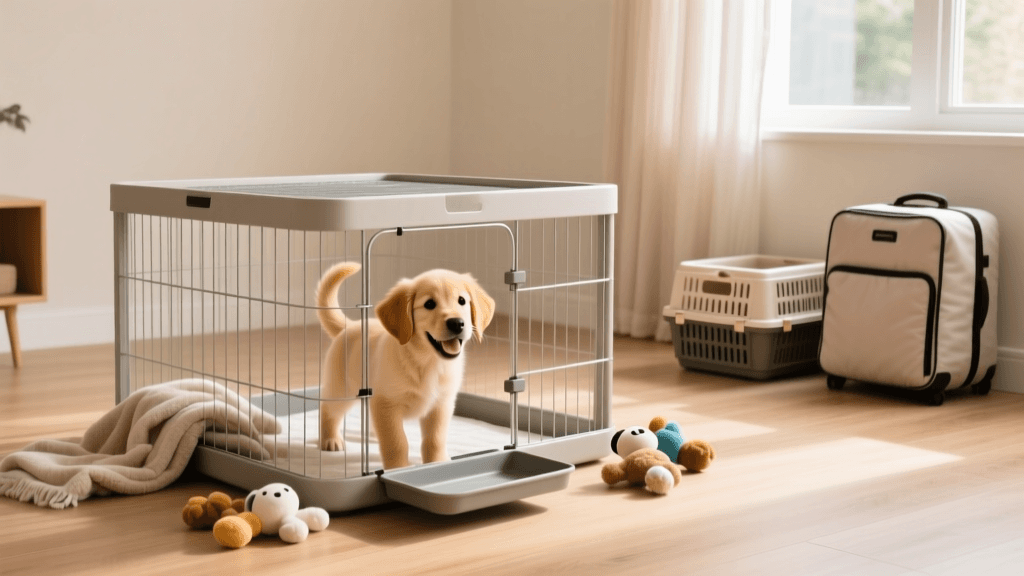
However, a crate alone is not enough for the first few weeks. Puppies need space to move, stretch, and play while still being contained. This is where a puppy playpen comes into play. By attaching a playpen to your puppy's crate, you create a multi-zone environment: a cozy bedroom for sleeping and a larger living room for water bowls, pee pads, and toys. The ASPCA strongly recommends using exercise pens to safely confine puppies when owners are busy but still at home, preventing them from chewing on electrical cords or swallowing hazardous household items.
How to Measure Your Puppy for the Perfect Crate
Buying the right size crate is crucial. A crate that is too large will allow your puppy to designate one corner for sleeping and another for eliminating, completely defeating the purpose of potty training. Conversely, a crate that is too small will cause physical discomfort and anxiety.
To find the ideal dimensions, measure your puppy from the tip of their nose to the base of their tail, and add two to four inches. Next, measure from the top of their head (or the tips of their ears, if they stand upright) to the floor, and add two to four inches. According to the Humane Society of the United States, because puppies grow rapidly, the most cost-effective strategy is to purchase an adult-sized crate that features an adjustable divider panel. This allows you to expand the living space incrementally as your dog grows, saving you from buying multiple crates over the first year.
Comparing Crate Types: Wire, Plastic, and Soft-Sided
The market is flooded with different crate designs, each catering to specific needs, temperaments, and travel requirements. Below is a detailed comparison chart to help you decide which material is best suited for your new puppy.
| Crate Type | Best For | Pros | Cons | Price Range |
|---|---|---|---|---|
| Wire | Home training, high ventilation | Folds flat, adjustable dividers, excellent visibility | Heavy, visually obtrusive, noisy | $50 - $100 |
| Plastic | Travel, airline cargo, den-loving dogs | Cozy, lightweight, airline compliant | Does not fold, poor visibility, traps odors | $40 - $120 |
| Soft-Sided | Fully trained adult dogs, car travel | Ultra-lightweight, portable, comfortable | Easily destroyed by chewing puppies, hard to clean | $30 - $70 |
Top Wire Crate Pick: MidWest Homes for Pets iCrate
For the vast majority of new puppy owners, a wire crate is the gold standard. The MidWest Homes for Pets iCrate consistently ranks as a top seller due to its durability, ease of assembly, and dual-door design. It features a rust-resistant black electro-coat finish and heavy-duty slide-bolt latches that clever puppies cannot easily nudge open. The included divider panel is a massive plus for growing puppies. Wire crates offer maximum visibility and ventilation, which helps reduce claustrophobia in anxious dogs. They also fold flat for easy storage and transport. The primary drawback is that wire crates are heavy and can be visually obtrusive in a living room, though many owners solve this by purchasing a stylish wooden crate cover or end-table crate.
Top Plastic Crate Pick: Petmate Ultra Vari Kennel
If you plan on flying with your puppy or if your dog prefers a darker, more enclosed den, a heavy-duty plastic crate is the way to go. The Petmate Ultra Vari Kennel meets most airline cargo specifications (always verify with your specific airline before booking). The plastic shell provides a cozier, more den-like atmosphere that can help overstimulated puppies settle down faster. The wire vents on the sides ensure adequate airflow while preventing the puppy from getting their paws caught. While plastic crates are lighter than wire ones and easier to wipe clean, they do not fold down for storage and offer less visibility for the dog.
The Best Puppy Playpens for Safe Confinement
While crates are for sleeping and short-term confinement, playpens are for active supervision and play. The IRIS USA Exercise Pet Playpen is a fantastic option for small to medium breeds. Made from durable, molded plastic, it is lightweight, easy to assemble without tools, and can be configured into various shapes (octagon, square, or rectangle) to fit your room's layout.
For larger, more boisterous breeds, the Amazon Basics Foldable Metal Exercise Pen provides a sturdy, escape-resistant barrier. Standing at 24 to 48 inches tall, these metal panels feature a rust-proof coating and ground anchors to keep the pen securely in place, even if your puppy decides to test the perimeter. Metal pens are highly recommended for outdoor use or for large living spaces where you need to section off a safe zone.
Essential Crate Accessories to Buy on Day One
The crate itself is just the foundation. To make the space inviting and functional, you need to invest in a few key accessories:
- Snuggle Puppy Heartbeat Toy: Created by SmartPetLove, this plush toy features a battery-operated heartbeat simulator and a heat pack. It mimics the feeling of snuggling with littermates, drastically reducing crying and separation anxiety during the first few nights.
- KONG Classic Puppy Toy: Stuff this durable rubber toy with puppy-safe peanut butter or plain yogurt and freeze it. It provides hours of mental stimulation and helps soothe teething gums while the puppy is confined.
- Washable Crate Mat: Avoid fluffy beds initially, as teething puppies will shred them and potentially ingest the stuffing, leading to dangerous intestinal blockages. Opt for a flat, chew-resistant, machine-washable mat like the Gorilla Grip Waterproof Crate Pad until your puppy outgrows the chewing phase.
- Stainless Steel Coop Cups: These attach directly to the wire or plastic crate walls, preventing your puppy from tipping over their water bowl and soaking their bedding.
Budgeting for Your Puppy's Confinement Setup
When preparing your home, it is helpful to understand the financial commitment required for proper confinement gear. Here is a general breakdown of what you can expect to spend:
- Adjustable Wire Crate (Large): $50 to $90
- Metal Exercise Playpen: $40 to $70
- Snuggle Puppy Heartbeat Toy: $40
- KONG Puppy Toy: $12 to $18
- Waterproof Crate Mat: $25 to $40
Total Estimated Investment: $167 to $258. While this may seem like a significant upfront cost, investing in high-quality, durable gear prevents the need for constant replacements and protects your home from costly damages caused by unsupervised chewing.
Final Thoughts on Preparing Your Home
Selecting the right crate and playpen is a foundational step in your journey as a new dog owner. By prioritizing proper sizing, durable materials, and comfort-enhancing accessories, you set your puppy up for success from day one. Remember that confinement is not a punishment; it is a proactive management tool that keeps your curious puppy safe while they learn the rules of their new environment. Take the time to introduce the crate positively, using high-value treats and plenty of praise, and your puppy will soon view their crate as their favorite spot in the house.
hannah-wickes
All our authors care for dogs every day — read more of their work on the authors page.