Top No-Pull Dog Harnesses for New Owners in 2026: Fit Guide
Discover the best no-pull dog harnesses for 2026. Learn how to measure, fit, and train your new rescue or puppy with front-clip gear.
Bringing Your New Dog Home: The First-Day Gear Essentials
Bringing a new dog or puppy home is one of the most exciting milestones in life. However, as any seasoned dog owner will tell you, the first week is often a chaotic blend of joy, anxiety, and unexpected behavioral challenges. Among the most common hurdles new owners face in 2026 is leash pulling. Whether you have just adopted a high-energy rescue from a shelter or brought home an exuberant adolescent puppy, stepping out the front door can quickly turn into a frustrating game of tug-of-war.
While many new owners default to standard flat collars or traditional back-clip harnesses, these tools often exacerbate the problem. To set yourself and your new companion up for success from day one, preparing a high-quality, front-clip no-pull dog harness before your dog even arrives is a critical step in your home preparation checklist. This comprehensive guide will walk you through the science of pulling, the top harness models available in 2026, and exactly how to measure, fit, and train your new dog for loose-leash walking.
The Science of Pulling: Why Standard Gear Fails
To understand why a no-pull harness is essential, we must first understand the biomechanics of a pulling dog. Dogs possess a natural physiological response known as the 'opposition reflex.' When pressure is applied to the front of their neck or chest, their instinct is to push forward against it. This is the exact same reflex that allows sled dogs to pull heavy loads across the snow.
When you attach a leash to a standard flat collar, a dog that pulls will put immense pressure on their trachea and cervical spine. Over time, this can lead to severe medical issues, including tracheal collapse, particularly in smaller breeds. Conversely, a traditional back-clip harness distributes the pressure across the dog's chest and shoulders. While this protects the neck, it actually encourages the opposition reflex, giving your dog maximum leverage to pull you down the street.
A true no-pull harness features a leash attachment ring located on the front chest strap. When the dog pulls forward, the front clip gently redirects their momentum sideways, turning them back toward you. This disrupts the opposition reflex without causing pain, making it an invaluable tool for positive reinforcement training during the crucial first months of dog ownership.
Top 3 No-Pull Harnesses to Prepare in 2026
The pet gear market has evolved significantly, with 2026 bringing advancements in breathable mesh, reflective safety stitching, and escape-proof buckles. Here are the top three front-clip harnesses we recommend having ready in your home before your new dog arrives.
1. Rabbitgoo No-Pull Dog Harness (Best Budget-Friendly Starter)
The Rabbitgoo harness remains a staple for new dog owners in 2026 due to its accessibility, affordability (averaging around $25), and user-friendly design. It features four adjustment points—two on the neck strap and two on the chest—allowing for a highly customized fit. The padded chest plate prevents chafing, which is vital for rescue dogs with sensitive skin or thin coats. It includes both a front clip for training and a back clip for casual walks once your dog has mastered loose-leash walking.
2. 2 Hounds Design Freedom No-Pull Harness (Best for Flight-Risk Rescues)
If you are adopting a fearful or flight-risk rescue dog, the 2 Hounds Design Freedom Harness (priced around $42 in 2026) is the gold standard. It features a patented martingale loop on the back that gently tightens if the dog backs up, preventing them from slipping out of the harness and bolting. The front chest ring provides excellent steering control. It is constructed with Swiss velvet lining behind the legs to prevent the severe chafing that many cheaper harnesses cause on a dog's armpits.
3. Kurgo Tru-Fit Smart Harness (Best for Travel and Car Safety)
For owners who plan to travel frequently or commute with their new dog, the Kurgo Tru-Fit Smart Harness (approximately $38) is a must-have. It features a unique nesting buckle system made of all-steel hardware, inspired by rock-climbing gear. More importantly, it has been crash-tested and includes a 10-inch seatbelt tether. The front D-ring provides excellent no-pull control, making it a versatile 2-in-1 solution for both neighborhood training and highway safety.
How to Measure Your New Dog for a Harness
A no-pull harness is only effective if it fits correctly. A harness that is too loose will chafe the armpits and allow the dog to escape, while one that is too tight will restrict shoulder movement and cause discomfort. According to the veterinary experts at Preventive Vet, accurate measuring is the most critical step in purchasing a harness.
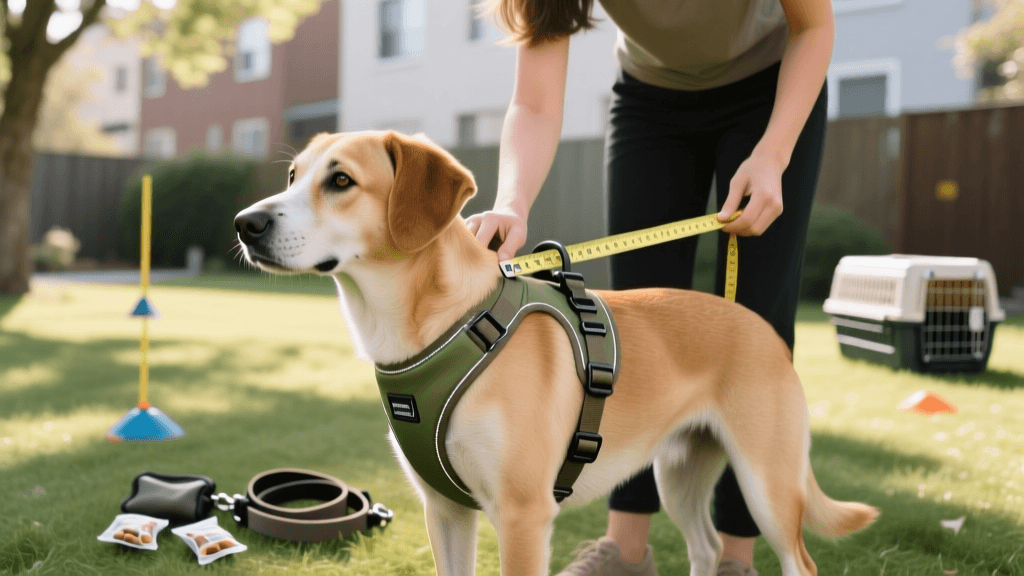
If you are adopting from a shelter, ask the staff to help you take these two measurements before you finalize your purchase:
- Neck Girth: Measure around the thickest part of the dog's neck, right where the collar naturally sits. Ensure you can slip two fingers between the tape measure and the dog's skin.
- Chest Girth: Measure around the widest part of the dog's ribcage, typically just behind the front legs. This is the most crucial measurement for a front-clip harness.
| Harness Size (General 2026 Standards) | Neck Girth (Inches) | Chest Girth (Inches) | Typical Breed Examples |
|---|---|---|---|
| Small | 12 - 16 | 16 - 22 | Jack Russell, Pug, Miniature Schnauzer |
| Medium | 16 - 20 | 22 - 28 | Beagle, Border Collie, Cocker Spaniel |
| Large | 20 - 26 | 28 - 36 | Labrador Retriever, Golden Retriever, Boxer |
| Extra Large | 26 - 32 | 36 - 44 | German Shepherd, Rottweiler, Great Dane |
Note: Always refer to the specific manufacturer's sizing chart, as dimensions can vary slightly between brands like Rabbitgoo, Kurgo, and 2 Hounds Design.
First-Week Training: Acclimating Your Dog to the Front Clip
Simply putting a no-pull harness on your dog will not instantly cure pulling; it is a training aid, not a magic cure. The American Kennel Club (AKC) emphasizes that loose-leash walking requires patience, consistency, and positive reinforcement, especially during the decompression period of a newly adopted dog.
Here is a step-by-step protocol for your first week:
- Desensitization (Days 1-2): Do not force the harness over your dog's head immediately. Leave it on the floor near their bed with high-value treats (like boiled chicken or freeze-dried liver) placed on top of it. Let them associate the gear with positive experiences.
- Indoor Practice (Days 3-4): Put the harness on indoors and attach the leash to the front chest ring. Let the dog drag the leash around the house (under strict supervision) to get used to the weight and feeling of the front attachment.
- The 'Check-In' Reward (Days 5-7): When you step outside, keep your treats in a pouch at your waist. Every time your dog looks back at you or the leash goes slack, immediately mark the behavior with a 'Yes!' and deliver a treat right at the seam of your pants. This teaches the dog that staying near your leg is highly rewarding.
The ASPCA also recommends the 'tree method' for stubborn pullers. If your dog hits the end of the leash and pulls, stop walking completely and become like a tree. Do not yank the leash. Wait for the dog to turn and look at you, which naturally creates slack in the leash, then reward and resume walking.
Common 2026 Mistakes New Owners Make
Even with the best gear, new owners often fall into predictable traps during the first few months. Avoid these common errors to ensure your dog's safety and comfort:
- Leaving the Harness On 24/7: Harnesses are not collars. They should only be worn during walks, training sessions, or car rides. Leaving a harness on an unsupervised dog can lead to severe matting, skin infections, or the dog getting caught on furniture and choking.
- Using the Back Clip for Pullers: Many front-clip harnesses also feature a back clip. If your dog is still in the training phase and actively pulling, attaching the leash to the back ring will completely negate the no-pull benefits and encourage sled-dog behavior.
- Ignoring Chafing Signs: Check your dog's armpits and chest daily during the first week. If you notice redness or hair loss, the harness is either too tight, improperly adjusted, or the wrong style for your dog's specific body shape (e.g., deep-chested breeds like Greyhounds often require specialized sighthound harnesses).
Conclusion: Setting the Foundation for a Lifetime of Walks
Preparing your home with the right equipment before your new dog arrives is a hallmark of responsible pet ownership. By investing in a high-quality front-clip no-pull harness in 2026, taking the time to measure your dog accurately, and committing to positive reinforcement training during those critical first few weeks, you are laying the groundwork for years of safe, enjoyable, and stress-free walks together. Remember, every dog learns at their own pace, so arm yourself with patience, plenty of treats, and the right gear, and embrace the beautiful journey of getting to know your new best friend.
hannah-wickes
All our authors care for dogs every day — read more of their work on the authors page.