2026 Force-Free Leash Training: Stop Pulling Without Corrections
Discover force-free loose leash walking techniques for 2026. Learn the engagement game and best front-clip harnesses to stop pulling without corrections.
The 2026 Shift: Why Force-Free is the Gold Standard
As we navigate dog ownership in 2026, the landscape of canine behavioral science has definitively shifted away from aversive equipment and dominance-based theories. Modern veterinary behaviorists and certified professional dog trainers now universally advocate for positive reinforcement and force-free methods. The goal is no longer to suppress a dog's natural instincts through fear or discomfort, but to build a cooperative partnership based on clear communication and mutual trust. When it comes to leash walking, this means abandoning prong collars, choke chains, and electronic shock collars in favor of biomechanically sound harnesses and strategic reward systems.
According to the American Veterinary Society of Animal Behavior (AVSAB), the use of punishment and aversive tools can lead to increased stress, anxiety, and even aggression in dogs. Their official position statements emphasize that reward-based training is not only more humane but significantly more effective for long-term behavioral modification. By focusing on what we want the dog to do—rather than punishing what we don't want—we create a confident, engaged canine partner who actively chooses to walk politely by our side.
The Biomechanics of Leash Pulling
Before diving into the training protocol, it is crucial to understand why dogs pull in the first place. Dogs naturally move at a faster pace than humans, and their primary way of exploring the world is through their olfactory system. When a dog catches an interesting scent, their instinct is to move toward it. If they pull and the leash moves them closer to the scent, the behavior is immediately reinforced. Furthermore, traditional back-clip harnesses can trigger the opposition reflex, a natural instinct where a dog leans into pressure, inadvertently encouraging them to pull harder.
The ASPCA emphasizes that stopping forward motion the moment the leash goes tight is a foundational step in force-free training. This utilizes the concept of negative punishment—removing something the dog wants (forward movement) to decrease an unwanted behavior (pulling). However, negative punishment alone is not enough; it must be paired with positive reinforcement to teach the dog the desired alternative behavior.
The Core Technique: The "Engage-Disengage" Walking Game
The most effective force-free method for curing leash pulling in 2026 is a variation of the Engage-Disengage game, adapted specifically for loose-leash walking. This protocol teaches your dog that paying attention to you is far more rewarding than dragging you down the street.
Phase 1: Baseline Engagement in a Low-Distraction Zone
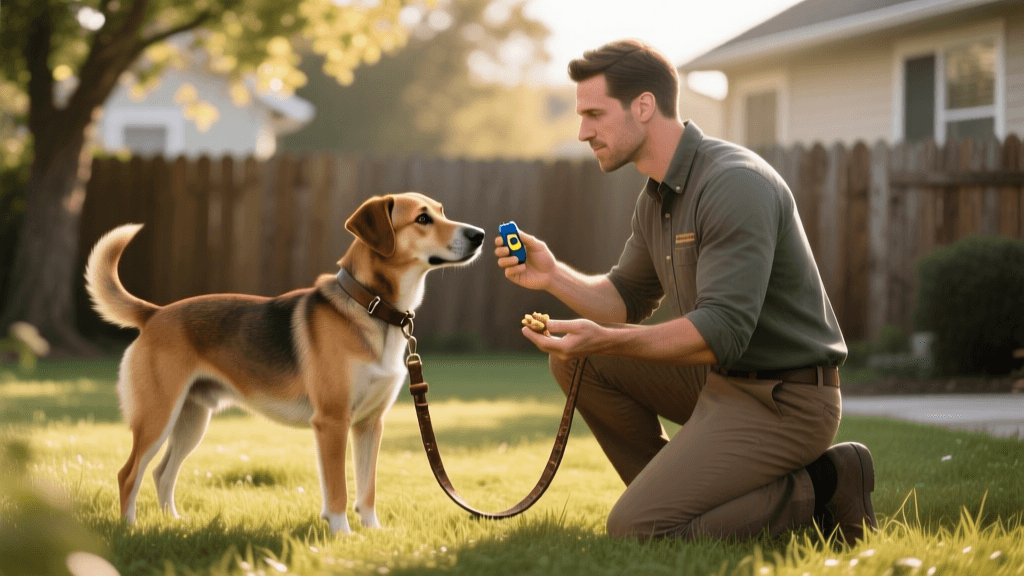
Begin in a quiet environment, such as your living room or a fenced backyard. Stand still with your dog on a 6-foot fixed-length leash (never use a retractable leash for this training). Hold high-value treats in your hand. Wait for your dog to voluntarily look at you. The exact millisecond they make eye contact or orient their head toward you, use a marker word like "Yes!" or click a clicker, and immediately deliver the treat. Repeat this 20 to 30 times until your dog is consistently offering eye contact. You are building a baseline expectation that checking in with you yields excellent outcomes.
Phase 2: Adding the "Penalty Yard" and Movement
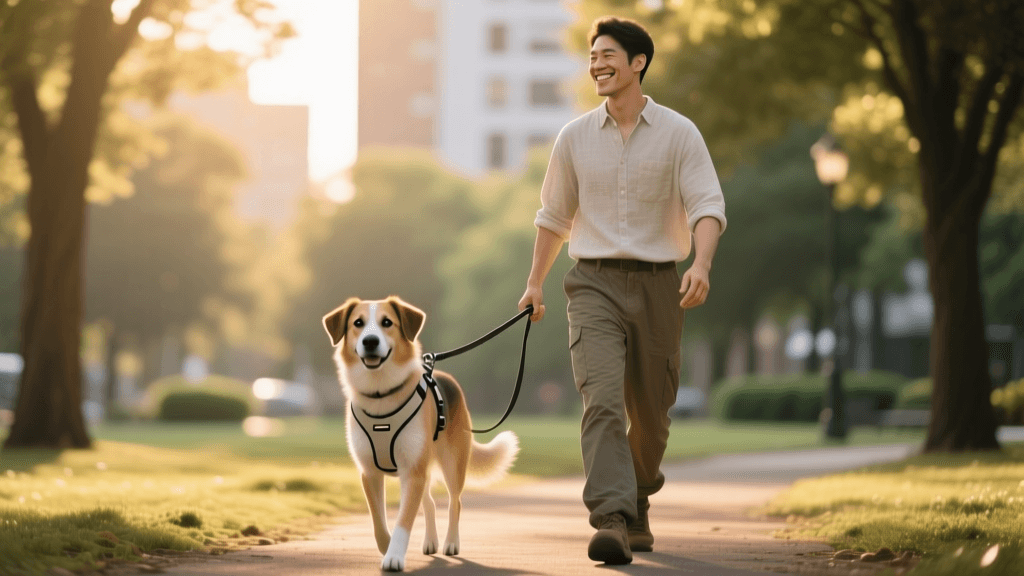
Once your dog is reliably checking in, begin walking forward at a normal pace. The moment your dog surges ahead and the leash becomes taut, immediately stop walking. Become a tree. Do not yank the leash, do not scold the dog, and do not reel them in. Simply wait. Eventually, your dog will turn back to look at you, wondering why the walk has stopped. Mark that look with "Yes!" and invite them back to your side to receive the treat. Once the leash is loose again, resume walking. This teaches the dog a clear contingency: a tight leash means the walk stops; a loose leash and eye contact mean the walk continues and treats are available.
Phase 3: The U-Turn and Direction Changes
To prevent your dog from simply forging ahead until they hit the end of the leash, introduce unpredictable direction changes. As you walk, before the leash gets tight, cheerfully say "Let's go!" and abruptly turn 180 degrees in the opposite direction. When your dog catches up and is walking beside you, mark and reward heavily. This keeps the dog mentally engaged, as they must pay attention to your body language to avoid being left behind. It shifts their mindset from autonomous pulling to collaborative movement.
Essential Force-Free Gear for 2026
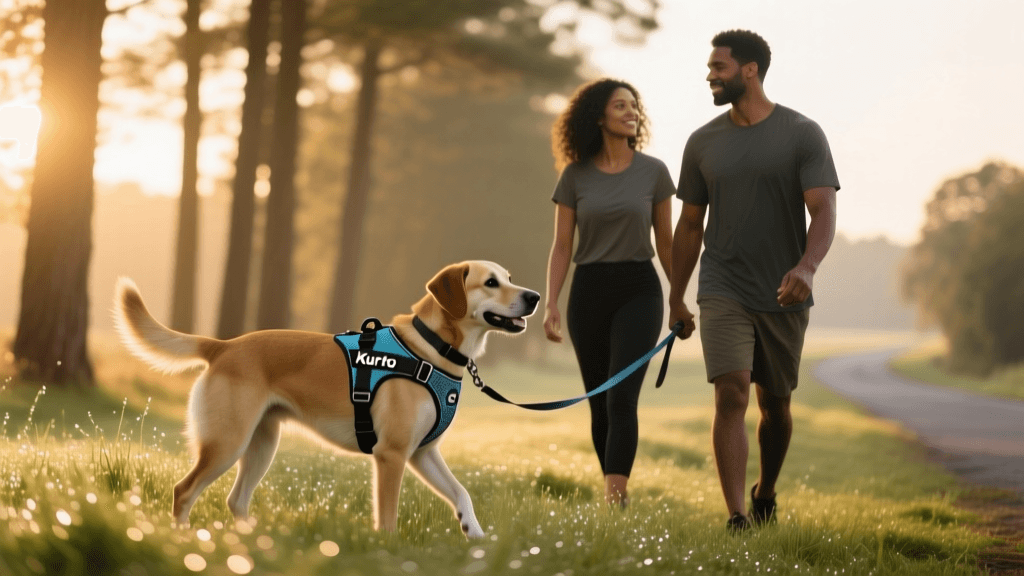
Success in force-free leash training relies heavily on using the correct equipment. A standard flat collar puts dangerous pressure on a dog's trachea and thyroid gland when they pull. Instead, a well-fitted front-clip or dual-clip harness is mandatory. A front-clip attachment point rests on the dog's sternum; when the dog pulls, the leash gently turns their center of gravity back toward the handler, neutralizing their forward momentum without causing pain.
| Harness Model (2026 Editions) | Clip Configuration | Best Feature for Pullers | Approx. Retail Price |
|---|---|---|---|
| Ruffwear Front Range | Dual (Front & Back) | Padded chest plate prevents chafing during U-turns | $44.95 |
| Kurgo Tru-Fit Smart | Dual (Front & Back) | Crash-tested safety & V-neck design for deep-chested breeds | $34.99 |
| Haqihana H-Harness | Front Only (Optional) | Y-shape design ensures zero shoulder restriction | $52.00 |
When fitting these harnesses, ensure you can slide two fingers comfortably under all straps. A poorly fitted harness can alter a dog's natural gait and cause long-term musculoskeletal issues, which is a major focus of canine physical therapy standards in 2026.
Building a 2026 Reward Hierarchy
Not all treats are created equal, especially when competing with the overwhelming environmental distractions of the outdoors. To succeed, you must establish a reward hierarchy. Dry kibble might work in your living room, but it will not compete with a squirrel or a discarded food wrapper on the sidewalk.
- Low-Value: Dry kibble, standard commercial biscuits (Use for easy, familiar environments).
- Medium-Value: Zuke's Mini Naturals, soft commercial training treats, small pieces of string cheese (Use for neighborhood walks with mild distractions).
- High-Value: Freeze-dried beef liver, boiled chicken breast, low-sodium hot dogs, real cheese (Reserve exclusively for high-distraction environments and breakthrough moments).
The Humane Society of the United States recommends keeping treat pieces incredibly small—about the size of a pea. This prevents the dog from getting full too quickly and allows for rapid-fire reinforcement without excessive calorie intake. Additionally, consider the mechanics of treat delivery. Tossing a treat on the ground (a treat scatter) encourages sniffing, which naturally lowers a dog's heart rate and promotes a calmer mental state before resuming the walk.
The Role of Decompression Walks (Sniffaris)
A common mistake owners make is expecting a dog to walk in a perfect heel for the entirety of a 45-minute outing. This is an unrealistic expectation that leads to frustration for both the human and the dog. Modern force-free training incorporates the concept of the "Sniffari" or decompression walk. Sniffing is mentally exhausting for dogs and releases dopamine, acting as a natural calming mechanism.
Use a long line (15 to 30 feet) in a safe, open area like a quiet field or empty park. Allow your dog to wander, sniff, and explore at their own pace without demanding constant eye contact or a strict heel. By fulfilling their biological need to sniff and explore, they will be significantly less frustrated and much more willing to engage in structured loose-leash walking when you return to the paved sidewalks.
Troubleshooting Common Roadblocks
My dog refuses to move when I put the harness on.
This is often a sign of classical conditioning; the dog has associated the harness with the frustration of being restrained or corrected. Re-introduce the harness using desensitization. Leave it on the floor, feed high-value treats near it, then through the neck hole, and gradually build up to clipping it on for just a few seconds inside the house before taking it off and playing a fun game.
My dog is too distracted by the environment to look at me.
You are too close to the trigger. Increase your distance from the distraction until your dog is under their threshold of reactivity. If a dog is over threshold, their brain is flooded with cortisol and adrenaline, making learning biologically impossible. Move further away, use higher-value treats, and practice the engagement game where the environment is less intense.
Progress feels incredibly slow.
Force-free training is a marathon, not a sprint. You are rewiring your dog's neurological pathways and replacing deeply ingrained habits. Celebrate micro-victories: a single step with a loose leash, a brief moment of eye contact, or a quick recovery after a distraction. Consistency, patience, and a generous reinforcement history are the ultimate keys to mastering loose-leash walking in 2026 and beyond.
anouk-beaumont
All our authors care for dogs every day — read more of their work on the authors page.