Best Force-Free Puppy Gear & Home Setup Guide For 2026
Discover the best force-free puppy gear and home setup strategies for 2026. Learn positive reinforcement methods to prepare your space without aversives.
Bringing a new puppy or rescue dog into your home is a transformative experience, and how you prepare your environment sets the foundation for your lifelong bond. In 2026, the veterinary and behavioral communities are more unified than ever in advocating for positive reinforcement and force-free methods. Gone are the days of relying on intimidation, dominance theory, or aversive tools to manage a new dog. Today, successful dog ownership is rooted in environmental management, classical conditioning, and reward-based learning.
Whether you are adopting a high-energy adolescent rescue or bringing home an eight-week-old puppy, setting up a force-free home means proactively designing your space to encourage good choices while removing the opportunity for unwanted behaviors. This comprehensive guide will walk you through the essential gear, home setup strategies, and desensitization techniques you need to welcome your new dog using only humane, science-backed methods.
The Force-Free Philosophy for New Dog Owners
Force-free training, often referred to as LIMA (Least Intrusive, Minimally Aversive) or R+ (Positive Reinforcement), focuses on rewarding desired behaviors and managing the environment to prevent rehearsal of unwanted behaviors. According to the American Veterinary Society of Animal Behavior (AVSAB), reward-based methods are the standard of care for canine behavioral development. The AVSAB explicitly advises against the use of aversive tools—such as prong collars, shock collars, and choke chains—noting that they can induce fear, anxiety, and aggression while damaging the human-animal bond.
When preparing your home in 2026, this philosophy extends beyond training tools to your home environment. Instead of using bitter apple sprays to punish chewing or isolating a dog in a dark room for potty accidents, force-free owners use baby gates, playpens, and high-value enrichment toys to manage the dog's space. As the Pet Professional Guild (PPG) emphasizes, a well-managed environment is the first line of defense in preventing behavioral issues before they even begin.
Essential 2026 Force-Free Gear Checklist
To implement positive reinforcement effectively, you need the right equipment. The gear you select should prioritize your dog's physical comfort and psychological well-being.
Y-Front Harnesses Over Collars
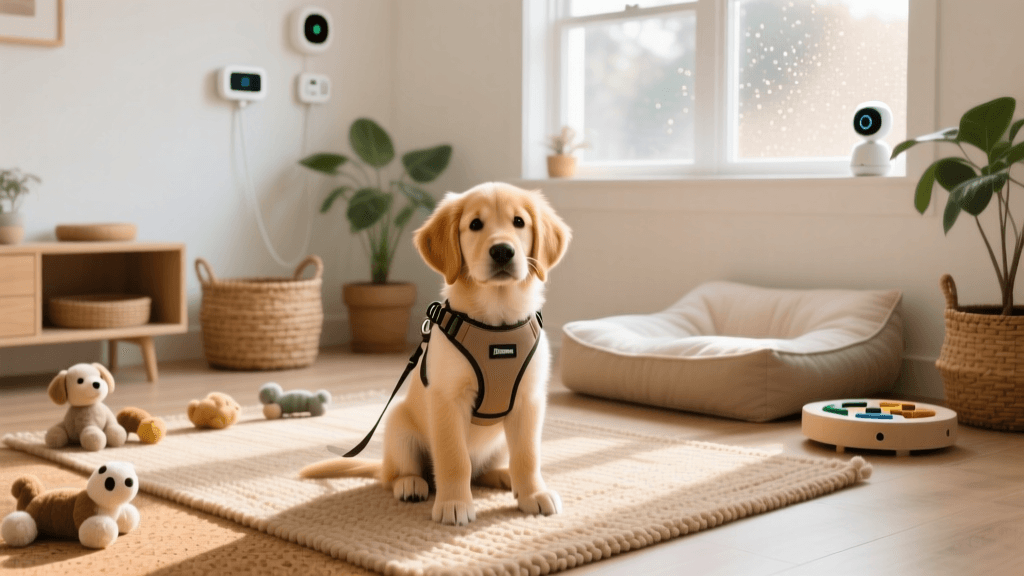
Walking a new puppy or a leash-reactive rescue on a flat collar can cause tracheal damage and increase frustration. In 2026, veterinary behaviorists universally recommend Y-front harnesses that sit below the sternum, allowing for full shoulder extension and eliminating pressure on the neck. Harnesses are not just walking tools; they are safety devices that allow you to gently guide your dog without causing pain or triggering a fight-or-flight response.
High-Capacity Treat Pouches
In positive reinforcement, timing is everything. You have roughly one to two seconds to mark and reward a desired behavior. Fumbling in your pockets for treats ruins the feedback loop. A dedicated, high-capacity treat pouch with a quick-release magnetic closure allows you to deliver high-value rewards (like freeze-dried minnows or boiled chicken) instantly. Look for pouches with multiple compartments to separate treats from waste bags and a built-in silicone lining for easy cleaning of greasy treats.
Interactive Enrichment Toys
Boredom is the enemy of a well-behaved puppy. Instead of punishing a dog for chewing on furniture, force-free owners provide appropriate, highly engaging outlets. Lick mats, snuffle pads, and hollow rubber toys stuffed with frozen goat milk or pumpkin puree provide mental stimulation. Mental enrichment tires a dog out more effectively than a short walk and releases dopamine, reinforcing a calm state of mind in your home.
2026 Force-Free Harness Comparison Chart
Choosing the right harness is critical for your dog's comfort. Below is a comparison of the top three force-free harnesses favored by certified behavior consultants in 2026.
| Brand & Model | Design Type | Best For | Key Force-Free Feature | Approx. 2026 Price |
|---|---|---|---|---|
| Blue-9 Balance Harness | Y-Front, Multi-Clip | Daily walks, training, reactive dogs | 6 adjustment points prevent chafing; front clip discourages pulling without pain. | $75 - $85 |
| Haqihana Harness | H-Style / Y-Front | Sensitive dogs, escape artists, rescues | Padded, lightweight straps; designed specifically to avoid shoulder restriction. | $60 - $70 |
| Perfect Fit Harness | Modular Fleece-Lined | Deep-chested breeds, growing puppies | Three separate interchangeable pieces ensure a custom, pressure-free fit. | $90 - $110 |
Setting Up Your Home Without Aversives
A force-free home is a managed home. By controlling the environment, you remove the need to correct your dog verbally or physically.
The 'Open Door' Safe Space
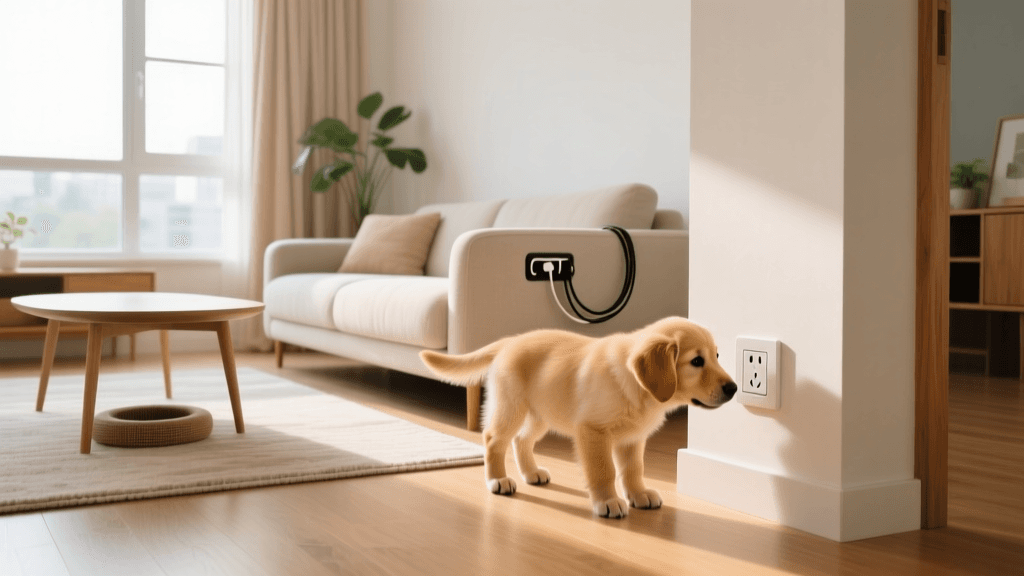
While crates have traditionally been used for house training, modern force-free advocates often prefer 'open door' playpens or tethering stations for new puppies. A wire exercise pen placed in the living room, filled with a comfortable orthopedic bed, water, and a snuffle mat, allows the puppy to be part of the family while preventing them from wandering off to chew on electrical cords. If you do use a crate, it must never be used as a time-out or punishment zone. The door should remain open, and the crate should be associated exclusively with high-value chews and naps.
Puppy-Proofing Without Bitter Sprays
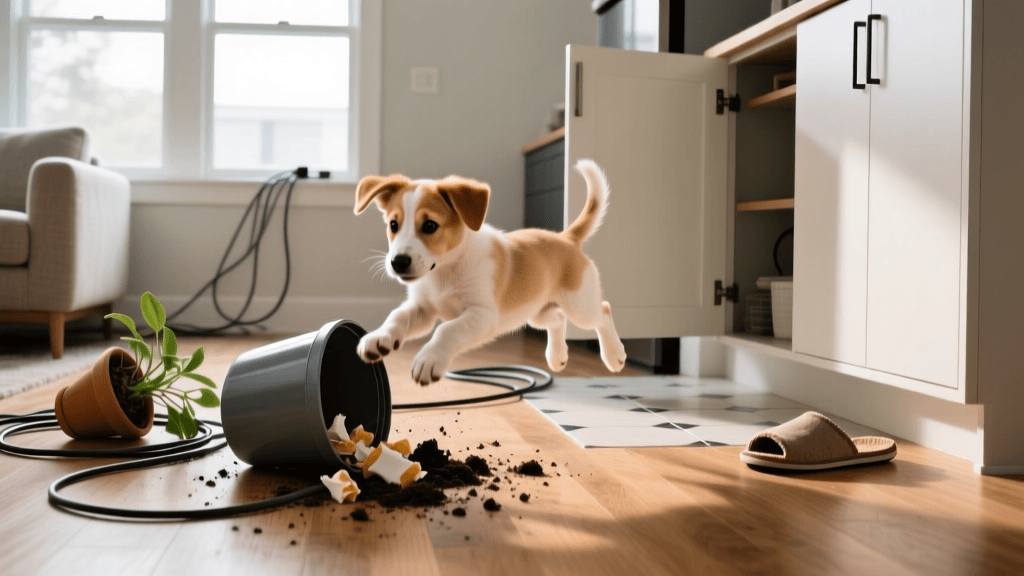
Aversive taste deterrents like bitter apple spray rely on punishment and can cause unnecessary stress, especially for sensitive dogs. Furthermore, many puppies simply learn to tolerate the taste. Instead, practice environmental management. Use cord concealers, elevate houseplants, and store shoes in closed bins. If your puppy grabs a forbidden item, do not chase them (which turns it into a game) or pry their mouth open (which can cause resource guarding). Instead, offer a high-value trade, such as a piece of real meat or a stuffed West Paw Toppl, and toss it on the ground to encourage them to drop the item voluntarily.
Positive Potty Training Stations
Potty training is entirely dependent on positive reinforcement and supervision. When an accident happens indoors, never rub the dog's nose in it or scold them; this only teaches the dog to hide from you when they need to eliminate. Instead, clean the area thoroughly with an enzymatic cleaner like Nature's Miracle or Earthbath to completely break down the uric acid crystals. Take your puppy outside to a designated potty station every 30 to 45 minutes, and the moment they eliminate outdoors, throw a 'potty party' with verbal praise and premium treats.
Classical Conditioning: Introducing the Harness
Never force a harness over a puppy's head or pin them down to clip it on. This creates negative associations and can lead to lifelong handling sensitivity. Use classical conditioning to teach your dog that the harness predicts wonderful things.
- Step 1: The Presentation. Hold the harness in your hand and feed your dog a high-value treat. Repeat this 10 times. The dog learns: Harness = Chicken.
- Step 2: The Nose Target. Hold the neck loop open. Wait for your dog to voluntarily sniff or poke their nose through the hole. The moment they do, click or say 'Yes!' and feed a treat from your other hand.
- Step 3: Brief Duration. Once they are comfortably poking their nose through, slide the harness over their head for one second, feed three treats rapidly, and remove it.
- Step 4: Fastening. Gradually increase the time the harness is on. Practice reaching for their belly and back to touch the clips, rewarding heavily for calm behavior before actually fastening the straps.
- Step 5: The Joy Walk. The first time the harness is fully buckled, immediately attach the leash and go for a walk or engage in a fun game of tug. The harness must always predict a positive outcome.
Building a Lifelong Bond
Preparing your home for a new dog using force-free methods requires patience, foresight, and a commitment to empathy. By investing in ergonomic gear like the Blue-9 Balance Harness, utilizing interactive enrichment, and managing your environment to set your dog up for success, you eliminate the need for punishment. As you navigate the beautiful chaos of bringing a new dog home in 2026, remember that every interaction is an opportunity to build trust. For more resources on compassionate canine care and behavior, consult the educational materials provided by Fear Free Pets and your local certified force-free behavior consultant.
marcus-aldridge
All our authors care for dogs every day — read more of their work on the authors page.