Diagnosing Puppy-Proofing Failures: Solutions for a Safe Home
Discover why your puppy-proofing failed and how to fix it. Diagnose common hazards and apply actionable solutions to keep your new dog safe at home.
The Root Cause: Why Puppy-Proofing Fails
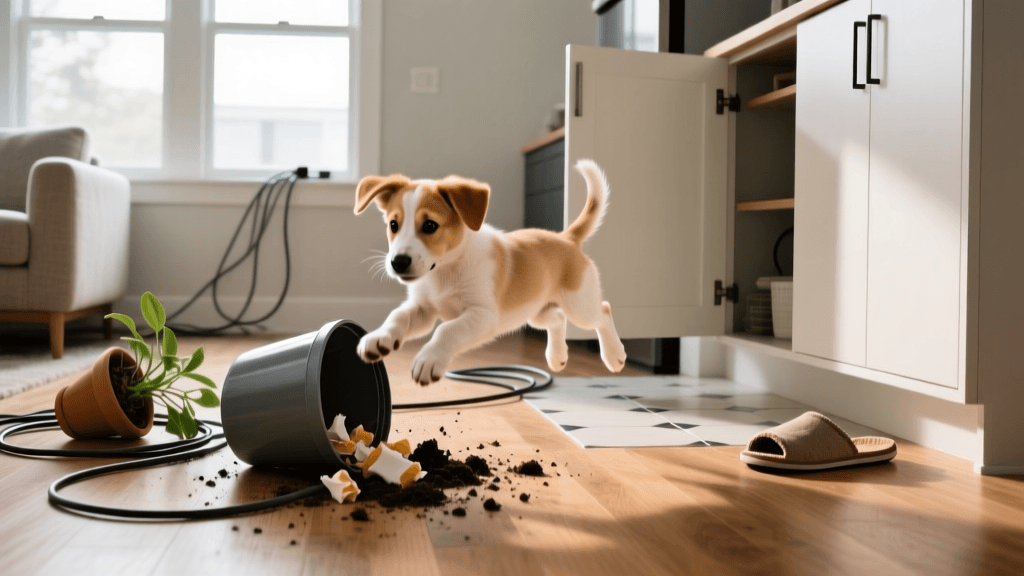
Bringing a new dog into your home is an exhilarating milestone, but it often comes with an unexpected wave of destruction and hidden dangers. Many new owners spend hours preparing their homes, only to find their new puppy chewing through baseboards, ingesting toxic houseplants, or escaping the backyard. According to the American Kennel Club (AKC), the majority of household accidents occur not because owners didn't try to puppy-proof, but because they failed to diagnose the specific behavioral drives and physical capabilities of their new pet. Puppy-proofing is not a one-time checklist; it is an ongoing diagnostic process. To create a truly safe environment, we must shift our perspective from simply hiding hazards to understanding why a dog interacts with them in the first place.
Diagnosing Indoor Hazards: Room-by-Room Solutions
The Kitchen: Toxins, Trash, and the 'Out of Sight' Fallacy
The Problem: Owners often assume that placing items on kitchen counters is sufficient. However, medium-to-large breed puppies can easily jump onto counters by 16 weeks of age, and smaller breeds will knock items down by climbing on chairs or trash cans. The most severe risks here are dietary toxins, particularly Xylitol (found in sugar-free gums and peanut butters), grapes, and macadamia nuts.
The Diagnosis: If your dog is getting into the trash, it is usually driven by scavenging instincts and the high-value scent of food waste, not just boredom. Standard step-on trash cans are easily triggered by a dog's paw.
The Solution: Invest in a locking trash can, such as the Simplehuman Locking Trash Can, or retrofit your existing cabinetry with childproof magnetic locks (Cost: $12-$18). Store all baking supplies, especially those containing Xylitol or chocolate, in upper cabinets or inside sealed, hard-plastic bins. For a comprehensive list of dangerous ingredients, always consult the ASPCA Animal Poison Control database.
The Living Room: Electrical Cords and Furniture
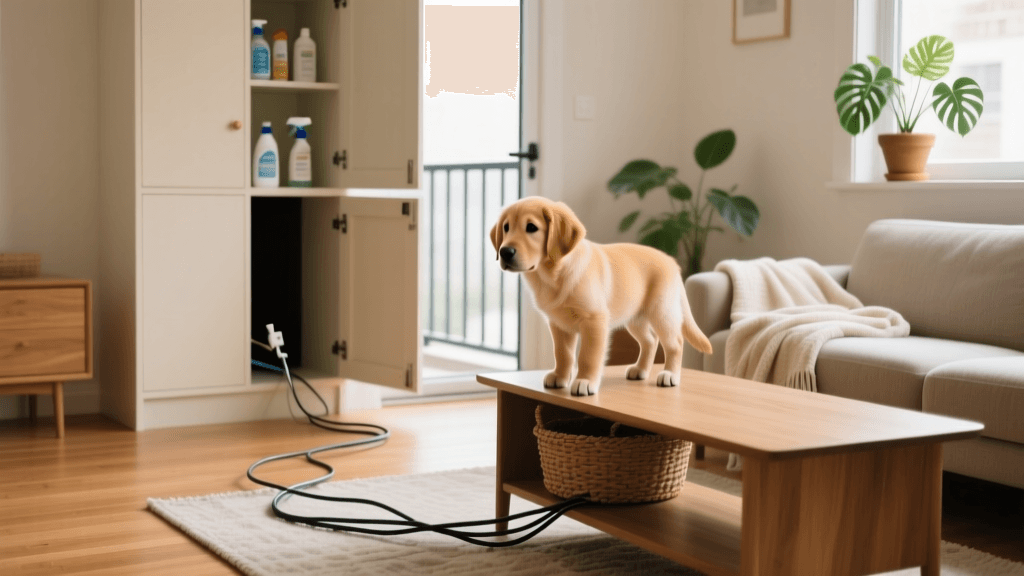
The Problem: Puppies explore the world with their mouths. Between 12 and 16 weeks of age, puppy teething peaks, and the rubbery texture of electrical cords feels incredibly soothing to inflamed gums. Chewing a live wire can result in severe oral burns, pulmonary edema, or fatal electrocution.
The Diagnosis: If your puppy is targeting cords, baseboards, or the legs of wooden coffee tables, they are likely in the active teething phase or lack appropriate, high-value chew alternatives.
The Solution: Do not rely solely on bitter sprays, as some dogs actually enjoy the taste. Instead, use physical barriers. Purchase split-loom cord concealers or heavy-duty cable management boxes (e.g., J-Chan Cable Management Box, Cost: $20-$25) to completely enclose power strips. For furniture legs, apply a physical deterrent like double-sided training tape or wrap the legs in clear acrylic furniture guards. Pair this with a vet-approved deterrent spray like Grannick's Bitter Apple Spray (Cost: $12) applied to the surrounding area, not directly on the cord.
The Bathroom & Laundry: Cleaning Supplies and Medications
The Problem: Bathrooms are small, enclosed spaces that owners often leave open. Toilet bowl cleaners, liquid laundry pods, and human medications left on the sink are lethal hazards. Liquid pods, in particular, are highly attractive to dogs due to their bright colors and squishy texture.
The Diagnosis: Dogs are drawn to bathrooms because of the water source and the confined, den-like space. If a dog ingests cleaning supplies, it is often because the products were stored under the sink in easily nudged cabinets.
The Solution: Install sliding door locks or magnetic cabinet latches on all lower vanity cabinets (Cost: $10). Keep the toilet lid closed at all times, and consider using a toilet lid lock if your dog is prone to drinking from the bowl, which can expose them to harmful bacteria and residual chemical cleaners.
The Outdoor Perimeter: Solving Escape and Digging
The Problem: Many new owners assume a standard 6-foot wooden privacy fence is enough. However, dogs are escape artists. They will dig under the fence, squeeze through gaps, or climb chain-link enclosures.
The Diagnosis: The golden rule of canine containment is: if the dog's head can fit through a gap, their body can follow. Furthermore, digging is often a symptom of prey drive (chasing burrowing animals) or a desire to reach a stimulus on the other side of the fence, such as a neighboring dog.
The Solution: Inspect your fence line and measure all gaps. Any gap larger than 2 inches must be sealed. To prevent digging, install an 'L-footer' barrier. Purchase 1-inch galvanized chicken wire or hardware cloth. Bury the wire 2 inches deep into the soil, extending it 2 feet inward toward the yard, creating an 'L' shape. When the dog attempts to dig at the fence line, they will hit the wire and stop. Cover the wire with topsoil and grass seed to maintain your yard's aesthetics. Total cost for a 50-foot fence line is approximately $40-$60 in materials.
Behavioral Diagnosis: Boredom vs. Teething vs. Anxiety
Before buying more baby gates, you must diagnose the root behavior driving the destruction. Misdiagnosing the behavior leads to failed solutions.
- Teething (3 to 6 months): Characterized by a need to gnaw on hard or rubbery surfaces. Solution: Provide frozen KONG Classic toys stuffed with plain pumpkin puree and kibble. The cold numbs the gums, and the rubber satisfies the chewing urge.
- Boredom / Lack of Enrichment: Characterized by shredding soft items like pillows, mail, or drywall. Solution: Implement a daily sniffari (decompression walk) and use puzzle feeders for all meals to drain mental energy.
- Separation Anxiety: Characterized by destruction focused exclusively on exit points (door frames, window sills) and accompanied by vocalization. Solution: Standard puppy-proofing will not fix this. You must consult a certified veterinary behaviorist and implement desensitization protocols.
Comparison Chart: Hazard vs. Solution vs. Cost
| Household Hazard | Behavioral Diagnosis | Actionable Solution | Estimated Cost |
|---|---|---|---|
| Electrical Cords | Teething (12-16 weeks peak) | Split-loom cord concealers & cable boxes | $15 - $25 |
| Kitchen Trash | Scavenging / Food drive | Locking trash can or magnetic cabinet locks | $12 - $45 |
| Toxic Houseplants | Curiosity / Foraging instinct | Macrame hangers or high shelving (above 6ft) | $15 - $30 |
| Fence Digging | Prey drive / Boredom | L-footer galvanized hardware cloth (buried) | $40 - $60 |
| Crate Strangulation | Pacing / Trying to see out | Remove collars in crate; use breakaway tags | $0 - $10 |
The 'Safe Space' Paradox: Crate and Pen Hazards
Many owners believe that putting a dog in a crate or an exercise pen (x-pen) eliminates all hazards. This is a dangerous misconception. The ASPCA frequently treats dogs for injuries sustained inside their own crates. The most common issue is strangulation or jaw entrapment caused by the dog's collar or ID tags catching on the crate's wire dividers or the metal loops of an x-pen.
The Solution: Always remove your dog's collar before placing them in a crate or leaving them unattended in an x-pen. If identification is a concern, use a breakaway safety collar. Additionally, avoid placing soft, plush beds inside the crate for puppies under 9 months of age. Puppies will often chew and ingest the poly-fill stuffing, leading to life-threatening intestinal blockages that require emergency surgery costing upwards of $3,000. Instead, use a chew-proof, elevated cot like the Kuranda Dog Bed, or a heavy-duty canvas mat until the chewing phase has completely passed.
Conclusion: Proactive Management
Diagnosing puppy-proofing failures requires a shift in how you view your home. You must look at your living spaces through the eyes of a curious, teething, and highly intelligent animal. By identifying the specific behavioral drivers behind your dog's actions—whether it is teething, scavenging, or prey drive—you can implement targeted, physical solutions that actually work. Remember that no amount of physical barriers can replace active supervision and proper mental enrichment. Use the tools, measurements, and product recommendations outlined in this guide to build a fortress of safety, allowing your new dog to explore their forever home without the risk of preventable tragedy.
robin-maitland
All our authors care for dogs every day — read more of their work on the authors page.