Force-Free Cooperative Paw Care & Nail Trimming 2026
Learn force-free cooperative paw care and scratch board nail trimming for dogs in 2026. Reduce vet stress with positive reinforcement handling techniques.
The Shift to Cooperative Care in 2026
In the modern landscape of canine health and wellbeing, the way we approach routine maintenance has fundamentally shifted. Gone are the days of physical restraint and forced compliance. In 2026, the gold standard for veterinary and grooming procedures is cooperative care—a force-free methodology rooted in positive reinforcement that empowers dogs to actively participate in their own healthcare. According to the American Veterinary Society of Animal Behavior (AVSAB), humane handling and fear-free techniques are not just ethical imperatives; they are critical for reducing chronic stress and preventing long-term behavioral trauma.
Cooperative care relies on giving the dog a 'start button' or a clear way to consent to handling. When dogs are taught that they have agency, their cortisol levels drop significantly, making procedures like nail trimming, paw inspections, and veterinary exams safer and more effective. This guide will walk you through the most effective force-free methods for paw care, focusing on the scratch board technique, Dremel desensitization, and consent-based handling.
Why Paw Care is a Critical Health Issue
Many owners view nail trimming as a mere cosmetic chore, but from a veterinary perspective, it is a vital component of orthopedic health. When a dog's nails grow too long, they push back into the nail bed, altering the natural angle of the paw. This forces the dog to shift its weight backward, leading to chronic joint strain, altered posture, and eventually early-onset osteoarthritis. Furthermore, the ASPCA emphasizes that overgrown nails can cause splaying of the toes, increasing the risk of painful paw pad abrasions and ligament injuries.
However, the traditional method of pinning a dog down to clip their nails often results in a spike in heart rate and a deep-seated phobia of paw handling. By utilizing positive reinforcement, we can maintain optimal orthopedic health without compromising the dog's mental wellbeing or the human-animal bond.
Essential Tools for Force-Free Nail Maintenance
Choosing the right equipment is the first step in a successful force-free protocol. Below is a comparison of the most common paw care tools available in 2026, evaluated on their suitability for cooperative care training.
| Tool | Best For | Est. Cost (2026) | Force-Free Rating |
|---|---|---|---|
| Custom Wooden Scratch Board | Front nails; highly anxious dogs; owner-led shaping | $35 - $60 | ⭐⭐⭐⭐⭐ (Excellent) |
| Dremel PawControl 7760-PGK | All nails; precise grinding; smooth finishing | $45 - $55 | ⭐⭐⭐⭐ (Great, requires desensitization) |
| Millers Forge Plier Clippers | Dogs already comfortable with paw handling | $20 - $25 | ⭐⭐⭐ (Good, requires stillness) |
| Guillotine-Style Clippers | Small breed dogs with thin nails | $12 - $18 | ⭐ (Poor, high risk of crushing/pain) |
Note: For force-free training, the Scratch Board and the Dremel are the preferred tools, as they allow the dog to maintain a natural, relaxed posture without requiring the owner to restrain the paw.
Step-by-Step: Teaching the Scratch Board Method
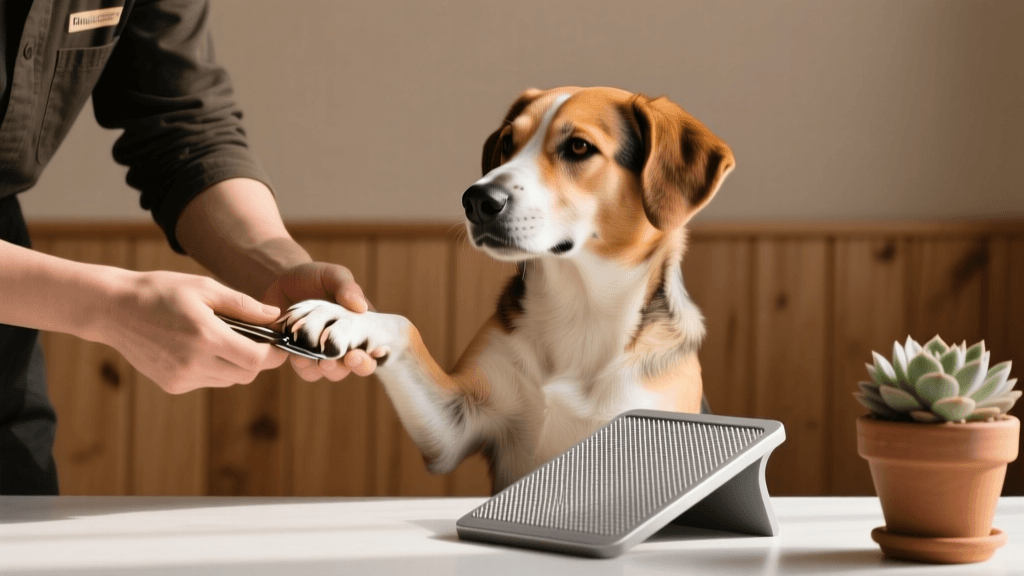
The scratch board is a brilliant piece of enrichment equipment that turns nail filing into a fun, dog-led game. The board consists of a wooden plank with interchangeable sheets of sandpaper. Here is how to shape this behavior using a clicker or a verbal marker (like 'Yes!').
Phase 1: Targeting the Board
- Setup: Place the scratch board flat on the ground. Have a pouch of high-value treats ready (e.g., Ziwi Peak air-dried venison or K9 Natural beef lung bites).
- Investigation: The moment your dog looks at or sniffs the board, mark and reward. Toss the treat away from the board to reset them.
- Paw Targeting: Wait for the dog to offer a paw touch to the board. If they don't, you can lure them by placing a treat on the edge of the board. Mark and reward any paw contact.
Phase 2: Shaping the Scratch
- Forward Motion: Once the dog is comfortably tapping the board, withhold the reward for simple taps. Wait for a slight forward dragging motion. Mark and reward heavily.
- Building Duration: Gradually require longer, more deliberate scratches. Use a sandpaper grit of 80 or 100 for beginners to ensure quick results and keep the dog motivated.
- Adding a Cue: Once the behavior is fluent, add a verbal cue like 'File!' or 'Scratch!' right before the dog initiates the movement.
Pro Tip: The scratch board naturally files the front nails. For the hind nails, you can teach the dog to target the board with their back paws by placing the board on a slight elevation or using a target stick to guide their hindquarters.
Dremel Desensitization: A Force-Free Approach
For dogs who need their nails shortened beyond what a scratch board can achieve, a rotary tool like the Dremel PawControl is ideal. However, the sound and vibration can be aversive. The Fear Free Pets organization advocates for systematic desensitization and counter-conditioning (DS/CC) to change the dog's emotional response to the tool.
The 5-Step Dremel Protocol
- Step 1: Visual & Auditory Distance. Turn the Dremel on in another room. Feed high-value treats (like plain boiled chicken or low-sodium bone broth from a squeeze tube). Turn it off, and the treats stop. Repeat until the dog shows happy anticipation when they hear the sound.
- Step 2: Proximity. Bring the Dremel into the same room, keeping it at least 10 feet away. Continue the 'sound on = treats, sound off = no treats' game. Gradually decrease the distance over multiple sessions.
- Step 3: Tactile Introduction (Off). With the Dremel turned off, touch the side of the tool to the dog's shoulder, then their leg, then their paw. Mark and reward for calm acceptance.
- Step 4: Vibration without Grinding. Turn the Dremel on its lowest setting. Touch the side of the plastic guard to the dog's nail (not the sanding band). Reward continuously while the tool is touching the nail.
- Step 5: The Grind. Gently touch the spinning sanding band to the tip of the nail for exactly one second. Mark, reward, and release. Keep early sessions to a maximum of 3 nails per paw to prevent frustration or fatigue.
Cooperative Handling: The 'Start Button' Concept
At the core of force-free methodology is the concept of consent. In cooperative care, we teach the dog a 'start button' behavior. This is a specific posture the dog assumes to signal they are ready for the procedure. If the dog breaks the posture, the procedure immediately stops.
The Chin Rest: Teach your dog to rest their chin on a designated mat or your lap. While their chin is down, you may touch their paws or use the Dremel. If they lift their head, you stop immediately, remove the tools, and wait for them to offer the chin rest again. This builds immense trust, as the dog learns they are never trapped.
The Bucket Game: Popularized by force-free trainer Chirag Patel, this involves teaching the dog to focus on a bucket of high-value food (like a frozen Hyper Pet IQ Treat Mat smeared with plain Greek yogurt and peanut butter). While the dog is licking the bucket, you perform the nail trim. If the dog turns away from the bucket, you stop. This shifts the dog's focus from the handling to the enrichment activity, lowering their emotional arousal.
High-Value Reinforcement: 2026 Treat Recommendations
Positive reinforcement requires the use of rewards that the dog finds genuinely motivating. In 2026, the market for high-value, single-ingredient, and functional training treats has expanded significantly. For paw care sessions, you need treats that can be delivered rapidly or licked continuously to promote soothing endorphin release.
- For Continuous Licking: Use a silicone lick mat spread with The Honest Kitchen human-grade bone broth mixed with a little plain pumpkin puree. Freezing this mat beforehand increases the duration of the licking session, which naturally calms the canine nervous system.
- For Rapid Fire Rewards: Ziwi Peak air-dried venison or mackerel pieces. These are highly aromatic, soft enough to chew quickly, and nutrient-dense, making them ideal for shaping complex behaviors like the scratch board.
- For Squeeze Tube Delivery: Commercially available dog-safe peanut butter pastes or pureed baby food (sweet potato or beef) in reusable silicone squeeze tubes allow you to deliver rewards without taking your hands off the Dremel or the dog's paw.
Troubleshooting Common Handling Sensitivities
Even with the best force-free techniques, some dogs may exhibit deep-seated sensitivities due to past trauma or underlying orthopedic pain. If your dog consistently pulls away, yawns, lip-licks, or freezes during paw handling, do not push forward. These are subtle signs of stress and displacement behaviors.
First, rule out medical issues. A dog with undiagnosed carpal arthritis or a hidden toe infection will naturally resist handling. Consult your veterinarian for a thorough orthopedic exam. If the dog is physically healthy, return to Step 1 of your desensitization protocol. Break the training down into even smaller approximations—perhaps just looking at the paw without touching it—and increase your rate of reinforcement. Remember, the goal of cooperative care is not just to get the nails short; it is to ensure your dog feels safe, respected, and emotionally secure throughout their entire life.
marcus-aldridge
All our authors care for dogs every day — read more of their work on the authors page.