Fixing Dog Leash Reactivity: Diagnosis and Solutions
Discover why your dog lunges on walks. Learn problem diagnosis and actionable solutions to fix leash reactivity using proven behavior adjustment techniques.
Understanding Leash Reactivity: Frustration vs. Fear
Leash reactivity is one of the most common and stressful behavioral issues dog owners face. It manifests as lunging, barking, growling, or snapping when a dog is on a leash and spots a trigger, such as another dog, a cyclist, or a stranger. However, before you can implement a solution, you must accurately diagnose the root cause of the behavior. Reactivity is not a one-size-fits-all problem; it generally stems from either barrier frustration or fear-based aggression. Misdiagnosing the root cause can lead to training protocols that inadvertently make the behavior worse.
Diagnosing the Root Cause of Your Dog's Lunging
To effectively treat leash reactivity, observe your dog's body language and history. The ASPCA notes that canine aggression and reactivity are often rooted in underlying fear or environmental frustration. Here is how to tell the difference:
The Barrier Frustration Test
Barrier frustration occurs when a dog is highly social and wants to greet the trigger, but the leash acts as a physical barrier preventing them from doing so. The tension of the leash transforms their excitement into frustration, resulting in barking and lunging. Indicators include:
- A loose, wagging tail (though sometimes stiff with excitement) prior to the lunge.
- Whining or high-pitched vocalizations.
- Pulling forward with a relaxed, open mouth.
- A history of being highly social and friendly when off-leash or in a dog park.
Fear-Based Aggression Indicators
Fear-based reactivity is a defensive mechanism. The dog perceives the trigger as a threat and uses barking and lunging to create distance, essentially saying, 'Stay away from me.' Indicators include:
- A tucked tail, pinned ears, or a stiff, frozen posture before the explosion.
- 'Whale eye' (showing the whites of the eyes) and excessive lip licking.
- Snapping or biting if the trigger approaches too closely.
- A history of fear, lack of early socialization, or previous negative encounters with other dogs.
Essential Gear for Reactive Dog Training
You cannot train a reactive dog effectively if your equipment is causing pain or if you lack control. Ditch the retractable leash and aversive tools. The American Veterinary Society of Animal Behavior (AVSAB) strongly advises against the use of punishment-based tools like prong or shock collars, as they suppress warning signs while increasing the dog's underlying negative emotional response. Instead, invest in the following force-free gear:
| Gear Item | Purpose | Estimated Cost | Recommended Type/Brand |
|---|---|---|---|
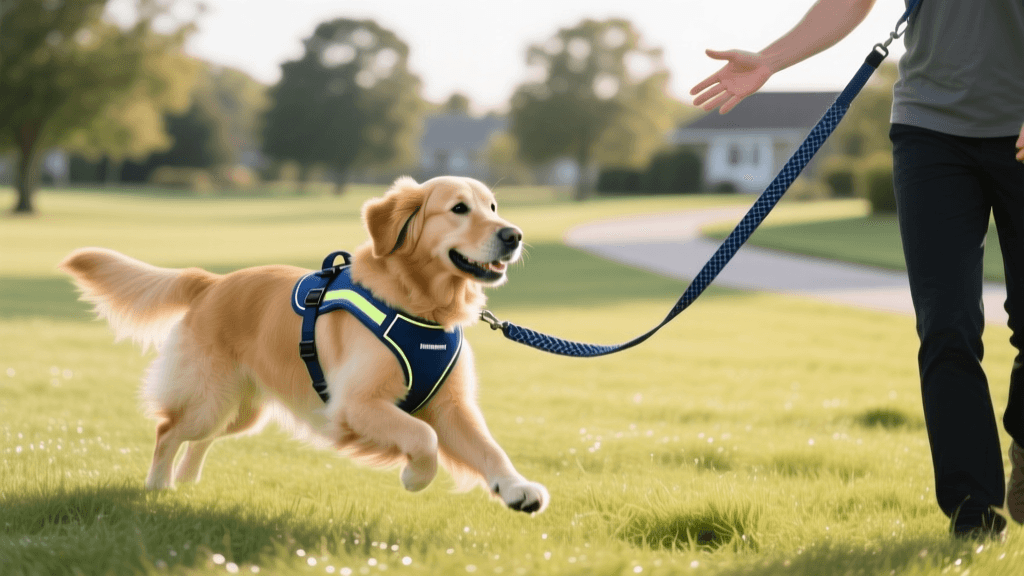
| Front-Clip Harness | Redirects pulling momentum sideways without choking the dog. | $40 - $50 | Ruffwear Front Range or Blue-9 Balance Harness |
| 6-Foot Biothane Leash | Provides consistent feedback; waterproof and easy to clean from treat grease. | $25 - $35 | 1/2-inch width Biothane with a traffic handle |
| Magnetic Treat Pouch | Allows instant access to rewards without fumbling with zippers. | $15 - $25 | Doggy Bag or Paw Pals Magnetic Pouch |
| 15-Foot Long Line | Allows safe decompression and sniffing in open areas away from triggers. | $20 - $30 | Lightweight Biothane or padded nylon long line |
Actionable Solutions: The Engage-Disengage Protocol
Once you have the right gear and understand your dog's motivation, you can begin counter-conditioning using the Engage-Disengage game (often associated with Leslie McDevitt's 'Control Unleashed' program). The goal is to change your dog's emotional response from 'Trigger = Threat/Frustration' to 'Trigger = Chicken/Cheese'.
Step 1: Finding the Threshold Distance
Your dog's 'threshold' is the distance at which they notice a trigger but are still capable of learning and taking treats. For most reactive dogs, this is between 30 and 50 feet. If your dog is stiff, staring, or refusing a treat, you are over threshold. You must increase the distance immediately. Find a quiet park bench or a parking lot edge where you can observe dogs from a safe distance.
Step 2: The High-Value Treat Hierarchy
Dry kibble will not work for reactivity training. You need treats that override the dog's adrenaline response. Cut treats into pea-sized pieces so the dog can consume them in under two seconds.
- Low Value: Dry biscuits, kibble (Save for easy tasks at home).
- Medium Value: Soft training treats, hot dogs (Use for mild distractions).
- High Value: Boiled chicken breast, string cheese, freeze-dried beef liver (Use exclusively for reactivity triggers).
Step 3: The 'Look at That' (LAT) Game
With your dog under threshold and your high-value treats ready, follow this 3-second timing loop:
- Engage: Your dog looks at the trigger (the other dog).
- Mark: The exact second they look, use a marker word like 'Yes!' or click a clicker.
- Disengage: Your dog turns their head toward you expecting the treat.
- Reward: Feed the high-value treat directly at the seam of your pants to keep them close to your side.
Repeat this 10 to 15 times per session. Keep sessions short—no longer than 15 minutes—to prevent cognitive fatigue and cortisol buildup.
The Emergency U-Turn: Managing Unplanned Encounters
Even with perfect management, you will eventually turn a corner and find yourself 10 feet away from an off-leash dog or an unexpected trigger. You need an Emergency U-Turn protocol. According to the American Kennel Club (AKC), having a reliable exit strategy is crucial for preventing rehearsed reactive behaviors.
How to train the 180-Degree Pivot:
- Start in your living room with zero distractions.
- Say your cue word in a cheerful, urgent tone: 'Let's Go!' or 'Touch!'
- Immediately pivot 180 degrees on your heel and walk the opposite way.
- Hold a high-value treat at your pant seam so the dog has to chase your hand to get it.
- After 3 to 5 steps, reward the dog heavily.
Practice this daily on boring neighborhood walks when no triggers are present, so the muscle memory is ingrained before you ever need to use it in a high-stress situation.
Management vs. Modification: Setting Realistic Timelines
It is vital to understand the difference between management and modification. Management involves avoiding triggers entirely (e.g., walking at 5:00 AM, crossing the street, using visual barriers like cars). Modification is the active training process of changing the dog's emotional response. Both are required simultaneously.
If you allow your dog to rehearse the reactive behavior (lunging and barking) even once a week, it will set your modification progress back significantly. Adrenaline and cortisol can remain in a dog's bloodstream for up to 72 hours after a severe reactive episode. Therefore, management is not a failure; it is a biological necessity for your dog's nervous system to reset.
Expect the modification process to take anywhere from 3 to 6 months of consistent, daily practice. Some dogs with severe fear-based histories may require lifelong management and the assistance of a certified veterinary behaviorist or a Certified Professional Dog Trainer (CPDT-KA). By accurately diagnosing the root cause, utilizing force-free gear, and applying the Engage-Disengage protocol with high-value rewards, you can transform your stressful walks into peaceful, connected experiences with your dog.
tom-renshaw
All our authors care for dogs every day — read more of their work on the authors page.