Best Long Lines for Dog Recall Training: Buyer's Guide
Discover the best long lines and harnesses for dog recall training. Compare top brands, lengths, and materials to keep your dog safe off-leash.
The Ultimate Buyer’s Guide to Long Lines for Recall Training
Transitioning your dog from a standard six-foot leash to off-leash freedom is one of the most rewarding milestones in dog ownership. However, achieving a bulletproof recall requires a safe, controlled intermediate step. Enter the long line: an essential training tool that bridges the gap between on-leash obedience and off-leash reliability. Whether you are hiking in the woods, exploring open fields, or simply working on emergency stops in your local park, the right long line can mean the difference between a successful training session and a dangerous chase.
In this comprehensive product review and buyer’s guide, we will break down the best long lines for dog recall training on the market. We will examine materials, hardware, lengths, and costs, while providing actionable advice on how to pair your long line with the proper harness for maximum safety and effectiveness.
Why You Need a Long Line for Recall Training
According to The Humane Society of the United States, a reliable recall is arguably the most critical safety cue your dog will ever learn. However, dogs are naturally easily distracted by scents, wildlife, and other dogs. Removing a standard leash before a dog has proven 100% reliability in high-distraction environments is a recipe for disaster.
A long line provides a physical safety net. It allows your dog to explore, sniff, and make choices while giving you the ability to gently enforce a recall command if they choose to ignore you. It prevents the dog from learning that they can simply run away and self-reward by chasing a squirrel. Furthermore, it allows you to practice emergency 'down' or 'wait' commands at a distance of 20 to 30 feet, simulating real-world off-leash scenarios without the risk.
Key Features to Consider Before Buying
Not all long lines are created equal. When shopping for a training line, you must evaluate three primary factors: material, length, and hardware.
1. Material Matters
- Biothane (Waterproof Webbing): Biothane is a polyester webbing with a TPU or PVC coating. It is waterproof, mud-proof, highly durable, and glides through grass without tangling. It is the gold standard for professional trainers, though it comes at a higher price point.
- Nylon: Lightweight and inexpensive, nylon is common but has significant drawbacks. Thin nylon lines can cause severe rope burn if pulled quickly through your hands. Nylon also absorbs water, becomes heavy when wet, and tangles easily in brush.
- Cotton/Rope: Rope lines offer excellent grip and are gentle on the hands. However, they are bulky, heavy when wet, and can develop mildew if not dried properly after use in damp environments.
2. Length and Width
For general recall training, a 20-foot to 30-foot line is the sweet spot. It provides enough distance for the dog to feel 'free' while remaining well within your control radius. Lines longer than 40 feet become incredibly difficult to manage and are generally reserved for specific scent-work or tracking exercises. Width is also crucial; a 3/4-inch to 1-inch width is ideal for medium to large dogs, providing enough surface area to prevent rope burn while remaining lightweight.
3. Hardware and Clips
Always look for a long line with a swivel snap hook. As your dog runs and rolls, the line will twist. A swivel prevents the line from kinking and weakening over time. Avoid heavy brass clips for small dogs, as the weight can pull on their harness, but ensure the clip is robust enough to withstand the sudden force of a 60-pound dog hitting the end of the line.
Top 4 Long Lines for Dog Training: Product Reviews
1. Signature K9 Biothane Tracking Line (Best Overall)
Specifications: 3/4-inch width | 20ft, 33ft, 50ft lengths | Brass or Stainless Steel hardware
Approximate Cost: $45 - $65
Signature K9 is a staple in the professional dog training community. Their Biothane tracking line is virtually indestructible, waterproof, and incredibly easy to clean—simply rinse it off with a hose after a muddy hike. The 3/4-inch width provides a fantastic grip without adding unnecessary weight. The high-quality stainless steel swivel snap ensures smooth rotation, preventing tangles during high-energy recall drills. While the upfront cost is higher, its longevity makes it the most cost-effective option over time.
2. Mendota Products Large Slip Lead / Long Line (Best Rope Option)
Specifications: 1/2-inch or 3/4-inch diameter rope | 15ft, 30ft lengths | Oil-tanned leather splices
Approximate Cost: $25 - $35
For handlers who prefer the tactile feel of rope, Mendota offers an exceptional product. Made in the USA from Multi-Filament polypropylene rope, it is softer on the hands than nylon and provides a secure grip even when wet. The oil-tanned leather splices add a touch of durability and style. It is slightly bulkier than Biothane and can snag on dense blackberry bushes, but for open field recall training, it is a fantastic, budget-friendly choice.
3. Ruffwear Long Trail Leash (Best Lightweight/Nylon)
Specifications: 10mm webbing | 20ft length | Anodized aluminum carabiner
Approximate Cost: $40 - $45
Ruffwear’s Long Trail leash is designed for the backcountry. It is incredibly lightweight and packs down small, making it ideal for hiking. It features a swiveling carabiner that is strong yet light enough not to burden smaller breeds. However, because it is made of thin nylon webbing, handlers must wear gloves or exercise extreme caution to avoid friction burns if a dog suddenly bolts. It is best suited for dogs with an already established baseline recall who just need a safety tether in alpine environments.
4. Hi kiss Dog Training Leash (Best Budget Option)
Specifications: 3/4-inch or 1-inch nylon | 15ft to 100ft lengths | Standard snap hook
Approximate Cost: $15 - $25
If you are on a strict budget or need a backup line that you won't mind ruining in heavy brush, the Hi kiss nylon training leash is a popular entry-level choice. It is highly affordable and available in massive lengths. The primary drawback is the standard snap hook, which lacks a high-quality swivel and may rust over time if exposed to saltwater. It also tangles easily, but for weekend warriors practicing in open parks, it gets the job done.
Comparison Chart: Top Long Lines
| Product | Material | Best Length | Best For | Est. Cost |
|---|---|---|---|---|
| Signature K9 Biothane | Biothane | 33 ft | Professional training, mud/water | $45 - $65 |
| Mendota Rope Line | Polypropylene Rope | 30 ft | Handlers preferring rope grip | $25 - $35 |
| Ruffwear Long Trail | Nylon Webbing | 20 ft | Backpacking, lightweight needs | $40 - $45 |
| Hi kiss Training Leash | Nylon | 30 ft | Budget buyers, open fields | $15 - $25 |
Crucial Pairing: Choosing the Right Harness
A long line should never be attached to a flat collar, martingale, or prong collar. If a dog sprints and hits the end of a 30-foot line, the sudden deceleration force applied to the neck can cause severe tracheal damage, whiplash, or spinal injury. The ASPCA strongly advocates for the use of properly fitted harnesses to distribute force safely across a dog's chest and shoulders.
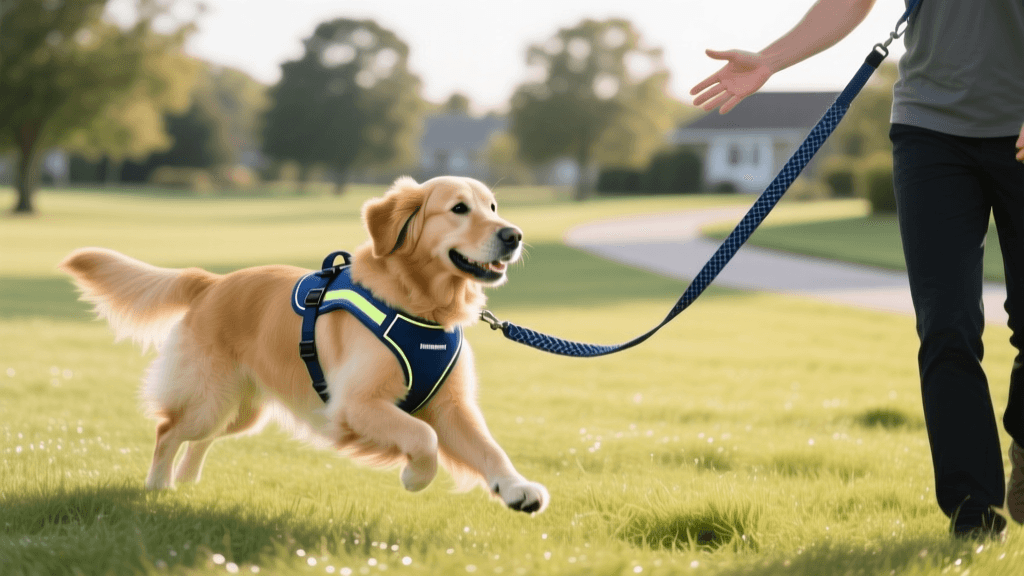
For recall training, a back-clip harness is ideal. It allows the long line to trail straight back without tangling in the dog's front legs. Top recommendations include the Ruffwear Front Range Harness (which features a secure back clip and comfortable padding) and the Kurgo Tru-Fit Smart Harness, which includes a padded chest plate specifically designed to absorb the shock of sudden stops.
Step-by-Step: How to Use a Long Line for Recall
Owning the right gear is only half the battle. Proper technique ensures safety and accelerates learning. Follow these steps to condition a reliable recall:
- The Drag Phase (Days 1-3): Attach the long line to your dog's harness and let them drag it around in a safe, enclosed area. This acclimates them to the weight and feel of the line without handler pressure.
- The Step-On Phase (Days 4-7): Pick up the end of the line but do not hold it tightly. Instead, let it slide through your hands and simply step on it when the dog reaches the end. This prevents you from being dragged and teaches the dog that the boundary is absolute.
- The Reel-In Technique: Never wrap the line around your hands, wrists, or fingers. If a large dog bolts, a wrapped line can cause degloving injuries or broken bones. Instead, gather the line in loose loops in your palm, much like holding a lasso.
- The Recall Cue: Call your dog using a high-value cue (e.g., 'Come!' or a whistle). If they do not respond within 1 to 2 seconds, gently apply backward pressure on the harness via the long line to guide them toward you. Do not yank; use steady, guiding pressure.
- The Jackpot Reward: The moment they reach you, release the line tension and deliver a 'jackpot' reward—high-value treats like boiled chicken or freeze-dried liver, given within 1 second of arrival. As noted by Best Friends Animal Society, immediate and high-value reinforcement is the key to cementing positive behavioral conditioning.
Safety Tips and Best Practices
- Watch for Tangles: Biothane and rope lines can easily wrap around tree trunks, bushes, or park benches. Always maintain visual contact with the line's path.
- Check Hardware Regularly: Inspect the snap hook and swivel before every session. Metal fatigue can cause clips to snap under sudden pressure.
- Avoid Dog Parks: Never use a long line in an off-leash dog park. Other dogs can become entangled in your line, leading to panic, fights, or severe injuries.
- Wear Proper Footwear: When stepping on the line to stop a lunging dog, wear closed-toe shoes with good traction to prevent slipping or stubbed toes.
Final Thoughts
Investing in a high-quality long line is an investment in your dog’s safety and your peace of mind. For most handlers, the Signature K9 Biothane Tracking Line offers the best combination of durability, safety, and ease of use, justifying its premium price tag. When paired with a well-fitted back-clip harness and consistent, positive reinforcement training protocols, a long line will empower you to grant your dog the off-leash freedom they crave while maintaining the control necessary to keep them safe in an unpredictable world.
aaron-whyte
All our authors care for dogs every day — read more of their work on the authors page.