Top Rated No-Pull Harnesses for Dog Leash Training Guide
Discover the best no-pull dog harnesses for leash training. Compare top front-clip harnesses, sizing tips, and expert advice to stop pulling today.
Transforming the Daily Walk: The Ultimate Buyer's Guide to No-Pull Harnesses
Walking your dog should be a relaxing, bonding experience, but for many owners, it feels more like a competitive game of tug-of-war. If your dog drags you down the street, choking themselves in the process, you are not alone. Leash pulling is one of the most common behavioral issues reported by dog owners. Fortunately, the right training equipment paired with positive reinforcement can completely transform your daily walks. In this comprehensive buyer's guide, we review the best front-clip no-pull harnesses on the market and provide a step-by-step training protocol to help your dog master loose-leash walking.
The Biomechanics of Pulling: Why Front-Clip Harnesses Work
To understand why a front-clip harness is a superior training tool, we must first look at canine biomechanics and a phenomenon known as the "opposition reflex" (or thigmotaxis). When a dog feels pressure against their chest or back—such as from a traditional flat collar or a back-clip harness—their natural instinct is to push forward against that pressure. This is the same instinct that allows sled dogs to pull heavy loads. According to the American Kennel Club (AKC), back-clip harnesses can actually encourage pulling because they distribute the pressure evenly across the dog's strong chest and shoulders, making it comfortable for them to lean into the leash.
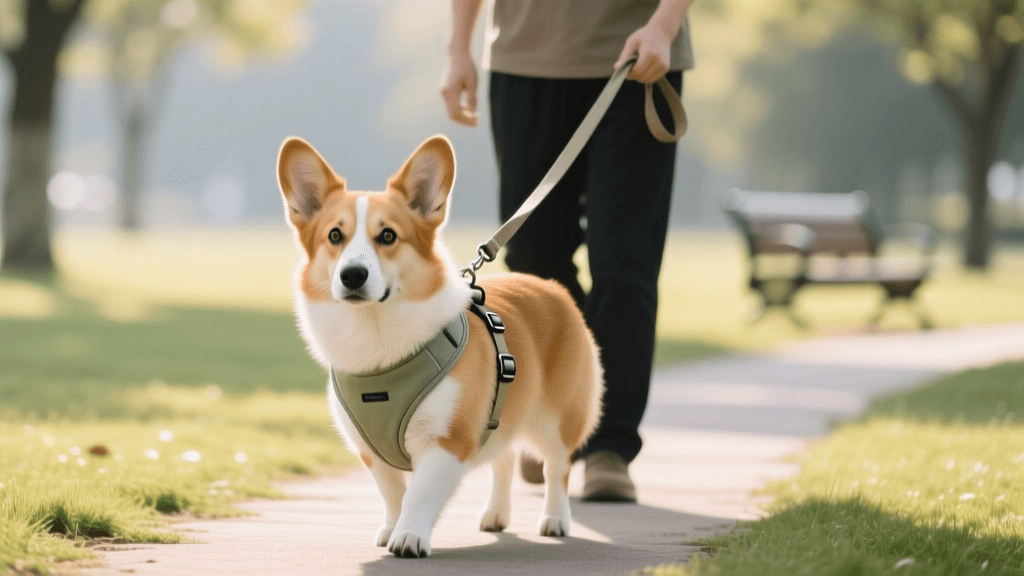
A front-clip harness, however, features a leash attachment ring located on the dog's sternum. When the dog pulls forward, the front clip gently redirects their center of gravity toward you, effectively turning them around and disrupting their forward momentum. This physical redirection creates a training window, allowing you to reward the dog for reorienting their attention back to you without causing any pain or tracheal damage.
2024 Comparison Chart: Top 3 Front-Clip Training Harnesses
Not all harnesses are created equal. Below is a structured comparison of the top-rated no-pull harnesses based on durability, adjustability, comfort, and training efficacy.
| Product | Price Range | Best For | Key Feature |
|---|---|---|---|
| Ruffwear Front Range | $35 - $45 | All-day comfort & active dogs | 4-point adjustment & foam padding |
| PetSafe Easy Walk | $20 - $30 | Chronic pullers & beginner trainers | Front martingale loop |
| Rabbitgoo No-Pull | $15 - $25 | Budget-conscious buyers | Reflective strips & dual-clip |
1. Ruffwear Front Range Dog Harness
Cost: ~$39.95 | Sizing: XXS to XL/XL
The Ruffwear Front Range is widely considered the gold standard for active dogs. It features two leash attachment points: a reinforced webbing ring on the chest for training, and a V-ring on the back for casual walks or securing a seatbelt tether. The harness is lined with plush foam padding, which prevents chafing during long hikes. It offers four points of adjustment, ensuring a snug fit around both the neck and the girth. Drawback: The neck opening is not adjustable via a buckle; it must be slipped over the dog's head, which can be difficult for dogs with large heads or sensitive ears.
2. PetSafe Easy Walk No-Pull Dog Harness
Cost: ~$25.00 | Sizing: Petite to XL
Designed by a veterinary behaviorist, the PetSafe Easy Walk is a staple in the dog training community. Its standout feature is the martingale loop on the front chest ring. When the dog pulls, the martingale loop tightens slightly across the chest, providing gentle, localized pressure that discourages pulling without restricting breathing. The color-coded belly and chest straps make it incredibly easy to put on and take off. Drawback: The nylon straps lack padding, which may cause chafing on short-haired dogs during extended use or if the fit is too loose.
3. Rabbitgoo No-Pull Pet Harness
Cost: ~$19.99 | Sizing: S to XL
For those seeking an affordable, dual-clip option, the Rabbitgoo harness is a top seller. It features a sturdy front metal ring, a back ring, and a handle on top for quick traffic control. The inclusion of highly reflective strips makes it an excellent choice for early morning or late-night urban walks. Drawback: The bulkier design can feel restrictive for smaller, agile breeds, and the plastic buckles may degrade faster than premium brands under heavy stress.
How to Measure Your Dog for a Training Harness
A poorly fitted harness can cause gait alterations, chafing, and even allow your dog to escape. The ASPCA emphasizes that proper equipment fit is crucial for canine safety and comfort. Always use a soft fabric tape measure and follow these steps:
- Step 1: Measure the Neck Girth. Measure the thickest part of your dog's neck, right where the collar naturally sits. Ensure you can slip two fingers between the tape and the dog's skin.
- Step 2: Measure the Chest Girth. This is the most critical measurement. Wrap the tape measure around the widest part of your dog's ribcage, usually just behind the front legs. The tape should be snug but not tight.
- Step 3: Check the Weight Guidelines. Use your dog's weight in conjunction with the girth measurements. If your dog falls between two sizes on a manufacturer's chart, always size up to prevent restricting the shoulder joints.
Pro Tip: After fitting the harness, perform the "two-finger test." You should be able to comfortably slide two fingers under any strap. If you cannot, it is too tight. If you can fit your whole hand, it is too loose and risks chafing the armpits.
The Training Protocol: Pairing the Harness with Positive Reinforcement
A front-clip harness is a management tool, not a magic cure. To achieve long-term loose-leash walking, you must pair the equipment with behavioral conditioning. The Humane Society of the United States recommends reward-based training to teach dogs that walking near their owner is more rewarding than forging ahead.
The "Red Light, Green Light" Method
This technique teaches the dog that tension on the leash means the walk stops, while a loose leash means the walk continues.
- Start in a Low-Distraction Environment: Begin in your hallway or backyard. Hold the leash in one hand and keep high-value treats (like boiled chicken or freeze-dried liver) in your treat pouch on the side where you want your dog to walk.
- Wait for Tension: The moment your dog surges forward and the leash becomes taut, immediately stop walking. Become a tree. Do not yank the leash or say anything.
- Wait for Reorientation: Because the front-clip harness will gently turn the dog toward you, they will eventually look back or take a step backward to see why you stopped.
- Mark and Reward: The second the leash goes slack and the dog looks at you, use a marker word like "Yes!" or a clicker, and deliver the treat right at your hip seam. This teaches the dog that the "reward zone" is right next to your leg.
- Resume Walking: Say "Let's go" and begin walking again. Repeat this process as many times as necessary.
Treat Timing and Placement
Where you deliver the treat is just as important as the treat itself. If you deliver the treat in front of your dog's nose while they are forging ahead, you are reinforcing the forward position. Always deliver the treat at your pant seam, slightly behind your hip. This physically positions the dog in the correct heel zone and encourages them to check in with you rather than staring straight ahead.
Common Leash Training Mistakes to Avoid
- Using Retractable Leashes: Retractable leashes teach dogs that pulling extends the leash, which directly contradicts your training. Always use a standard 4-to-6-foot flat nylon or leather leash for training.
- Inconsistency: If you enforce the "Red Light" rule on Monday but let your dog pull you to the mailbox on Tuesday because you are in a hurry, you are putting the behavior on a variable reinforcement schedule. This makes the pulling habit much harder to break.
- Punishing the Dog: Jerking the leash or using prong collars can create leash reactivity and fear. Modern behavioral science strongly advocates for positive reinforcement and humane management tools like front-clip harnesses.
Final Thoughts
Investing in a high-quality front-clip harness like the Ruffwear Front Range or the PetSafe Easy Walk is one of the best decisions you can make for your dog's leash training journey. By combining the gentle biomechanical redirection of a chest-attachment ring with consistent, reward-based training protocols, you can transform your dog from a frantic puller into a polite walking companion. Remember that patience is key; every walk is a training session, and with the right gear and mindset, you and your pup will be walking in harmony in no time.
anouk-beaumont
All our authors care for dogs every day — read more of their work on the authors page.