First-Week Diet Transition Guide for Newly Adopted Dogs
Learn how to safely transition your newly adopted dog to a new diet. Avoid GI upset with our step-by-step feeding schedule and nutrition tips.
Bringing Your New Dog Home: The Nutrition Challenge
Bringing a newly adopted dog or puppy into your home is a milestone filled with excitement, tail wags, and new routines. However, amidst the joy of selecting beds, toys, and leashes, many new pet owners overlook one of the most critical aspects of the first week: nutrition. The transition period is highly stressful for a dog. They are navigating a new environment, new smells, and new people. When you compound this environmental stress with a sudden change in diet, you create the perfect storm for gastrointestinal (GI) upset, including diarrhea, vomiting, and a refusal to eat.
According to the ASPCA, maintaining dietary consistency during the first few days of adoption is paramount to your dog's physical and emotional well-being. If you plan to switch your newly adopted dog to a higher-quality or more appropriate food, doing so abruptly can disrupt their delicate gut microbiome. This deep dive will guide you through the science of canine digestion, provide a precise 7-day transition schedule, and offer actionable advice on selecting and troubleshooting your new dog's diet.
The Science of the Canine Gut Microbiome
To understand why a gradual transition is non-negotiable, we must look at the canine gut microbiome. A dog's digestive tract is populated by billions of bacteria that are specifically adapted to break down the exact macronutrients and ingredients they are currently eating. When you introduce a new food—especially one with a different protein source, fat content, or fiber profile—the existing bacterial colonies are suddenly ill-equipped to process the new substrate.
This microbial mismatch leads to malabsorption, excess gas, and osmotic diarrhea. It takes time for the gut flora to shift and populate with the specific bacteria required to digest the new diet. By slowly introducing the new food, you allow the microbiome to adapt incrementally, preventing the painful and messy symptoms of digestive distress.
The 7-Day Diet Transition Schedule
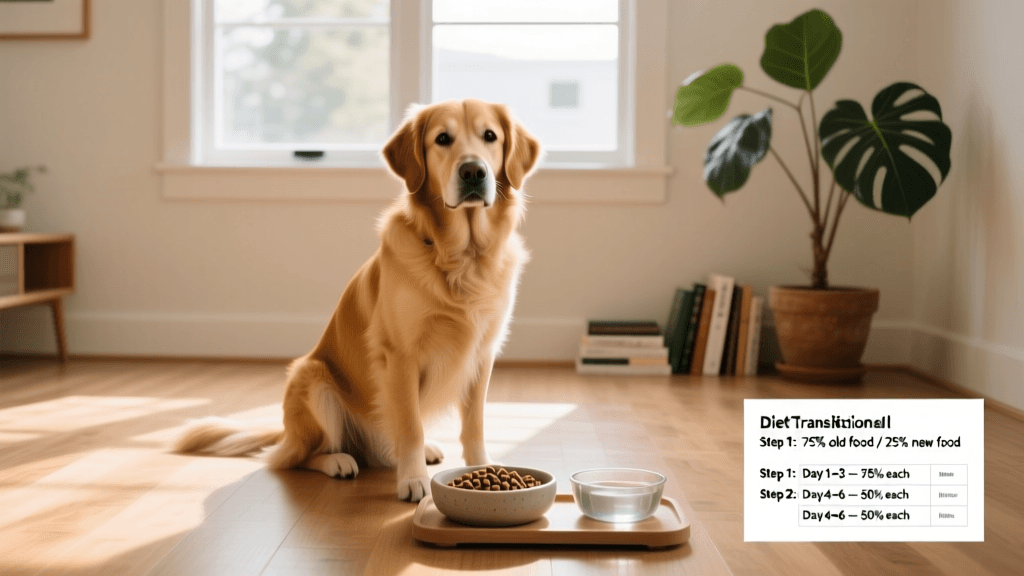
The golden rule of changing a dog's food is to take it slow. While some dogs with cast-iron stomachs can handle a 3-day switch, a 7-to-10-day schedule is the veterinary standard for adopted dogs experiencing environmental stress. Below is a structured, day-by-day transition chart. Note that these percentages refer to the volume of the total daily caloric intake, not just the physical scoop size, as different foods have varying caloric densities.
| Day | Old Food (Shelter/Previous) | New Food | Observation Notes |
|---|---|---|---|
| Day 1 - 2 | 75% | 25% | Monitor stool firmness and appetite. Ensure high water intake. |
| Day 3 - 4 | 50% | 50% | Watch for excess flatulence or lethargy. Maintain consistent feeding times. |
| Day 5 - 6 | 25% | 75% | Stool should remain formed. If soft, hold at this ratio for an extra day. |
| Day 7+ | 0% | 100% | Full transition. Monitor weight and body condition score over the next month. |
Pro Tip: If your dog experiences soft stools at any stage, do not advance to the next phase. Hold the current ratio for an additional 48 hours until their digestion stabilizes. If diarrhea persists for more than 24 hours, consult your veterinarian immediately, as stress-induced colitis or underlying parasites from the shelter environment may be at play.
Selecting the Right Food: WSAVA and AAFCO Guidelines
When choosing the new food for your transition, it is vital to look past flashy marketing terms like grain-free, ancestral, or holistic. Instead, rely on established veterinary nutrition standards. The World Small Animal Veterinary Association (WSAVA) recommends selecting diets from manufacturers that employ full-time veterinary nutritionists and conduct rigorous feeding trials.
Decoding the AAFCO Statement
The Association of American Feed Control Officials (AAFCO) sets the nutritional profiles for pet foods. Look for a statement on the bag that reads: This product is formulated to meet the nutritional levels established by the AAFCO Dog Food Nutrient Profiles for [Life Stage].
- Growth/Reproduction: Essential for puppies under 12 months (or up to 18-24 months for giant breeds).
- Adult Maintenance: For fully grown, non-reproducing dogs.
- All Life Stages: Formulated to meet the highest requirements (growth), meaning it is often higher in calories and calcium. This can lead to obesity in sedentary adult dogs if portion sizes are not strictly managed.
Budgeting for Premium Nutrition
High-quality commercial diets typically range from $2.50 to $4.50 per pound. For a 50-pound adult dog requiring roughly 1,200 calories a day, expect to spend between $60 and $90 per month on food. While this is a significant investment, it often results in better nutrient bioavailability, meaning your dog produces less waste and maintains a healthier coat and immune system.
Troubleshooting Digestive Issues During Transition
Even with a meticulous 7-day schedule, adopted dogs may experience minor GI hiccups due to the stress of relocation. Here are actionable, veterinarian-backed interventions to soothe your dog's stomach.
1. Incorporate Canine Probiotics
Probiotics introduce beneficial bacteria to the gut, aiding in the stabilization of the microbiome during dietary and environmental shifts. Products like Purina Pro Plan Veterinary Supplements FortiFlora or Proviable-DC are highly recommended. Sprinkle one packet over your dog's food daily during the first two weeks of adoption. These supplements typically cost around $30 for a 30-day supply and are a worthy investment for gut health.
2. The Power of Plain Pumpkin Puree
If your dog's stool becomes slightly soft (but not watery diarrhea), adding soluble fiber can help absorb excess water in the colon. Use 100% pure canned pumpkin puree—never pumpkin pie filling, which contains toxic spices like nutmeg and xylitol. Add 1 tablespoon per 10 pounds of body weight to their meals. This is an inexpensive, natural remedy that most dogs find highly palatable.
3. Implement a Bland Diet Protocol
If your dog refuses the new food or vomits once, withhold food for 12 hours (ensure fresh water is available) to let the GI tract rest. Following the fast, offer a bland diet consisting of boiled, skinless, boneless chicken breast and plain white rice in a 1:2 ratio (one part chicken to two parts rice). Feed small, frequent meals (1/4 cup every 3 hours) for 48 hours before slowly reintroducing the kibble.
Hydration and Feeding Equipment
Nutrition is only half the equation; hydration and feeding mechanics are equally important for a newly adopted dog.
- Water Intake: Dogs should drink approximately 1 ounce of water per pound of body weight daily. A 40-pound dog needs about 40 ounces (5 cups) of water. Transitioning to a dry kibble diet requires vigilant monitoring of water bowls, as kibble contains only 10% moisture compared to the 75% found in wet food.
- Slow Feeder Bowls: Shelter dogs often learn to inhale their food rapidly due to competition. This can lead to dangerous bloat (Gastric Dilatation-Volvulus) and regurgitation. Invest in a slow feeder bowl (like the Outward Hound Fun Feeder, costing around $15) to force your dog to forage and chew, improving digestion and mental stimulation.
- Elevated Feeders: For large or giant breeds, an elevated feeder can promote better posture and reduce the amount of air swallowed during meals, further mitigating bloat risks.
When to Call the Veterinarian
While mild soft stools are common during the first week, certain red flags require immediate veterinary intervention. Contact your vet or an emergency animal hospital if you observe:
- Bloody stool or stool that resembles coffee grounds.
- Profuse, watery diarrhea lasting more than 24 hours.
- Repeated vomiting or inability to keep water down.
- Lethargy, pale gums, or a distended, hard abdomen.
As noted by the American Kennel Club, patience and observation are your best tools when navigating a diet change. By respecting your dog's biological need for a gradual transition and choosing a nutritionally sound diet, you set the foundation for a long, vibrant, and healthy life together.
Conclusion
Getting a new dog is a profound commitment that extends far beyond the initial adoption paperwork. By prioritizing a structured, science-backed diet transition, you protect your new companion from unnecessary physical stress and establish a routine of care that will benefit them for years to come. Measure your portions, monitor their stool, and give their gut the time it needs to thrive in their forever home.
anouk-beaumont
All our authors care for dogs every day — read more of their work on the authors page.