Diagnosing and Solving Resource Guarding in Multi-Dog Homes
Learn how to diagnose and solve resource guarding in multi-dog homes. Discover actionable training tips, management tools, and safety protocols.
Understanding Resource Guarding in Multi-Dog Households
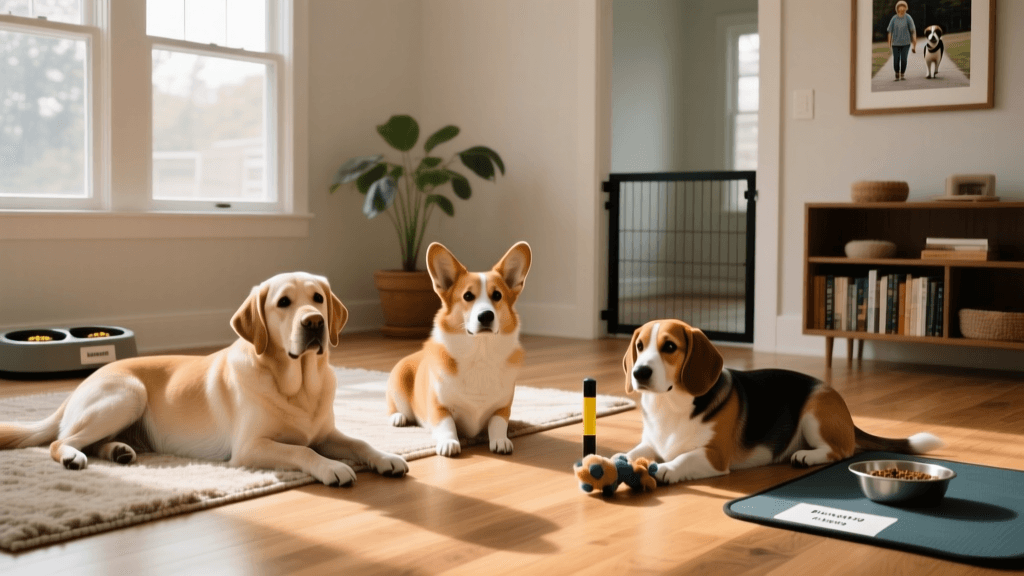
Sharing your life with multiple dogs can be an incredibly rewarding experience, offering companionship, play, and a vibrant household dynamic. However, when resource guarding enters the picture, a peaceful home can quickly transform into a stressful environment fraught with tension and the risk of injury. Resource guarding is a natural canine behavior rooted in survival instincts, but in a modern multi-dog home, it becomes a significant behavioral problem that requires immediate diagnosis and structured intervention. According to the ASPCA, resource guarding occurs when a dog exhibits aggressive behaviors to maintain control over food, toys, spaces, or even their favorite humans. In a multi-dog household, the competition for these valued resources can escalate quickly, leading to severe fights and lasting behavioral trauma.
The Ethology of Guarding: Why Dogs Guard
To effectively solve resource guarding, we must first understand its ethological origins. In the wild, canines must protect their limited resources from scavengers and competitors to survive. While our domestic dogs do not face starvation, the genetic imperative to guard high-value items remains deeply ingrained. Dogs may guard kibble, high-value chews (like bully sticks or raw bones), stolen contraband (like socks or trash), favored sleeping spots (like the master bed or a specific crate), and spatial boundaries (like doorways or hallways). When a second or third dog is introduced to the home, the resident dog may perceive a sudden scarcity of resources, triggering defensive posturing. It is crucial to recognize that guarding is not a sign of 'dominance' or 'spite'; it is an expression of anxiety and a fear of losing something the dog finds highly valuable.
The Danger of Punishing the Growl
One of the most common and dangerous mistakes owners make in multi-dog homes is punishing the warning signs of resource guarding, such as growling, lip licking, or stiffening. When you scold or physically correct a dog for growling, you do not eliminate the underlying anxiety or the desire to guard the resource. Instead, you suppress the warning system. The dog learns that growling results in punishment, so the next time they feel threatened, they may skip the vocal warning entirely and proceed straight to a bite. As noted by experts at Fear Free Pets, suppressing warning signs creates a 'ticking time bomb' scenario, especially dangerous when children or other pets are in the vicinity. The goal of behavioral modification is to change the dog's emotional response to the approach of another dog, making them feel that a nearby sibling predicts good things rather than a theft of their prized possession.
Diagnosing the Severity: The Canine Guarding Spectrum
Before implementing a training protocol, you must accurately diagnose the severity of your dog's resource guarding. The following table outlines the spectrum of guarding behaviors, from mild anxiety to severe aggression, and the immediate actions required for each level.
| Severity Level | Warning Signs & Behaviors | Immediate Action Required |
|---|---|---|
| Level 1: Mild | Eating faster when another dog approaches, slight body stiffening, turning head away. | Increase spatial distance during meals. Begin basic 'Trade-Up' games. |
| Level 2: Moderate | Low growling, hovering over the item, whale eye (showing whites of eyes), blocking access. | Implement strict physical barriers (gates/crates). Start Desensitization and Counter-Conditioning (DS/CC). |
| Level 3: Severe | Loud growling, snapping at the air, lunging without making contact, baring teeth. | Complete separation. Muzzle training required. Consult a certified behaviorist immediately. |
| Level 4: Critical | Biting and making contact, causing puncture wounds or bruises, prolonged fights. | Veterinary behaviorist (DACVB) intervention. Strict management to prevent any further incidents. |
Immediate Management Protocols: Stop the Bleeding
Behavioral modification takes time, often spanning several months. In the interim, you must manage the environment to prevent rehearsals of the unwanted behavior. Every time a dog successfully guards a resource or gets into a fight, the neural pathways associated with that aggression are reinforced. Management is your first line of defense.
1. Spatial Separation and Visual Barriers
Never leave high-value chews or food bowls out in shared spaces. Use hardware-mounted baby gates, such as the Carlson Pet Products Walk-Thru Pet Gate (approximately $45, 30 inches tall), to separate dogs during feeding times or chew sessions. If your dogs guard visual space or react to staring, use tension-rod curtains or privacy screens on the gates to block line-of-sight, which drastically reduces arousal levels.
2. Microchip Feeding Stations
For dogs that guard their food bowls or steal from siblings, the SureFeed Microchip Pet Feeder Connect (approximately $169) is a game-changer. This feeder reads the dog's microchip and only opens the lid for the assigned dog. If a resource-guarding dog attempts to approach another dog's bowl, the lid remains closed, eliminating the opportunity for theft and subsequent conflict.
3. Muzzle Conditioning
If you have a Level 3 or Level 4 guarder, muzzle conditioning is non-negotiable for safe management during training sessions. The Baskerville Ultra Muzzle (approximately $25) is highly recommended because it allows the dog to pant, drink water, and accept treats through the front grill, which is essential for counter-conditioning exercises. Spend 2 to 3 weeks pairing the muzzle with high-value rewards like peanut butter or squeeze cheese before attempting to use it in a multi-dog training scenario.
Behavioral Modification: The 'Trade-Up' Game
Once the environment is managed, you can begin active training. The 'Trade-Up' game teaches the guarding dog that relinquishing an item results in receiving something of even higher value. This shifts the dog's emotional state from 'I am losing my prize' to 'I am upgrading my prize.'
Step-by-Step Trade-Up Protocol
- Identify the Hierarchy of Value: Map out your dog's preferences. For example, a Kong Classic stuffed with kibble might be a '5/10' value item, while a piece of freeze-dried beef liver or Zuke's Mini Naturals (approximately $8 per bag) is a '10/10' value item.
- Start with Low-Value Items: Give the guarding dog a low-value toy or chew in a separated, safe area (e.g., behind a baby gate where the other dog can see but not interfere).
- Introduce the Trade: Toss a high-value treat directly in front of the dog's nose. The moment they drop the low-value item to eat the treat, mark the behavior with a verbal 'Yes!' or a clicker.
- Timing is Critical: The high-value treat must be delivered within 0.5 seconds of the dog releasing the item. Delayed timing confuses the dog and fails to build the positive association.
- Return the Item: In the early stages, once the dog eats the treat, give them the original item back. This builds trust. The dog learns that giving up the item is temporary and highly profitable.
- Gradual Progression: Slowly work your way up the value hierarchy over several weeks, eventually practicing with high-value chews like bully sticks. Keep training sessions under 15 minutes to prevent cognitive fatigue and frustration.
Desensitization and Counter-Conditioning (DS/CC) for Spatial Guarding
If your dog guards spaces (like the couch or the bed) or guards you from the other dog, DS/CC is the most effective protocol. The goal is to change the emotional response to the other dog's approach. According to the American Kennel Club (AKC), successful DS/CC requires keeping the guarding dog 'under threshold'—meaning the approaching dog is far enough away that the guarding dog notices them but does not react with stiffening or growling.
The Protocol: Have the non-guarding dog on a leash at a distance of 15 feet. The moment the guarding dog looks at the other dog without reacting, feed a continuous stream of high-value treats. When the other dog turns and walks away, the treats stop. The guarding dog quickly learns the '3-second rule': the presence of the other dog predicts a jackpot of treats, and their departure means the treats end. Over weeks, you can decrease the distance by 1-foot increments, provided the guarding dog remains relaxed and eager for treats.
Management Tools Comparison Chart
Choosing the right tools for your specific multi-dog dynamic is crucial for safety and success. Below is a comparison of the most effective management tools available on the market.
| Management Tool | Estimated Cost | Best Used For | Limitations |
|---|---|---|---|
| Hardware-Mounted Baby Gate | $40 - $70 | Separating dogs during meals, chews, and cool-down periods. | Requires drilling into walls; large dogs may jump over standard 30-inch gates. |
| Microchip Pet Feeder | $160 - $180 | Food guarding, slow feeders, and preventing dietary theft. | Does not prevent a dog from guarding the physical space around the bowl. |
| Basket Muzzle (e.g., Baskerville) | $20 - $30 | Safe DS/CC training, vet visits, and emergency management. | Requires extensive positive conditioning; not for long-term unsupervised use. |
| Snuffle Mat / Lick Mat | $15 - $25 | Reducing feeding arousal, promoting calming endorphins. | Can be destroyed by aggressive chewers; requires supervision. |
When to Seek Professional Help
While mild to moderate resource guarding can often be managed and improved with dedicated owner training, severe cases require professional intervention. If your dog has progressed to Level 3 or Level 4 on the guarding spectrum, or if you feel unsafe managing the environment, it is time to hire a professional. Look for a Certified Applied Animal Behaviorist (CAAB) or a Veterinary Behaviorist (DACVB). These professionals have the scientific background to assess the neurochemical factors at play, prescribe anti-anxiety medications (such as Fluoxetine or Trazodone) if necessary, and design customized safety protocols tailored to your home's specific layout and the unique temperaments of your dogs. Remember, seeking help is not a failure; it is a vital step in ensuring the safety and harmony of your multi-dog family.
Conclusion
Living with a resource-guarding dog in a multi-pet household requires patience, vigilance, and a commitment to force-free behavioral science. By accurately diagnosing the severity of the guarding, implementing strict environmental management, and utilizing counter-conditioning protocols like the Trade-Up game, you can fundamentally change how your dog perceives their siblings. With the right tools, consistent timing, and a proactive approach, you can restore peace to your home and ensure that all your dogs feel safe, secure, and valued.
anouk-beaumont
All our authors care for dogs every day — read more of their work on the authors page.