A First-Time Owner Guide to Puppy Vaccines and Costs
Discover the essential puppy vaccination schedule, costs, and vet tips for first-time dog owners to keep your new furry friend healthy and protected.

Welcome to Dog Parenthood: Why Vaccines Matter
Bringing a new puppy home is one of the most exciting milestones in life, but it also comes with a steep learning curve regarding their health and wellbeing. As a first-time dog owner, navigating the world of veterinary care can feel overwhelming. Among the most critical aspects of early puppy care is establishing a robust vaccination protocol. Puppies are born with immature immune systems and rely on maternal antibodies passed through their mother's colostrum. However, these maternal antibodies gradually wane between 6 and 16 weeks of age, leaving a window of vulnerability where your puppy is highly susceptible to life-threatening infectious diseases like Parvovirus and Distemper.
Understanding the timing, types, and costs of puppy vaccinations is essential for budgeting your first year of dog ownership and ensuring your companion lives a long, healthy life. This comprehensive guide will walk you through everything you need to know about puppy immunizations, from core vaccines to post-shot care.
Core vs. Non-Core Vaccines: What Does Your Puppy Need?
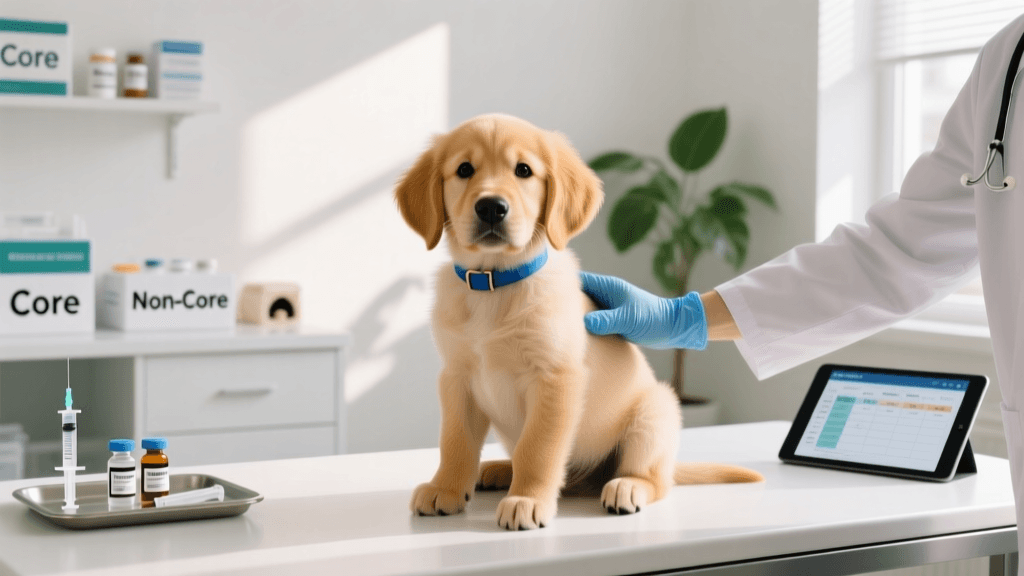
Veterinarians categorize canine vaccines into two distinct groups: core and non-core. According to the American Veterinary Medical Association (AVMA), core vaccines are those deemed essential for all dogs regardless of their geographic location or lifestyle, as they protect against diseases that are highly contagious, widespread, and potentially fatal.
- Core Vaccines: These include the DHPP combination shot (Distemper, Hepatitis/Adenovirus, Parainfluenza, and Parvovirus) and the Rabies vaccine. Rabies is a core vaccine not only due to its fatal nature but also because it is a zoonotic disease (transmissible to humans) and is mandated by law in most regions.
- Non-Core (Lifestyle) Vaccines: These are recommended based on your dog's specific risk factors, such as exposure to other dogs, geographic location, and outdoor activities. Examples include Bordetella (Kennel Cough), Leptospirosis, Lyme disease, and Canine Influenza. If you plan to enroll your puppy in daycare, attend group training classes, or frequent dog parks, the Bordetella vaccine is usually a strict requirement.
The Ultimate Puppy Vaccination Schedule and Cost Breakdown
To ensure continuous protection as maternal antibodies fade, puppies require a series of booster shots administered every 3 to 4 weeks until they are at least 16 weeks old. The American Kennel Club (AKC) outlines a standard schedule that most veterinary clinics follow. Below is a detailed breakdown of the timeline, estimated costs, and common veterinary product brands.
| Puppy Age | Vaccine Type | Estimated Cost (Per Visit) | Common Brand Examples |
|---|---|---|---|
| 6 - 8 Weeks | DHPP (1st Booster), Optional Bordetella | $75 - $100 | Vanguard Plus 5 (Zoetis), Nobivac Intra-Trac (Merck) |
| 10 - 12 Weeks | DHPP (2nd Booster), Leptospirosis, Lyme | $90 - $130 | Vanguard Plus 5L4, Nobivac Lyme |
| 14 - 16 Weeks | DHPP (3rd Booster), Rabies (1st Dose) | $100 - $150 | Nobivac Canine-Rabies, Imrab 3 (Boehringer Ingelheim) |
| 12 - 16 Months | DHPP Booster, Rabies Booster (1-Year or 3-Year) | $80 - $120 | Vanguard Plus 5, Defensor 3 |
Note: Costs vary significantly based on your geographic location, the type of clinic (private practice vs. low-cost shelter clinic), and whether additional wellness services are bundled into the visit.
Understanding the True Costs of First-Year Veterinary Care
When budgeting for a new puppy, first-time owners often make the mistake of only accounting for the price of the vaccine vials themselves. A comprehensive veterinary wellness visit includes several other vital components. Here is what you can expect to pay during a standard puppy wellness exam:
- Physical Exam Fee: $50 - $80. The vet will check your puppy's heart, lungs, teeth, joints, and overall body condition.
- Fecal Parasite Test: $35 - $50. Intestinal parasites like roundworms and hookworms are incredibly common in puppies and can be transmitted to humans.
- Deworming Medication: $15 - $30 per dose. Products like Nemex or Panacur are often administered directly in the clinic.
- Heartworm Prevention: $40 - $60 for a 6-month supply of chewable preventatives like Heartgard Plus or Interceptor Plus.
Altogether, you should budget between $400 and $700 for your puppy's first year of preventive veterinary care. Pet insurance or puppy wellness plans offered by clinics like Banfield or VCA can help spread these costs into manageable monthly payments.
Preparing for the Vet Visit: A First-Timer’s Checklist
Vet visits can be highly stressful for a young puppy. Proper preparation can make the experience positive, setting the foundation for a lifetime of cooperative veterinary care. Here are actionable tips for your first few visits:
- Bring a Fresh Stool Sample: Collect a fecal sample the morning of your appointment. Wrap it in a plastic bag or use the provided collection tubes to ensure accurate parasite testing.
- Practice Handling at Home: Gently touch your puppy's paws, ears, and mouth daily while giving high-value treats. This mimics the physical exam and reduces fear.
- Pack High-Value Distractions: Bring easily consumable, smelly treats like boiled chicken breast, freeze-dried liver, or Zuke's Mini Naturals. Licking and chewing release endorphins that calm puppies down during injections.
- Use a Secure Carrier or Harness: Clinic waiting rooms are full of unpredictable animals. Keep your puppy secure in a well-ventilated carrier or on a short, non-retractable leash attached to a secure body harness.
Post-Vaccination Care: Monitoring for Side Effects
After your puppy receives their 1ml subcutaneous or intramuscular injections, their immune system will begin the hard work of building antibodies. It is entirely normal for puppies to experience mild side effects for 24 to 48 hours. Common, non-alarming reactions include:
- Mild lethargy or increased sleeping.
- Decreased appetite for one meal.
- Soreness or a small, firm lump at the injection site.
- A low-grade fever.
When to Seek Emergency Care: Severe allergic reactions (anaphylaxis) are rare but require immediate veterinary intervention. If your puppy exhibits facial swelling, hives, persistent vomiting, difficulty breathing, or sudden collapse within minutes to hours of the vaccination, rush them to the nearest emergency veterinary hospital immediately.
Titer Testing: An Alternative to Endless Boosters?
As your puppy grows into an adult dog, you may wonder if annual boosters are truly necessary. The American Animal Hospital Association (AAHA) recognizes that core vaccines like DHPP and Rabies often provide immunity lasting three years or more. For owners concerned about over-vaccination, a titer test is a viable alternative.
A titer test involves drawing a small blood sample to measure the exact level of circulating antibodies in your dog's system against specific diseases. If the antibody levels are above the recognized protective threshold, a booster vaccine is deemed unnecessary. While titer tests are more expensive upfront (typically $150 to $250 per panel) compared to a $30 booster shot, they provide peace of mind and prevent unnecessary immune system stimulation. Note that Rabies titers are generally not accepted by local municipalities as a legal substitute for the Rabies vaccine, which must be kept current by law.
Final Thoughts for New Owners
Navigating your puppy's vaccination schedule is a fundamental responsibility of dog ownership. By understanding the difference between core and lifestyle vaccines, budgeting appropriately for wellness exams, and monitoring your puppy post-vaccination, you are actively safeguarding their future. Always maintain an open dialogue with your veterinarian, ask questions about the specific vaccine brands they use, and tailor a preventive care plan that perfectly suits your dog's unique lifestyle and environment.
robin-maitland
All our authors care for dogs every day — read more of their work on the authors page.