The First-Time Owner Guide To Puppy-Proofing Your Home
Discover essential puppy-proofing tips for first-time dog owners. Learn room-by-room safety checks, costs, and must-have products to keep your pup safe.
Welcoming Your First Puppy: The Chaos and the Charm
Bringing home your first puppy is an exhilarating milestone, but it is also a transition that requires meticulous preparation. Puppies are naturally curious, endlessly energetic, and equipped with sharp teeth that view your baseboards, shoes, and electrical cords as premium chew toys. For first-time owners, the sheer volume of household hazards can be overwhelming. According to the American Kennel Club (AKC), puppies explore the world primarily through their mouths, making environmental management your first line of defense against emergency veterinary visits.
Puppy-proofing is not just about hiding your favorite shoes; it is about creating a secure, enriching environment where your new companion can thrive without constant restriction. Ideally, you should begin this process at least two to three weeks before your puppy arrives. This timeline allows you to order specialized safety gates, test your fencing, and thoroughly deep-clean areas where toxic residues might linger. By approaching your home with a 'puppy-eye view'—literally getting down on your hands and knees to inspect spaces from a six-inch vantage point—you can identify hidden dangers that an adult human would easily overlook.
The Financial Reality: Budgeting for Puppy-Proofing
Many first-time owners budget extensively for the puppy itself, initial vaccinations, and premium kibble, but fail to allocate funds for home safety modifications. A comprehensive puppy-proofing overhaul typically costs between $150 and $400, depending on the size of your home and the extent of your outdoor yard. Investing in high-quality, hardware-mounted gates and durable cord protectors will save you thousands of dollars in potential property damage and emergency medical bills. Below is a general breakdown of expected costs for essential safety gear.
- Hardware-Mounted Baby Gates (x2): $80 - $120
- Cord Protectors & Outlet Covers: $30 - $50
- Locking Trash Cans: $60 - $100
- Pet-Safe Cleaning Supplies & Enzymatic Cleaners: $40 - $60
- Bitter Deterrent Sprays: $15 - $25
Room-by-Room Puppy-Proofing Checklist
To ensure no stone is left unturned, utilize this structured checklist to evaluate each zone of your home. This table outlines the primary hazards, recommended solutions, and the estimated time required to secure each area.
| Room / Zone | Primary Hazards | Recommended Solutions | Est. Time |
|---|---|---|---|
| Living Room | Electrical cords, small decor, toxic houseplants | Split loom tubing for cords, elevate plants, use bitter spray on furniture legs | 2 Hours |
| Kitchen | Accessible trash, toxic foods (grapes, xylitol), cleaning chemicals | Locking step-trash cans, childproof cabinet latches, secure pantry doors | 1.5 Hours |
| Bathroom | Medications, toilet water, dropped razors, toxic cosmetics | Keep toilet lids down, lockable medicine cabinets, sweep floors daily | 1 Hour |
| Bedroom | Chewed footwear, swallowed socks, bedframe splinters | Closet doors shut, laundry hampers with lids, provide designated chew beds | 45 Mins |
| Outdoor Yard | Fence gaps, toxic flora, fertilizer, pool access | Repair fence boards, remove sago palms, install pool fencing | 3+ Hours |
Living Room and Kitchen: High-Traffic Hazard Zones
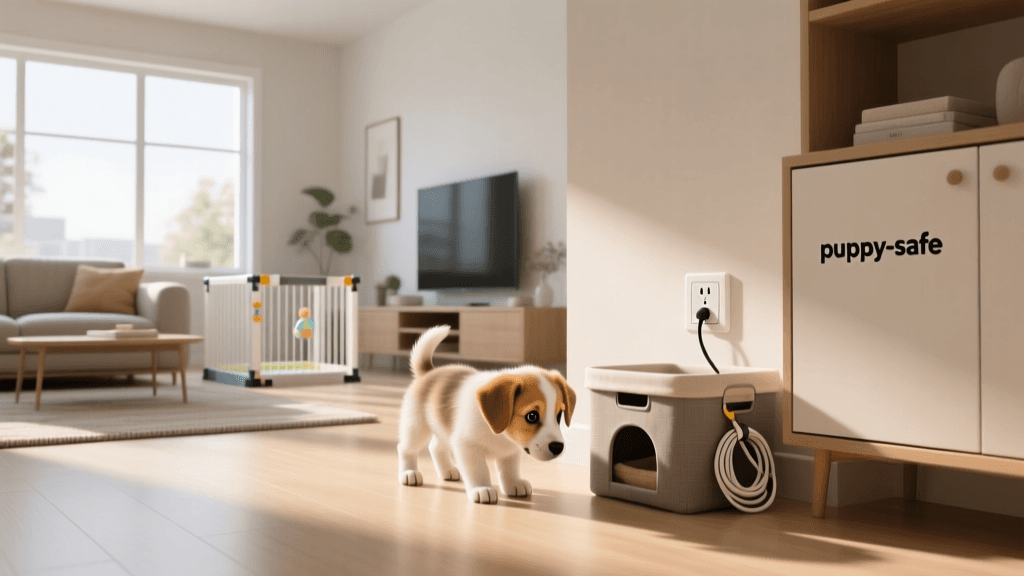
The living room and kitchen are the heart of your home, but they also harbor the most immediate threats to a teething puppy. Electrical cords are notoriously dangerous; a single bite can result in severe oral burns, pulmonary edema, or fatal electrocution. Do not rely on simple tape to secure cords. Instead, invest in rigid PVC cord channels or flexible split loom tubing to encase wires entirely. For outlets, use sliding safety covers rather than the small plastic plugs, which can easily be pried out by determined puppy paws and subsequently swallowed.
In the kitchen, the trash can is a treasure trove of hazardous items. Cooked bones (which can splinter and puncture the gastrointestinal tract), onion scraps, avocado pits, and packaging laced with meat juices are incredibly enticing. Standard pedal-bins are easily toppled by a medium-sized puppy. First-time owners should invest in a heavy-duty, locking trash can, such as the Simplehuman Locking Step Can, which requires a manual latch release that a dog cannot trigger. Furthermore, secure all lower cabinets containing cleaning supplies with magnetic childproof latches. Remember that many common floor cleaners contain phenols or ammonia, which are highly toxic if ingested or even walked on and subsequently licked off paws.
Bedrooms and Bathrooms: Hidden Dangers
Bedrooms present a unique hazard: clothing. Swallowed socks, underwear, and children's toys are leading causes of intestinal blockages requiring expensive surgical intervention. As a first-time owner, you must develop a strict 'closed-door' or 'closed-hamper' policy. Laundry must never be left in piles on the floor. Additionally, inspect your bed frame. If you have a box spring with exposed wooden slats or staple lines, block access to the space underneath the bed, as puppies love to den in dark, enclosed spaces and will happily chew through the fabric and wood.
Bathrooms require a zero-tolerance policy for dropped items. Human medications, particularly NSAIDs (like ibuprofen), acetaminophen, and antidepressants, are incredibly toxic to dogs. Data from the Pet Poison Helpline consistently ranks over-the-counter human medications among the top causes of pet poisoning. Never leave pill bottles on nightstands or bathroom counters. Furthermore, keep the toilet lid closed at all times. Puppies can easily fall in and drown, or ingest residual cleaning chemicals from the bowl water.
Outdoor and Yard Safety
Your yard should be a sanctuary, but it requires rigorous inspection. Walk the entire perimeter of your fence. Look for gaps wider than two inches, loose boards, or areas where soil has eroded beneath the fence line. Puppies are liquid; if they can fit their head through a gap, they can often squeeze their body through. For large breed puppies that will grow into athletic jumpers, ensure your fencing is at least six feet tall. If you have a digger, consider burying chicken wire along the fence line (bending the sharp edges outward) or pouring a concrete footer.
Landscaping is another hidden peril. The ASPCA Animal Poison Control Center maintains a comprehensive database of toxic flora. Common landscaping plants like Sago Palms, Oleander, Azaleas, and Lilies are highly toxic and can cause acute liver failure or cardiac arrest. Mulch is also a concern; while cedar and pine mulches are generally safe if not ingested in large quantities, cocoa bean mulch contains theobromine (the same toxic compound found in chocolate) and can be fatal if eaten. Opt for pet-safe alternatives like shredded hardwood or rubber mulch, and ensure all fertilizers and pesticides are stored in a locked shed, not an open garage.
Must-Have Products for First-Time Owners
To set yourself up for success, stock up on these specific, highly-rated puppy-proofing products before day one:
- Carlson Pet Products Super Gate: A hardware-mounted gate is non-negotiable for the top of staircases. Pressure-mounted gates can be dislodged by a jumping puppy, leading to catastrophic falls.
- Grannick's Bitter Apple Spray: A safe, non-toxic deterrent spray. Apply it to baseboards, table legs, and shoes. Reapply every 24 hours for the first week to establish a negative taste association.
- Enzymatic Cleaners (e.g., Nature's Miracle): Standard household cleaners do not break down the uric acid in puppy urine. If a puppy can still smell their previous accident, they will repeat it. Enzymatic cleaners destroy the odor at the molecular level.
- Kong Classic Dog Toy (Red or Black): While not a 'proofing' product per se, providing an appropriate, indestructible outlet for chewing is the best way to deter destructive behavior. Stuff it with puppy-safe peanut butter (xylitol-free) and freeze it to soothe teething gums.
Conclusion: Patience and Vigilance
Puppy-proofing your home is not a one-time event; it is an ongoing process. As your puppy grows, their reach, strength, and problem-solving skills will evolve. A gate that contained your eight-week-old Labrador may easily be vaulted by the time they are six months old. Stay vigilant, conduct weekly sweeps of your floors for dropped pills or coins, and remember that supervision is the ultimate safety tool. By investing the time and resources to secure your environment now, you are laying the foundation for a safe, happy, and stress-free life with your new best friend.
aaron-whyte
All our authors care for dogs every day — read more of their work on the authors page.