Top Crash-Tested Dog Car Harnesses for Safe Road Trips
Discover the best crash-tested dog car harnesses for safe travel. Compare top-rated brands, sizing tips, and safety standards for your next road trip.
The Hidden Dangers of Unrestrained Dogs in Vehicles
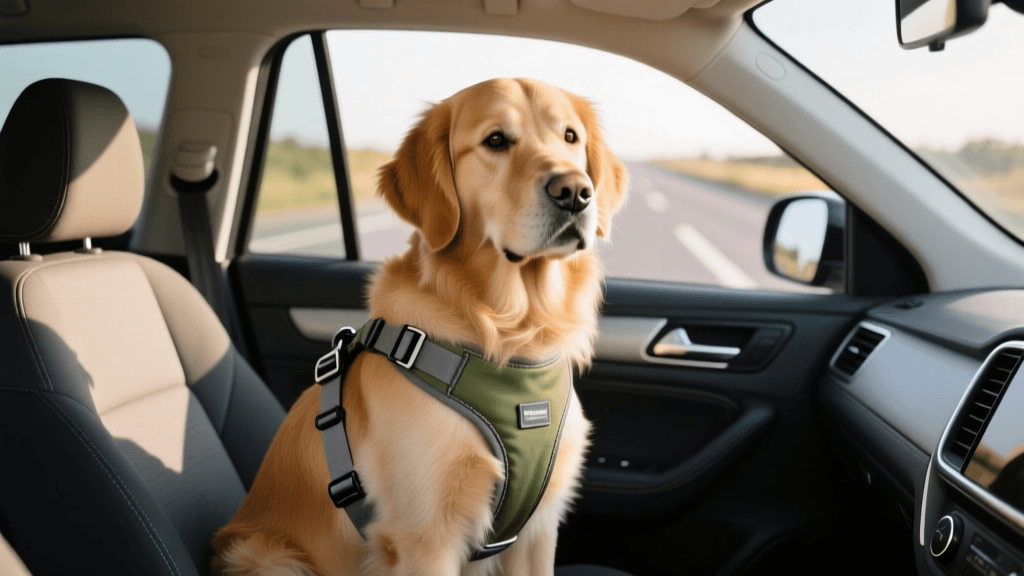
Road trips with your canine companion are one of the greatest joys of pet ownership. Whether you are heading to a local hiking trail, visiting family across the state, or embarking on a cross-country adventure, bringing your dog along makes the journey infinitely better. However, many well-meaning dog owners overlook a critical aspect of travel: vehicular safety. According to the National Highway Traffic Safety Administration (NHTSA), distracted driving is a leading cause of accidents, and an unrestrained pet moving around the cabin is a major distraction. More importantly, in the event of a sudden stop or collision, an unrestrained dog becomes a dangerous projectile.
Consider the physics of a car crash. A seemingly small 30-pound dog traveling at just 35 miles per hour will exert over 1,000 pounds of projectile force upon impact. This not only poses a fatal risk to your dog but also to any human passengers in the vehicle. While many owners use standard walking harnesses and clip them to the car's seatbelt latch, these everyday walking tools are simply not engineered to withstand the immense kinetic energy of a vehicular collision.
What Makes a Harness Truly 'Crash-Tested'?
The pet industry is largely unregulated when it comes to safety claims. Any manufacturer can slap the words 'crash-tested' on a product label without providing verifiable data or adhering to a standardized testing protocol. To truly protect your dog, you must look for products that have been independently tested and certified by the Center for Pet Safety (CPS).
The CPS is a non-profit research and advocacy organization dedicated to companion animal safety. They utilize rigorous, independent crash-testing protocols that mirror the Federal Motor Vehicle Safety Standard (FMVSS) No. 213, which is the same standard used to evaluate child safety seats. When a harness earns the CPS Certification seal, it means it has been dynamically tested using specially engineered, biofidelic crash-test dogs (weighted dummies designed to mimic the skeletal and mass properties of real dogs) and has proven its ability to keep the dog secured and minimize rotational forces during a simulated 30 mph collision.
Top 3 CPS-Certified Dog Car Harnesses Reviewed
Based on safety ratings, durability, comfort, and ease of use, here are the top three crash-tested dog car harnesses currently on the market.
1. Sleepypod Clickit Sport
Price Range: $100 - $120
Weight Capacity: 18 to 90 lbs
Best For: Everyday use and frequent travelers
The Sleepypod Clickit Sport is widely regarded as the gold standard in canine vehicular safety. It features a unique three-point design that secures the dog's torso, distributing the force of a collision across the chest and shoulders rather than the fragile neck area. The harness is constructed with energy-absorbing padded vesting and includes reflective strips for nighttime visibility.
- Pros: Exceptional safety rating, doubles as a comfortable walking harness, easy to clean, wide size range.
- Cons: Premium price point, the three-point buckling system can take a few extra seconds to secure compared to single-clip models.
2. Kurgo Enhanced Strength Tru-Fit Smart Harness
Price Range: $35 - $45
Weight Capacity: 5 to 110 lbs
Best For: Budget-conscious buyers and smaller dogs
Kurgo's Tru-Fit Smart Harness was one of the first to undergo rigorous CPS testing. The 'Enhanced Strength' version features all-steel nesting buckles (based on rock-climbing gear) and a reinforced cross-stitched chest plate. It connects to the vehicle's seatbelt using a heavy-duty carabiner and a dual-tether system that limits forward and lateral movement.
- Pros: Highly affordable, incredibly durable hardware, includes a 10-inch seatbelt tether with a carabiner, available for very small dogs (XS).
- Cons: The heavy steel buckles can be cumbersome for tiny breeds, the vest material is less padded than the Sleepypod.
3. EzyDog Drive Harness
Price Range: $95 - $110
Weight Capacity: 15 to 90 lbs
Best For: Dogs with deep chests or unique body shapes
The EzyDog Drive Harness utilizes 'Cross Link Technology' and an ergonomic, molded chest plate that conforms to your dog's specific shape over time. It is designed to be left on the car seat, allowing you to simply guide your dog into the pre-formed harness and click the dual carabiners into place. It passed the CPS 30 mph crash test with flying colors, showing minimal rotational displacement.
- Pros: Excellent anatomical support, very fast to secure once adjusted, highly breathable materials.
- Cons: Bulky to store when not in use, not ideal for use as a daily walking harness due to its rigid structure.
Comparison Chart: Features and Specifications
| Brand & Model | CPS Certified | Approx. Cost | Weight Range | Primary Material | Walking Friendly? |
|---|---|---|---|---|---|
| Sleepypod Clickit Sport | Yes (5-Star) | $110 | 18 - 90 lbs | Padded Nylon & Neoprene | Yes |
| Kurgo Enhanced Tru-Fit | Yes | $40 | 5 - 110 lbs | Ripstop Nylon & Steel | Yes |
| EzyDog Drive Harness | Yes | $100 | 15 - 90 lbs | Molded EVA Foam & Webbing | No |
How to Properly Measure and Fit Your Dog
Buying the right brand is only half the battle; a crash-tested harness will only perform correctly if it is fitted precisely to your dog's body. A harness that is too loose will allow the dog to slip out or suffer whiplash, while one that is too tight can restrict breathing and cause panic.
- Measure the Neck: Use a soft tailor's measuring tape to measure the thickest part of your dog's neck, right at the base where it meets the shoulders.
- Measure the Chest Girth: This is the most critical measurement. Wrap the tape around the deepest part of your dog's ribcage, usually just behind the front elbows. Ensure the tape is snug but not tight.
- The Two-Finger Rule: Once the harness is on, you should be able to comfortably slide two fingers between the harness straps and your dog's body at the chest and neck. If you can fit your whole hand, it is too loose. If you cannot fit two fingers, it is too tight.
- Check the Tether Length: When clipped into the car, your dog should be able to sit up and lie down comfortably, but they should not have enough slack to jump into the front seat or hang their head out the window.
Acclimating Your Dog to the Car Harness
Because crash-tested harnesses are inherently heavier and more restrictive than standard walking gear, your dog may initially resist wearing one. The American Veterinary Medical Association (AVMA) emphasizes that reducing travel anxiety is key to safe transit. Follow this step-by-step acclimation protocol:
- Days 1-3 (Indoor Introduction): Leave the harness on the floor with high-value treats placed on it. Let your dog sniff and investigate. Put the harness on for just 2-3 minutes indoors while feeding them a meal or playing a game, then immediately remove it.
- Days 4-6 (Short Walks): Attach their regular leash to the harness and go for a short, positive walk around the block. This teaches them that the heavy harness predicts fun activities.
- Days 7-10 (Stationary Car Time): Place your dog in the car with the harness on and clipped to the seatbelt, but do not start the engine. Sit in the back seat with them, offer a long-lasting chew toy (like a stuffed Kong), and keep the session under 10 minutes.
- Day 11+ (Short Drives): Begin taking very short drives (e.g., to a favorite park or a drive-thru for a pup cup). Gradually increase the duration of the trips as your dog shows relaxed body language.
Final Thoughts on Canine Travel Safety
Investing in a CPS-certified, crash-tested car harness is one of the most important decisions you can make for your dog's longevity and your family's safety. While the upfront cost of premium models like the Sleepypod or EzyDog might seem steep, it is a fraction of the cost of emergency veterinary care following an accident. By choosing a rigorously tested product, measuring your dog accurately, and taking the time to properly acclimate them to the gear, you ensure that every road trip you take together is as safe as it is memorable. Remember, our dogs rely on us to make the right safety choices on their behalf—buckle them up before you put the car in drive.
priya-sutaria
All our authors care for dogs every day — read more of their work on the authors page.