Adapting Your Home and Daily Routine for Senior Dogs
Discover practical tips for adapting your home, diet, and daily routine to support your senior dog's comfort, mobility, and overall health as they age.
Embracing the Golden Years: A Guide to Senior Dog Care
Watching your dog transition from a boundless, energetic puppy into a gentle, gray-muzzled senior is one of the most profound experiences of pet ownership. While their love for you remains unchanged, their physical and cognitive needs will inevitably shift. Adapting your home environment, daily routines, and nutritional approach is essential to ensure your aging companion remains comfortable, mobile, and happy. According to the ASPCA, proactive adjustments to a senior dog's lifestyle can significantly delay the onset of age-related mobility issues and improve their overall quality of life.
Defining the Senior Life Stage
The term 'senior' is not a one-size-fits-all designation. A dog's aging timeline is heavily influenced by their breed and size. Generally, smaller breeds age more slowly than their larger counterparts.
- Small Breeds (under 20 lbs): Typically considered senior around 10 to 12 years of age.
- Medium Breeds (20-50 lbs): Enter their senior years around 8 to 10 years of age.
- Large Breeds (50-90 lbs): Often reach senior status between 7 and 9 years of age.
- Giant Breeds (over 90 lbs): May be considered seniors as early as 5 to 7 years of age.
Understanding where your dog falls on this spectrum allows you to implement preventative care before severe mobility or cognitive issues arise.
Modifying Your Home Environment for Aging Joints
Osteoarthritis and general joint stiffness are incredibly common in aging dogs. Making strategic modifications to your home can prevent painful slips and reduce the strain on your dog's hips, knees, and spine.
Flooring and Traction
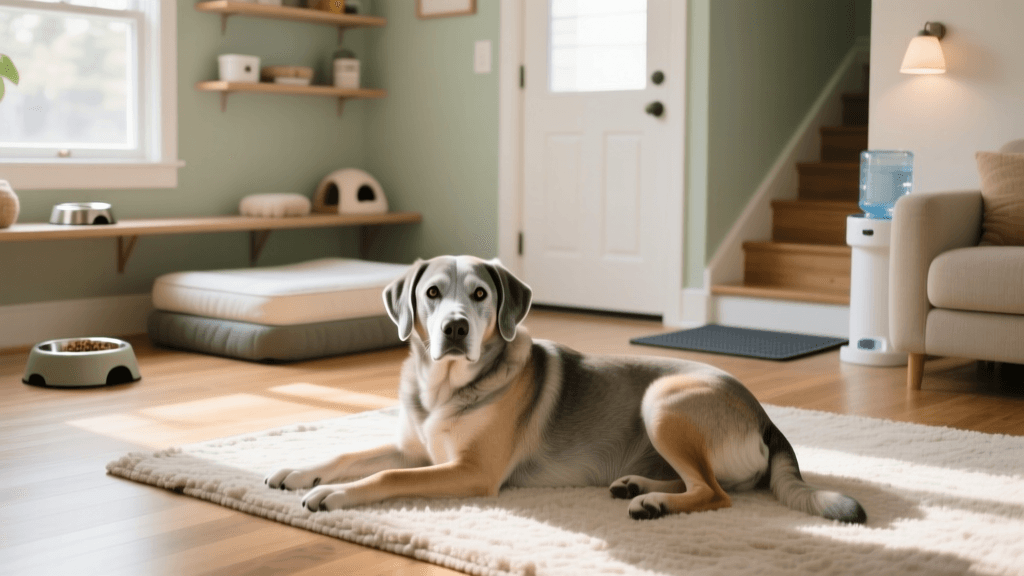
Hardwood, tile, and laminate floors are notorious for causing splaying injuries in senior dogs whose paw pads have lost their natural grip. Cover high-traffic areas and pathways to their favorite resting spots with rubber-backed, non-slip area rugs or interlocking foam puzzle mats. If your dog struggles to stand up from a lying position, placing a textured yoga mat near their bed can provide the immediate traction they need to gain their footing.
Upgrading Their Bedding
Standard plush dog beds often compress over time, offering zero support for arthritic joints. Invest in a high-quality orthopedic bed featuring a minimum of 4 to 6 inches of high-density memory foam. Beds with bolstered edges are highly recommended, as they provide crucial neck and spine support when your dog is resting. Additionally, consider a heated dog bed or a microwavable heat pad (used with a protective cover) during colder months to soothe stiff joints.
Ramps and Stairs
Jumping onto couches, beds, or into the back of an SUV can cause micro-tears in aging ligaments. Introduce pet ramps or stairs early, before your dog experiences pain that makes them fearful of the device. When selecting a ramp, look for a gentle incline ratio (ideally 1:4, meaning for every 4 inches of length, the ramp rises 1 inch) and a surface covered in high-traction carpet or rubber ridges.
Adjusting Daily Routines and Exercise
While senior dogs still require regular exercise to maintain muscle mass and joint mobility, the intensity and duration must be adjusted. The American Kennel Club (AKC) emphasizes that consistency is far more important than intensity for older dogs.
Restructuring Walks
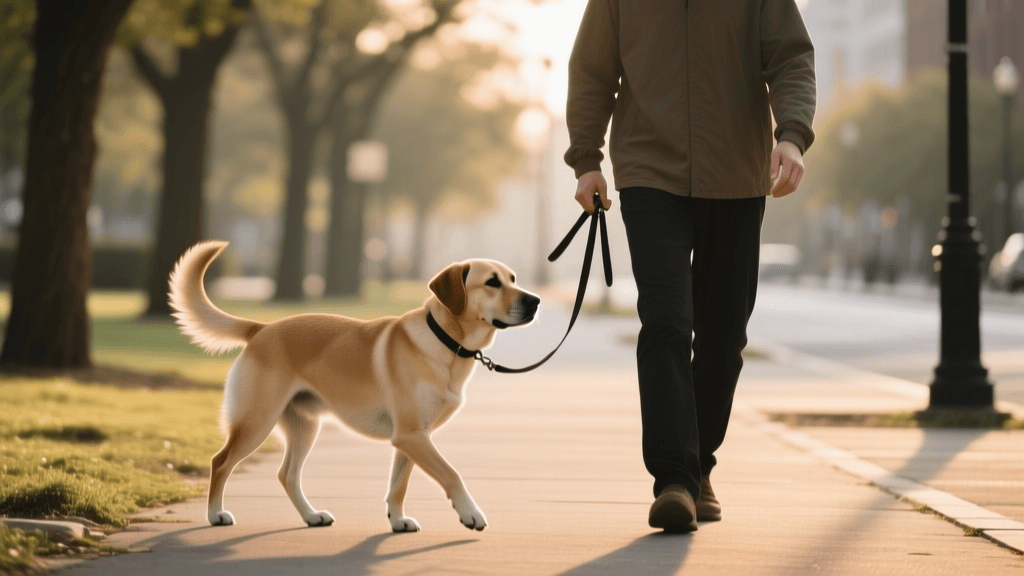
Instead of one long, exhaustive 45-minute hike, transition to two or three shorter, 15-minute leash walks spread throughout the day. This prevents the 'weekend warrior' effect, where a dog overexerts themselves and suffers from severe stiffness the following day. Avoid walking on hot asphalt, as senior dogs have a harder time regulating their body temperature and their paw pads are more susceptible to burning.
Prioritizing Mental Enrichment
As physical exertion decreases, mental stimulation must increase to prevent cognitive decline and boredom. Incorporate the following into your daily routine:
- Snuffle Mats: Hide your dog's daily kibble ration in a fabric snuffle mat to encourage natural foraging behaviors and tire them out mentally.
- Puzzle Toys: Use soft rubber puzzle toys designed for seniors (which are gentler on aging teeth) to dispense treats.
- Scent Work: Hide strong-smelling treats around the living room and encourage your dog to 'find it.' This low-impact activity is excellent for cognitive health.
Nutritional Shifts and Supplements
A common misconception is that all senior dogs need a 'senior diet' that is strictly lower in protein. However, veterinary nutritionists note that healthy senior dogs actually require high-quality, easily digestible protein to prevent muscle wasting (sarcopenia). Dietary changes should always be based on a veterinary assessment rather than age alone. For a deeper understanding of age-related nutritional needs, the Cummings Veterinary Medical Center at Tufts University provides excellent evidence-based guidelines on feeding your senior dog.
Adult vs. Senior Nutritional Focus
| Nutritional Factor | Healthy Adult Dog | Healthy Senior Dog |
|---|---|---|
| Caloric Density | Moderate to High (based on activity) | Often Lower (to prevent obesity due to slowed metabolism) |
| Protein Quality | High biological value | Highly digestible, high biological value (to maintain muscle mass) |
| Joint Support | Baseline maintenance | Increased Omega-3s (EPA/DHA), Glucosamine, and Chondroitin |
| Fiber Content | Standard levels | Often increased to promote healthy gastrointestinal motility |
| Phosphorus | Standard levels | Restricted ONLY if early-stage kidney disease is diagnosed |
Targeted Supplementation
Discuss adding a veterinary-approved joint supplement containing Green-Lipped Mussel, MSM, and Omega-3 fatty acids with your vet. These ingredients have been clinically shown to reduce joint inflammation and improve mobility in dogs with osteoarthritis. Always introduce supplements gradually to avoid gastrointestinal upset.
Grooming and Hygiene Adjustments
Grooming a senior dog requires a gentler touch and a focus on preventative hygiene.
- Nail Trims: As dogs become less active, their nails no longer wear down naturally on pavement. Overgrown nails alter the angle of the paw, forcing the dog to walk on the back of their foot, which places immense strain on arthritic wrists and elbows. Trim or grind nails every 2 to 3 weeks.
- Bathing: Standing in a tub can be terrifying and painful for a dog with weak hind legs. Use a shallow, rubber-matted tub, or rely on waterless foaming shampoos and grooming wipes for spot cleaning between full baths.
- Incontinence Management: Age-related cognitive dysfunction or weakened sphincter muscles can lead to accidents. Use washable, reusable belly bands for males or dog diapers for females, and ensure you are using enzymatic cleaners on your floors to completely remove pheromones and prevent repeat offenses.
Veterinary Care: The Bi-Annual Rule
Perhaps the most critical adjustment to your routine is the frequency of veterinary visits. While an annual checkup is sufficient for a healthy adult, senior dogs should see their veterinarian every six months. Because dogs age roughly seven times faster than humans, a six-month gap is equivalent to a human skipping medical care for three to four years.
Request a comprehensive senior blood panel at least once a year. This should include a Complete Blood Count (CBC), a full chemistry panel, a urinalysis, and a thyroid check. Catching conditions like hypothyroidism, early renal disease, or liver anomalies in their nascent stages allows for dietary and medical interventions that can add years to your dog's life.
Conclusion
Sharing your life with a senior dog is a privilege. They have given you their best years, and adapting your home, diet, and routine is the ultimate way to reciprocate that devotion. By making thoughtful, proactive adjustments to their environment and daily care, you can ensure that your dog's golden years are truly golden—filled with comfort, dignity, and the quiet joy of simply being by your side.
anouk-beaumont
All our authors care for dogs every day — read more of their work on the authors page.